How to Apply AI-Powered Marketing Strategies on a Budget
Marcela De Vivo
Marcela De Vivo
March 11, 2026
Let’s be honest—“affordable marketing” has a branding problem.
For years, it’s been positioned as the consolation prize. The backup plan. The thing you settle for when you don’t have the budget for “real” strategy. Agencies throw the term around like a discount label, and founders often assume it means DIY hustle, generic templates, and underwhelming results.
But here’s the lie that’s been sold to startups, small teams, and scrappy marketers: That you have to choose between affordability and performance. This section also explains affordable ai marketing, including how affordable ai marketing relates to the reader's decision and when affordable ai marketing is most useful.
If you're operating with a limited marketing budget for a tech startup, personalization is off the table. That growth demands big ad spend, complex tools, or a full-stack marketing team.
In 2025, that mindset isn’t just outdated—it’s dangerous. Because the brands cling to this idea? They’re the ones falling behind.
Today, the most agile teams aren’t outspending their competition—they’re outsmarting them. And they’re doing it by deploying AI-powered, affordable marketing strategies that are anything but basic.
Affordable marketing no longer means watered-down or one-size-fits-all. It means lean, intelligent, data-informed—and designed to scale without draining your budget.
In this article, we’re going to break down how AI is rewriting the rules of what affordable marketing looks like—and how you can run personalized, pro-level campaigns even if you’re building your brand from a dorm room, a co-working desk, or a one-person team.
Guide to Personalization with AI powered marketing strategies for Lean Teams
Once upon a time, “personalization” in marketing meant auto-filling someone’s first name into an email subject line and calling it a day. That might have passed in 2010. But in 2025? That level of customization is table stakes—and your audience sees right through it.
Today, AI has redefined what personalization actually looks like, both in sophistication and scale. We're no longer talking about cosmetic tweaks. We're talking about precision-level messaging that adapts to who your audience is, where they are, what they care about—and what they’ll respond to next.
Here’s how AI is changing the personalization game:
How to Apply Real-Time Behavioral Intelligence in AI powered marketing strategies
AI tracks how users interact with your brand across touchpoints—web, email, ads, social—and adapts accordingly. That means you’re not just sending content to people, you’re sending content because of people.
Example: If someone clicks your product video but doesn’t convert, AI can trigger a follow-up email with a personalized case study based on their industry.
How to Build AI micro-segmentation that drives tailored campaigns
Forget broad buyer personas. AI breaks audiences down by nuanced data points—behavioral triggers, engagement history, content preference, device usage—and builds micro-targeted campaigns in minutes.
The result? Segment-specific content that resonates like it was handcrafted—because to the user, it feels like it was.
How to Detect and Act on Purchase Intent with AI powered marketing strategies
Predictive AI can detect user intent before a human marketer even notices a trend. Instead of waiting for someone to fill out a form, AI can identify purchase signals and trigger conversion-ready content that moves them forward in the funnel.
How to Optimize Messages per Channel with AI (Email, Social, Ads)
AI personalizes not just what you say—but how and where you say it. Your email CTA can be entirely different from your Instagram caption or LinkedIn post—and it should be. The best part? AI automates that process, ensuring each message fits the tone, format, and context of its channel.
How to Launch Dynamic Ads and Adaptive Web Pages with AI powered marketing strategies
Ad copy that changes based on user behavior. Web pages that adjust layout and messaging in real time based on who’s visiting. These aren't enterprise-only features anymore—they’re table stakes for AI-powered, affordable marketing strategies that actually convert.
AI has made personalization predictive, contextual, and adaptive. If your current marketing efforts are still stuck at “Hey [First Name],” you’re not personalizing—you’re patronizing.
Real personalization isn’t a luxury. It’s a requirement—and thanks to AI, it’s now entirely within reach for every team, no matter the size of your budget.
Personalization on a Budget: AI powered marketing strategies That Replace Heavy Headcount
Once upon a time, personalization came with a price tag that only enterprise brands could afford. Custom content? That meant hiring a copywriter. Targeted email flows? You needed a CRM manager. Dynamic landing pages? It's better to have a dev team on standby.
For early-stage founders or lean startup teams, it simply wasn’t possible. A tight marketing budget for a tech startup meant cutting corners, scaling back, or running generic campaigns and hoping for the best. That’s no longer the case.
How to Replace Manual Work with AI workflows (No Extra Hires)
What used to require a team of specialists can now be handled by one person and the right AI toolkit. Machine learning models don’t just automate tasks—they make decisions based on data, freeing up bandwidth and removing the need for constant manual input.
You can:
Auto-generate personalized email sequences in minutes
Tailor landing page content based on user behavior
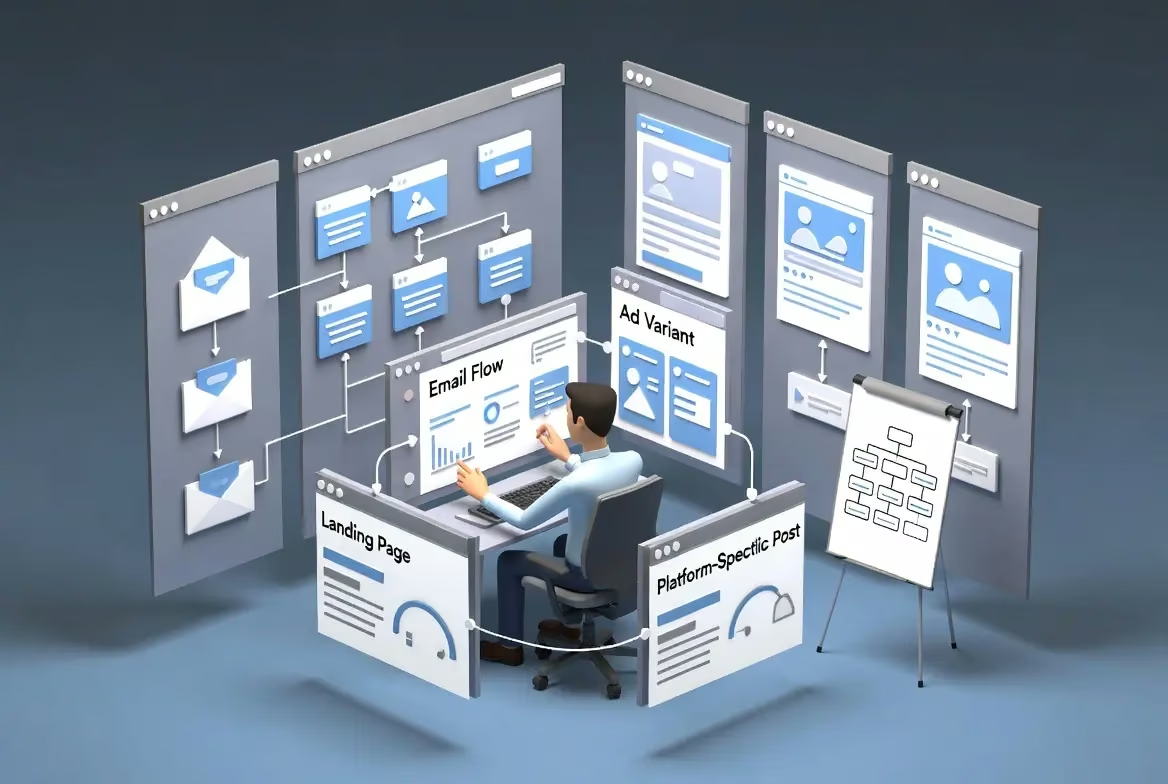
Deploy adaptive copy across multiple platforms—all from a single dashboard
The result? Campaigns that look like they came from a 10-person marketing department—executed by one scrappy founder.
How to Use Pre-Built AI personalization logic without coding
AI doesn’t just give you tools—it comes with logic baked in. You no longer need to map out every “if/then” in your funnel. AI can analyze behavioral data, segment your audience, and adjust messaging without requiring any coding or setup.
How to Generate On-Brand Visuals and Copy Variations with AI
Not a designer? Not a copywriter? Doesn’t matter. AI now helps generate everything from campaign visuals to dynamic ad copy and social captions tailored to your tone and audience. What once took hours of coordination can now be done in minutes—with personalized results that convert.
This isn’t about cutting quality to save money. It’s about using automation to amplify creativity without bloating your overhead.
Case Study: Ship a full-funnel campaign as a team of one using AI
We’re seeing it happen every day:
Solo founders launching full-funnel campaigns
Freelancers managing five clients without burning out
Micro-agencies delivering enterprise-level output with a skeleton crew
AI is removing the friction between ambition and execution—and price is no longer the barrier.
With today’s tools, even the leanest startup can launch smart, personalized campaigns at scale. The only thing standing in the way is the assumption that affordability equals limitation.
Low-Cost, High-Impact AI powered marketing strategies for Lean Teams
Before AI, you were stuck choosing between a few “cheap advertising techniques” that rarely moved the needle—or stretching your limited budget across too many disconnected tools.
Now? With AI in your corner, lean doesn’t mean limited—it means lethal.
Here’s how small teams and solo marketers are running high-impact campaigns using inexpensive, AI-driven tactics that are anything but basic.
How to Turn One Input into a Full Campaign with AI
You don’t need a team of copywriters to scale your messaging. AI can take one strategic input—like a product description, customer pain point, or blog idea—and instantly repurpose it into dozens of formats:
A social ad headline that converts
A blog post optimized for search
An email tailored to a specific segment
A product explainer formatted for Instagram Reels
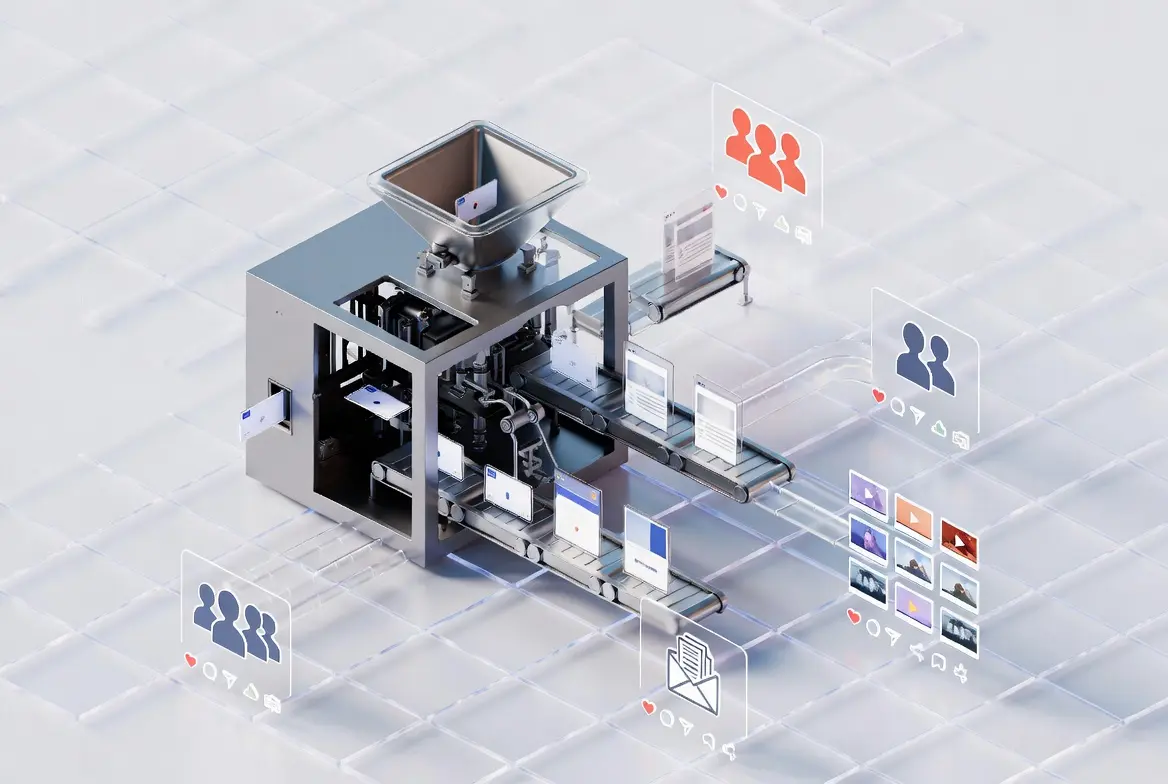
This isn't repurposing—it’s regenerating content dynamically, in tone, voice, and intent. One idea becomes a full campaign. That’s how smart teams are building low-cost advertisements with maximum reach.
How to Automate Customer Segmentation with AI (No Consultants)
Traditionally, segmenting your audience required CRMs, consultants, and time you didn’t have. AI flips that equation.
Modern tools now auto-analyze user behavior—page visits, click patterns, engagement history—and build segments for you:
First-time visitors vs. return customers
High-intent prospects vs. passive browsers
Email engagers vs. ad clickers
With one click, you can send the right message to the right audience—without paying a specialist to configure it.
That’s personalization and precision, delivered through cost-effective marketing strategies made for startups.
How to Produce Multi-Channel Creative with AI (No Design Tools Needed)
Need video scripts for YouTube? Captions for TikTok? Scroll-stopping graphics for paid social? AI has it covered.
Creative assets used to be the most expensive part of launching a campaign. Today, they’re one of the most inexpensive ways to market your business—if you let AI handle the heavy lifting.
Using AI-powered tools, you can:
Generate branded visuals from text
Write high-converting ad copy in your brand voice
Repurpose long-form content into bite-sized posts for every platform
No freelancers, no design software, no delays.
How to Execute Fast and Look Enterprise-Grade with AI powered marketing strategies
This isn’t about doing less with less—it’s about doing more with precision and speed, without overspending. AI enables small teams to test, learn, and launch fast. And every output—every message, every ad, every page—is tied directly to real user behavior.
In other words: your campaign is working smarter and harder.
Forget “cheap advertising techniques” that waste time. These are intelligent, data-informed tactics that deliver enterprise-level performance on a budget built for bootstrapped teams.
How to Create Human-Sounding AI powered marketing strategies
Let’s get one thing straight: personalization without authenticity fails. Fast. Your audience can smell robotic content from a mile away. The moment your copy starts sounding like it was written by a machine that’s never spoken to a customer, you lose the trust—and the conversion.
But here’s the twist: AI no longer sounds robotic. It can now write, speak, and design in your voice. It can reflect your brand’s values, adapt to your customer’s tone, and even shift its style depending on the platform.
This is where AI shifts from automation to augmentation. You’re not replacing your creativity—you’re scaling it.
How to Train AI to Match Your Brand Voice
Modern AI models don’t just “fill in blanks.” They learn your brand’s tone, vocabulary, and rhythm. That means your startup’s edgy, witty, or mission-driven voice? AI can carry that tone across every touchpoint—emails, ads, blog posts, even chatbot scripts.
You no longer need to rewrite content to make it sound on-brand. AI learns your voice—and replicates it with precision.
How to Keep Brand Voice Consistent with AI across Email, Ads, and Social
Inconsistent messaging kills campaigns. With AI, you can train your tools to match your voice across every platform, ensuring that whether someone’s reading your email or seeing your ad on Instagram, the tone feels like you.
The same values.
The same messaging.
The same emotional pull.
That kind of consistency used to require a team of brand strategists and copy editors. Now it takes minutes—and a few well-crafted prompts.
How to Launch Multilingual Campaigns with AI (No Translators Required)
Want to reach new markets without hiring translators or native writers? AI can generate your content in multiple languages—while still matching tone, intent, and cultural nuance.
You can:
Run hyper-localized ad campaigns across countries
Deliver landing pages in a user’s native language
Personalize emails to match regional context and idioms
That’s global marketing made possible on a startup budget.
How to Run Multivariate Tests with AI and Iterate in Real Time
You’re not guessing anymore. AI doesn’t just generate content—it measures its performance, adjusts in real-time, and runs multivariate tests at a level manual teams can’t touch.
Think:
Subject line testing on 10+ variations
Button color, placement, and CTA copy
Ad headline variations are delivered dynamically based on user data
All optimized by machine learning—not your marketing intern.
Instead of spending weeks testing and analyzing manually, you get insights in real time and adapt immediately—maximizing ROI with minimal lift.
How to Keep AI Content Authentic and Trustworthy
The most successful campaigns don’t feel like marketing—they feel like connection. AI now enables that level of personalized authenticity at scale, delivering:
Messages that sound human
Campaigns that feel intentional
Experiences that reflect your brand identity
And all of it delivered without the bloated budget, the bloated timeline, or the bloated team.
Affordable marketing in 2025 isn’t just efficient—it’s emotionally intelligent. You’re not just reaching people. You’re resonating with them. And AI makes that possible, even if you’re building the campaign from your kitchen table.
How to Measure ROI from AI powered marketing strategies (Spend Less, Get More)
Let’s kill the myth once and for all: cutting costs doesn’t mean cutting corners.
In fact, in 2025, the most efficient marketing teams aren’t spending the most money—they’re spending the least to get the most measurable results. That’s the new ROI reality. It’s no longer about how much you put into your marketing—it’s about how intelligently your efforts perform.
How to Calculate Output per Dollar and Hour with AI
Modern marketers have redefined return on investment. It’s not just about clicks or conversions anymore—it’s about:
How many qualified leads do you generate per dollar
How much output does your team create per hour
How fast can you pivot without wasting budget
That’s the new equation. Results per dollar. Per minute. Per team member.
If your content takes weeks to produce or your campaigns rely on brute-force media spend, you’re not maximizing ROI—you’re leaking it.
How to Find and Reduce Hidden Marketing Costs with AI
Let’s talk about the real cost drains:
Guesswork on what content will perform
Time wasted building from scratch
Budget bloat from outsourcing what should be automated
AI doesn’t just streamline execution—it reduces friction. It takes the most time-consuming, repetitive, and error-prone parts of marketing and makes them disappear:
Smart recommendations replace trial and error
Automated workflows replace project backlogs
Performance insights replace “gut-feel” decisions
It’s not just faster. It’s smarter. And in a market where speed and accuracy win, that’s where the real savings live.
How to Outperform Larger Teams with automation and rapid testing
Here’s what the old model looked like: Big team. Big budget. Big overhead.
Here’s what it looks like now: Small team. Smart tech. Better outcomes.
Marketers embracing cost effective marketing strategies—powered by automation and AI—are running circles around teams still stuck in traditional playbooks. They’re launching campaigns faster, testing more variables, personalizing more touchpoints, and spending less to do it all.
It’s not about how much you can afford to spend. It’s about how little you need to spend to stay ahead.
How to Turn Efficiency into an Edge with AI workflows
When you think efficiently, you act strategically. You:
Say no to vanity metrics
Automate what doesn’t require a human
Focus your team’s energy on what drives real growth
And that shift—toward lean, intelligent marketing—is exactly what gives small businesses and startups their edge. You’re not weighed down by legacy systems or inflated expectations. You’re free to move fast, adapt quickly, and outpace bigger players who are too slow to change.
Get Started: Launch and scale personalization with one AI platform
You don’t need a huge budget or a dozen tools to market like a pro.
Whether you’re just starting out or growing fast, Gryffin helps you do more with less.
FAQs AI Powered Marketing
Q: How can a startup with a small marketing budget run truly personalized campaigns using AI in 2025? A: Connect your core channels (web, email, ads, social) so AI can learn from real user behavior and trigger responses in real time. Use micro-segmentation to target by actions and preferences, not just demographics, and let AI generate tailored content for each segment. Enable channel-specific variations so the same message adapts to email, LinkedIn, or Instagram automatically. Add dynamic web and ad personalization so headlines, CTAs, and modules adjust to who’s visiting.
Q: What are practical AI tactics a one-person marketing team can use to deliver multi-channel campaigns that feel human? A: Start with one strong input (a product benefit or customer pain) and let AI regenerate it into ads, emails, posts, and short video scripts. Turn on automated segmentation so messages reflect each user’s behavior and intent. Use tone-matching and brand voice cloning to keep everything sounding consistent and human across channels. Let machine-led testing refine copy and layouts in the background while you focus on strategy.
Q: What are the steps to set up AI-driven micro-segmentation and intent-based messaging without a data team? A: Connect your analytics and CRM so AI can read visits, clicks, and engagement history. Define high-value behaviors (e.g., watched a demo, returned to pricing) and let the system auto-create segments around them. Map each segment to intent-specific messages and triggers, then enable automatic delivery across email, ads, and on-site. Monitor performance insights and let AI iterate variations while you review winners weekly.
Q: What are examples of dynamic ad copy and website personalization that don’t require enterprise tools? A: Run ads that switch headlines by industry or funnel stage, such as serving a case study to users who viewed a product video but didn’t convert. Personalize landing pages so first-time visitors see value props, while returning users see social proof or a shorter CTA path. Adjust CTAs (book a demo vs. start a trial) based on detected intent signals. Swap hero images and feature modules to match a visitor’s segment in real time.
Q: Which marketing tasks should small teams automate first to improve ROI and cut hidden costs? A: Automate audience segmentation and lifecycle email sequences so messages track behavior without manual setup. Let AI handle content regeneration (ads, captions, posts) from a single brief to reduce time spent starting from scratch. Turn on machine-led multivariate testing for subject lines, CTAs, and layouts, and rely on automated performance insights instead of guesswork. Use dynamic web and ad personalization to concentrate spend on the highest-intent users.
Q: How do AI tools learn and apply my brand voice consistently across email, ads, and social? A: Provide samples of on-brand content and a short style guide so the model learns your tone, vocabulary, and rhythm. Use brand voice cloning to encode that style and apply it automatically across formats and channels. Enable channel-aware prompts so the same message adapts to platform norms without losing your voice. Keep a light human review loop for sensitive assets while AI maintains day-to-day consistency.
Q: What does ROI mean for lean marketing teams in 2025, and how does AI change the equation? A: ROI is output per resource: qualified leads per dollar, content produced per hour, and speed of iteration without waste. AI reduces hidden costs by cutting guesswork, automating repetitive work, and guiding decisions with real performance data. Lean teams using automation personalize more touchpoints and test more ideas faster than larger, manual teams. The result is higher returns with fewer people and lower spend.
Q: What tools and workflows can help create multi-language campaigns on a startup budget? A: Build a single source brief with your brand voice, key messages, and regional notes, then use AI to generate language-specific versions. Apply tone-matching and cultural context prompts so each variant keeps intent and style while fitting local norms. Produce channel-ready assets (ads, emails, landing copy) per language in one pass, then review critical pieces for accuracy. Launch by region and let AI optimize based on local engagement and conversion data.
Q: How can I run machine-led A/B tests for subject lines, CTAs, and ad copy without heavy manual setup? A: Connect your email, web, and ad platforms so AI can create and rotate multiple variants automatically. Set clear success metrics (opens, CTR, conversions) and let the system allocate traffic and learn in real time. Allow the model to generate additional variants from early winners to expand testing without extra work. Review insights regularly and promote top performers globally with one click.
Q: What are affordable alternatives to “cheap advertising” for startups that actually convert? A: Use AI to regenerate one strategic idea into tailored assets for every channel, then deliver them to micro-segments built from real behavior. Trigger intent-based messages (e.g., case studies after product video views) instead of running broad, generic campaigns. Personalize landing pages and ads dynamically so each user sees the most relevant proof and CTA. Layer in machine-led testing to continuously refine copy and design while keeping spend focused on what works.
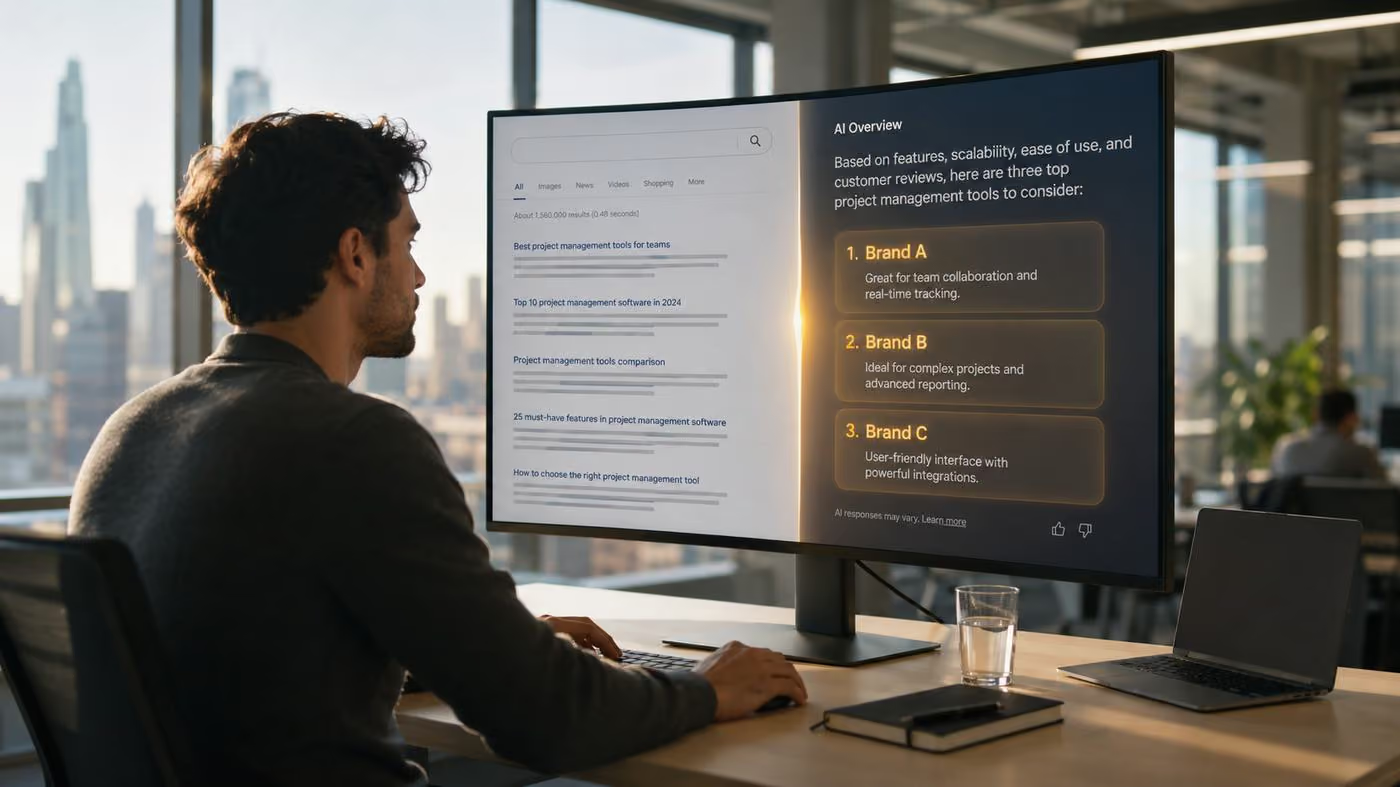
At first, we weren’t even thinking about AI visibility. We were focused on rankings and traffic like everyone else. But once we started testing our brand in ChatGPT and other AI tools, we realized we were barely showing up — even for topics we ‘ranked’ for. Gryffin gave us a clear picture of where we stood, how competitors were being cited instead, and what that actually meant for our pipeline. It shifted how we think about search entirely.








.webp)