SEO Tools Website Analysis For Real-Time Audits And AI Insights
Marcela De Vivo
Marcela De Vivo
March 11, 2026
A website is often the cornerstone of a brand’s visibility, credibility, and conversion strategy. But simply launching a well-designed site is no longer enough. With search engines evolving rapidly and user behaviors shifting just as quickly, success depends on your ability to continually analyze, adapt, and optimize your digital presence.
This is where website analysis—powered by advanced SEO tools—becomes essential. More than just a health check, website analysis offers a deep dive into how your site performs from both a technical and content standpoint. It uncovers insights that drive smarter decisions, such as which pages need improvement, what content resonates with users, and how well you’re ranking for critical keywords.
For data-driven marketers, this analysis forms the foundation of every effective SEO strategy. Instead of guessing what works, you’re equipped with actionable intelligence that guides where to focus your time and resources. And thanks to advances in AI and automation, platforms like Gryffin can now deliver these insights in real-time, making it easier than ever to iterate and improve.
In this guide, we’ll explore how to master the art and science of SEO tools website analysis—breaking down the essential tools, metrics, and workflows you need to drive measurable outcomes. Whether you're leading an in-house team, managing client campaigns, or scaling content efforts across a portfolio of brands, this article is your roadmap to smarter, more strategic SEO.
What Is SEO Tools Website Analysis? Definition and Use Cases
Website analysis is the structured process of examining a website’s overall health, visibility, and performance across search engines. It goes beyond surface-level metrics, offering a comprehensive view of how well your site is optimized to attract, engage, and convert users. For marketers, it’s not just about identifying problems—it’s about uncovering opportunities to enhance content, improve user experience, and align with evolving search algorithms.
At its core, website analysis leverages SEO tools to break down key performance areas. These insights allow marketers to make informed, data-backed decisions rather than relying on instinct or outdated tactics. In a competitive digital landscape, analyzing your site regularly ensures that your SEO strategy remains agile, relevant, and impactful.
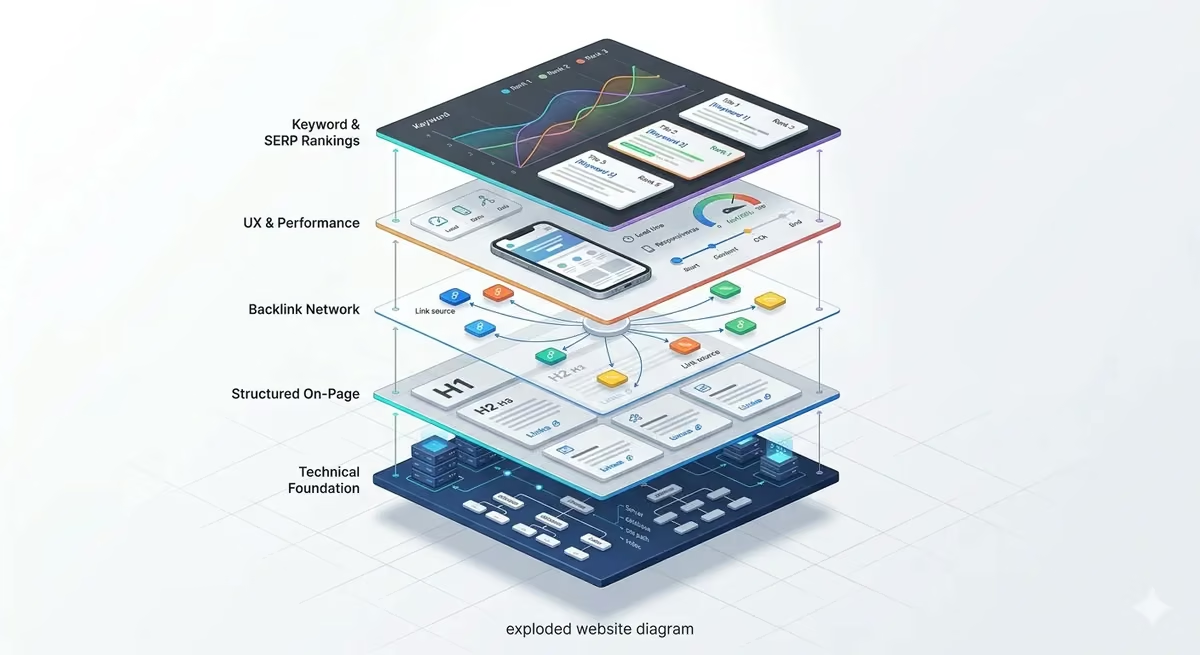
Whether you're auditing a newly launched site or refining a mature content ecosystem, these core components form the backbone of an effective SEO website analysis:
Checklist: Core Components of an SEO Tools Website Analysis
1. How to Run a Technical SEO Audit in an SEO Tools Website Analysis
This is the foundation of all SEO work. A technical audit checks for issues that prevent search engines from properly crawling and indexing your site. Common areas include:
Broken links and redirect loops
XML sitemap and robots.txt configuration
HTTPS security implementation
Canonical tags and duplicate content
Mobile responsiveness and crawlability
With Gryffin’s AI-powered audit tools, these issues are flagged in real-time, with actionable suggestions prioritized by impact—helping teams fix high-priority problems without sifting through spreadsheets.
2. How to Optimize On-Page SEO in an SEO Tools Website Analysis
Strong on-page SEO ensures that your content is optimized for both users and search engines. This involves:
Meta titles and descriptions
Header structure (H1, H2, etc.)
Keyword usage and density
Internal linking strategy
Content freshness and depth
Gryffin streamlines this process with smart templates and automated content scoring, so every piece you publish is structured for maximum discoverability and engagement.
3. How to Analyze Backlinks in an SEO Tools Website Analysis
Backlinks continue to be one of the most powerful ranking signals. An analysis of your link profile includes:
Number and quality of inbound links
Anchor text diversity
Link velocity (growth rate of backlinks)
Toxic or spammy link detection
Using Gryffin, marketers can integrate backlink data with content workflows, making it easier to target link-building efforts and clean up harmful links before they affect rankings.
4. How to Connect UX Metrics to SEO Outcomes
Search engines now factor user behavior into rankings, making UX data critical to SEO success. Key performance indicators include:
Mobile usability and responsive design
Page speed and Core Web Vitals
Bounce rates and time on site
Navigation clarity and conversion paths
Gryffin connects UX metrics with your SEO analysis, offering insights on how user behavior impacts organic performance—and where to make design or content adjustments.
5. How to Track Keyword Performance in an SEO Tools Website Analysis
Understanding how your content performs in search is essential for tracking progress and uncovering new opportunities. Analysis should cover:
Keyword rankings (current and historical trends)
SERP features visibility (e.g., snippets, knowledge panels)
Traffic potential by keyword
Gaps and opportunities in your keyword strategy
Gryffin’s platform ties keyword tracking directly to content generation, helping you create and refine pages based on real-time ranking data and search intent analysis.
By bringing all these elements together into a unified analysis, SEO professionals can build strategies that are not only comprehensive but continuously adaptive. Website analysis isn’t a one-time activity—it’s a strategic discipline. And when paired with automation and AI, it becomes a force multiplier for smarter marketing at scale.
How to Choose Tools for an SEO Tools Website Analysis Stack
Conducting a thorough website analysis requires a suite of specialized tools, each designed to focus on specific aspects of your SEO performance. From identifying technical errors to monitoring keyword rankings, these tools form the backbone of a data-driven SEO strategy. However, not all tools are created equal—the most effective solutions today are those that integrate AI to turn raw data into actionable insights.
Here’s a breakdown of the essential categories of SEO tools and how they contribute to smarter, more strategic analysis.
Categories of SEO Tools for Website Analysis and When to Use Each
1. Best Technical Audit Tools for SEO Tools Website Analysis
These tools diagnose the foundational health of your website. They mimic how search engine bots crawl your site and flag issues that can impede visibility.
Use Cases: Detect crawl errors, broken links, server issues, duplicate content, and Core Web Vitals problems.
What to Look For: Real-time alerts, prioritization of issues by SEO impact, and integration with Google Search Console.
Gryffin Advantage: With automated diagnostics baked into the platform, Gryffin flags technical SEO issues the moment they arise—turning audits from a monthly project into a continuous process.
2. How to Use On-Page SEO Checkers in Website Analysis
These tools evaluate the content and structure of individual web pages to ensure they’re optimized for target keywords and aligned with search engine best practices.
Use Cases: Optimize meta titles, descriptions, headers, internal linking, and keyword usage.
What to Look For: Content scoring systems, automated recommendations, and templates for consistent structure.
Gryffin Advantage: Gryffin uses intelligent templates and built-in validators to instantly assess on-page SEO quality as you create content—removing guesswork and improving efficiency.
3. How to Set Up Keyword Tracking for Website Analysis
Keyword trackers monitor how your site ranks across target terms and help identify new keyword opportunities to pursue.
Use Cases: Track keyword performance over time, discover ranking opportunities, and monitor competitors.
What to Look For: Real-time data, mobile/desktop differentiation, historical trend analysis, and SERP feature tracking.
Gryffin Advantage: By embedding keyword tracking directly into your content creation workflow, Gryffin ensures that every page is built to rank—and easily adapts as rankings shift.
4. How to Audit Backlinks for SEO Performance
These tools assess your website’s backlink profile and identify which links are helping (or hurting) your domain authority.
Use Cases: Monitor backlink quality, detect toxic links, analyze anchor text, and develop outreach strategies.
What to Look For: Link toxicity scoring, competitor comparisons, and integration with disavow tools.
Gryffin Advantage: Integrated backlink reporting allows teams to coordinate outreach and disavow strategies within the same project workflow, keeping link-building efficient and secure.
5. Build SEO Performance Dashboards for Website Analysis
These solutions consolidate key SEO metrics into visual dashboards that track progress over time and guide strategic adjustments.
Use Cases: Generate reports for stakeholders, monitor campaign effectiveness, and visualize ranking trends.
What to Look For: Customizable reports, data filtering, and team-specific performance metrics.
Gryffin Advantage: Gryffin combines performance analytics with real-time content workflows—so your team isn’t just reporting on outcomes, but adapting live campaigns based on the data.
Why AI-Driven SEO Tools Improve Website Analysis Results
Traditional SEO tools provide raw data. But in a fast-moving digital landscape, data alone is not enough. That’s where AI-enhanced tools transform the game.
Automated Detection: AI continuously scans your site for new issues and updates, eliminating the need for manual checks or scheduled crawls.
Predictive Insights: Based on patterns in your content and performance history, AI anticipates where problems may occur—or where opportunities lie.
Real-Time Recommendations: Instead of waiting for monthly reports, AI tools like Gryffin provide instant suggestions for improving SEO across technical, on-page, and strategic layers.
Scalability: AI handles large volumes of data and tasks without loss of quality, making it perfect for teams managing multiple clients or campaigns.
Contextual Relevance: AI doesn’t just surface data—it interprets it in the context of your goals, audience behavior, and content performance.
Gryffin’s AI layer enhances every aspect of the SEO toolset—turning data into insights, and insights into action. This leads to smarter strategies, faster execution, and better results without increasing workload.
How Gryffin Streamlines SEO Tools Website Analysis for Teams
Effective SEO demands more than just access to data—it requires tools that transform that data into intelligent, actionable strategies. Gryffin is purpose-built to bridge that gap, offering a seamless solution for marketing teams who want to work smarter, move faster, and stay ahead of the curve.
By integrating real-time audits, content optimization, and AI-powered insights into a collaborative platform, Gryffin simplifies website analysis from the ground up. Here’s how:
How to Use Gryffin for Real-Time Audits and Fixes
Traditional SEO audits often rely on scheduled reports—weekly, monthly, or even quarterly. But in today’s dynamic digital environment, those delays can cost rankings and relevance.
Gryffin’s real-time auditing engine eliminates the lag. As new pages are published, existing ones are updated, or Google rolls out an algorithm change, Gryffin instantly scans your site and flags issues as they emerge. Whether it’s a missing meta tag, a broken internal link, or a drop in Core Web Vitals, your team is alerted immediately—allowing for instant response, not delayed reaction.
These continuous audits are seamlessly integrated into your team’s daily workflows, reducing the time spent chasing down problems and enabling proactive SEO management.
Link Keyword Tracking to Content Optimization in Gryffin
Great content starts with great data. Gryffin brings keyword research, SERP tracking, and content scoring together into a single, unified dashboard—giving teams complete visibility into how their content is performing and where it needs improvement.
Track keyword performance in real time across devices and regions.
See how each piece of content ranks—and how it’s influenced by metadata, structure, and internal links.
Use AI-driven content scoring to assess optimization levels and receive real-time improvement suggestions.
Rather than bouncing between multiple tools, SEO teams can plan, write, optimize, and measure—all within Gryffin’s streamlined interface. The result: less friction, better alignment, and a more strategic use of your team’s time.
Set Up Collaborative SEO Workflows and Templates
Website analysis isn’t a one-person job. It takes input from SEOs, content strategists, developers, and writers. Gryffin makes this collaboration easy with role-based workflows and customizable templates built for team execution at scale.
Assign tasks automatically when an issue is detected (e.g., “Fix duplicate title tags” or “Update outdated meta descriptions”).
Use prebuilt templates for common SEO fixes, ensuring consistency and quality.
Track progress and team performance across campaigns in real time.
Whether you’re part of a three-person content team or managing SEO for a global brand, Gryffin enables your entire team to act on insights quickly and cohesively—no bottlenecks, no silos.
How Gryffin’s AI Turns SEO Data into Strategy
Raw data can only take you so far. Gryffin’s AI layer goes further by interpreting data, prioritizing tasks, and surfacing strategic recommendations.
For example:
If organic traffic to a high-converting page starts to drop, Gryffin can flag the issue, identify likely causes (such as keyword cannibalization or a ranking loss), and suggest optimization steps.
If your competitor gains featured snippet visibility for a key term, Gryffin can recommend how to re-optimize your page structure to compete.
This level of intelligence means your team isn’t just reacting to trends—they’re anticipating them. And with every insight grounded in data-backed reasoning, your strategy remains focused, impactful, and aligned with your goals.
In short, Gryffin transforms website analysis from a scattered, manual process into a unified, intelligent workflow. It helps SEO teams focus not just on reporting performance—but on improving it continuously.
Try Gryffin AI for Real-Time Website Analysis and Next Steps
Gryffin AI empowers you to analyze and optimize your website effortlessly with intelligent automation, comprehensive SEO tool integration, and actionable AI-driven recommendations. Stop navigating your digital marketing blindly—start making smarter, strategic decisions that consistently drive higher rankings, increased visibility, and greater productivity.
Experience Gryffin AI today and discover how seamless, affordable, and effective AI-powered website analysis can be.
SEO Tools Website Analysis FAQs
Q: What is an SEO website analysis and what should it include? A: An SEO website analysis is a structured review of your site’s health, visibility, and performance to guide data-driven optimization. It should cover technical site health (crawlability, indexing, Core Web Vitals), on-page SEO and content relevance, backlink profile and authority, user experience metrics, and keyword performance and ranking distribution. The analysis is ongoing, not one-time, and is most effective when supported by AI and automation.
Q: Step-by-step: how do I run a technical SEO audit to find crawl errors, duplicate content, and Core Web Vitals issues? A: Start by running a comprehensive crawl to spot broken links, redirect loops, and crawl errors, then verify robots.txt and XML sitemaps. Audit canonical tags and identify duplicate content across titles, meta descriptions, and body copy. Confirm HTTPS, mobile responsiveness, and overall crawlability. Measure Core Web Vitals and page speed, then prioritize fixes by SEO impact and set real-time alerts so new issues are flagged immediately.
Q: Which SEO tools do I need for website analysis (technical, on-page, keywords, backlinks, reporting), and what features matter most? A: Use technical audit tools, on-page SEO checkers, keyword tracking platforms, backlink analysis software, and performance dashboards. Look for features like real-time alerts, issue prioritization, content scoring with recommendations, device and SERP feature tracking, toxicity scoring with disavow integration, and customizable reporting. AI-enabled tools add value by turning raw data into actionable guidance.
Q: How do AI-powered SEO tools differ from traditional ones, and when are they most useful? A: Traditional tools surface data; AI-powered tools automate detection, deliver predictive insights, and provide real-time recommendations in context. They’re especially useful for dynamic environments, multi-site portfolios, and teams that need continuous monitoring and fast iteration. AI also scales analysis without adding manual workload.
Q: How can I connect keyword tracking with content creation so new pages are built to rank? A: Embed keyword tracking directly into your content workflow so briefs, structure, and metadata are informed by real-time ranking and intent data. Use content scoring to validate optimization of headers, copy, and internal links before publishing, then refine pages as rankings shift. This closes the loop between research, creation, and performance.
Q: Which user experience metrics should I track to improve organic performance? A: Track mobile usability, responsive design, page speed and Core Web Vitals, bounce rates, time on site, navigation clarity, and conversion paths. These signals reflect how users engage with your content and increasingly influence search visibility. Linking UX metrics to organic outcomes helps you prioritize design and content changes that matter.
Q: How do I analyze my backlink profile and clean up toxic links without hurting rankings? A: Review the quantity and quality of inbound links, anchor text diversity, and link velocity, then use toxicity scoring to flag risky domains. Prioritize removal or disavow of harmful links while preserving high-quality, relevant links that support authority. Compare against competitors to guide outreach and avoid over-disavowing.
Q: What workflows and templates help SEO teams collaborate on audits, on-page fixes, and reporting? A: Use role-based workflows that auto-assign tasks when issues are detected, supported by templates for common fixes like duplicate titles or thin content. Centralize on-page checks, keyword data, and reporting so SEOs, writers, and developers work from the same source of truth. Track progress and performance in real time to prevent bottlenecks.
Q: How does Gryffin handle real-time audits, keyword tracking, content scoring, and backlink management for SEO teams? A: Gryffin runs continuous audits that flag technical issues as they appear and integrate directly into team workflows. It unifies keyword tracking with content scoring and real-time recommendations, so pages are created and refined based on live data. Integrated backlink reporting supports outreach and disavow actions within the same projects, keeping strategy and execution aligned.
Q: What does a continuous, real-time SEO monitoring setup look like compared to doing monthly audits? A: Continuous monitoring scans your site in real time, triggers instant alerts, and routes prioritized tasks to the right owners, enabling proactive fixes. Monthly audits create lag between issues and action, which can lead to missed opportunities and slower recovery. A real-time setup ties insights to templates and workflows, helping teams adapt quickly as rankings and algorithms change.
At first, we weren’t even thinking about AI visibility. We were focused on rankings and traffic like everyone else. But once we started testing our brand in ChatGPT and other AI tools, we realized we were barely showing up — even for topics we ‘ranked’ for. Gryffin gave us a clear picture of where we stood, how competitors were being cited instead, and what that actually meant for our pipeline. It shifted how we think about search entirely.










.webp)