AI Competitor Analysis: How to Reverse-Engineer Content That Appears in AI Answers
Marcela De Vivo
Marcela De Vivo
May 27, 2026
12
The shift from traditional search engine optimization (SEO) to generative engine optimization (GEO) has fundamentally changed how content is discovered, evaluated, and retrieved. This article provides a comprehensive, vendor-neutral methodology for reverse-engineering the structures, assets, and data signals that artificial intelligence systems prioritize when generating answers. Written from the perspective of Gryffin.com, we outline how modern content teams can transition from legacy keyword-targeting strategies to high-impact, structured information design. By understanding retrieval-augmented generation (RAG) mechanics, redefining your competitive set for AI, and mapping structural gaps, your team can systematically build content that search engines and AI engines confidently cite.
What Is AI Competitor Analysis and How Does It Differ From Traditional SERP Analysis?
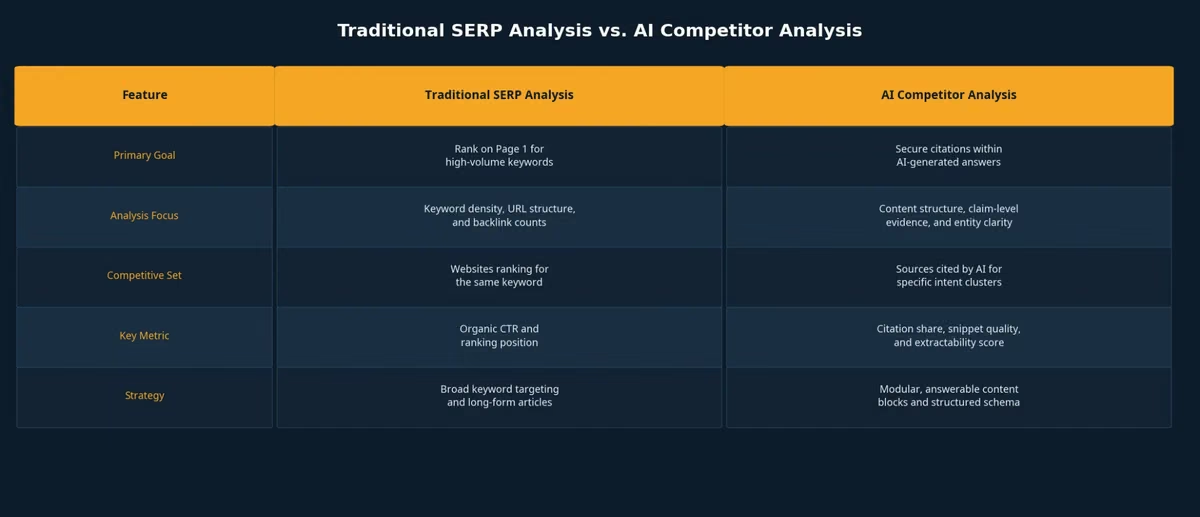
In traditional search engine optimization, the primary objective has always been to secure a position among the "ten blue links" on a search engine results page (SERP). Success in this legacy paradigm relies on keyword density, backlink profiles, and domain authority. However, the search landscape has shifted dramatically. With the rise of AI-driven search engines, search engines no longer simply point users to external links; they synthesize multi-source answers directly on the results page.
This evolution requires a new methodology: AI competitor analysis. Unlike traditional SERP analysis, which monitors ranking positions and competitor backlink velocity, AI competitor analysis focuses on understanding why and how AI engines select specific content modules to construct their synthesized answers. It is the process of reverse-engineering the exact semantic structures, structured data, and authoritative evidence stacks that AI systems extract and cite.
To understand this shift, consider how the search experience differs between these two environments:
By shifting your focus to AI competitor analysis, your content team can stop guessing what search engines want and start building pages optimized for how machines actually retrieve information. To scale this transition effectively, teams must integrate these insights into their broader AI marketing strategy to align content creation with automated systems.
How Do AI Systems Decide Which Sources to Cite in Their Answers?
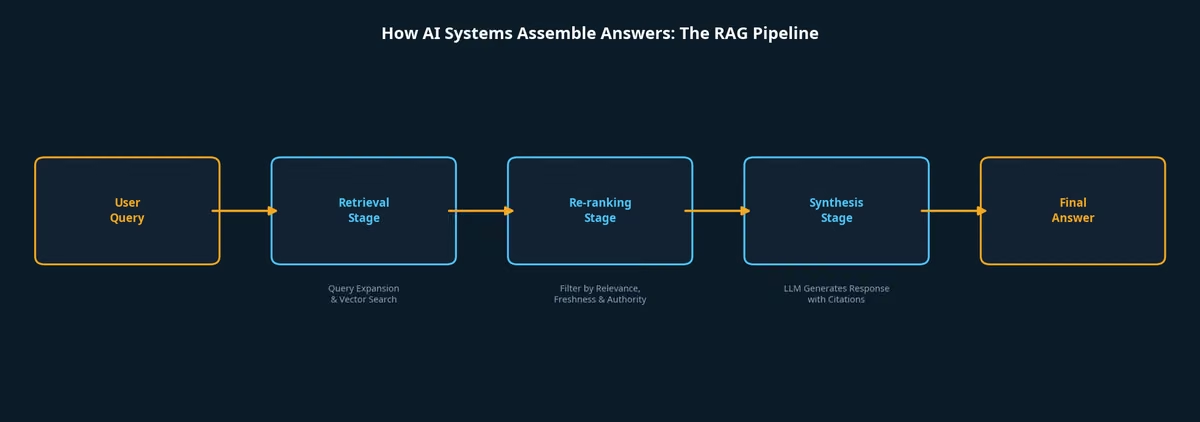
To optimize content for AI visibility, we must first demystify the pipeline that modern AI systems use to retrieve and synthesize information. Most search-focused AI models do not generate answers from their static pre-trained knowledge base alone. Instead, they utilize a framework known as Retrieval-Augmented Generation (RAG).
The RAG pipeline operates in three distinct stages:
Retrieval: When a user inputs a query, the system converts the query into a vector representation and searches a massive index of crawled web pages. It retrieves a set of candidate documents that are semantically similar to the user's intent.
Re-ranking: The system filters and ranks these candidate documents based on specific quality signals. These signals include information density, structural clarity, and source authority.
Synthesis: The large language model (LLM) reads the top-ranked document snippets, synthesizes a cohesive response, and appends citations to the specific sources it used to construct the answer.
What Makes Content "Answerable" to Machines?
AI engines prioritize content that is highly "answerable." This means the information is presented in a way that minimizes the cognitive load on the machine during the retrieval and synthesis stages. Several critical signals correlate with high citation rates:
Clarity of Claims: Unambiguous, direct statements that answer a specific query without unnecessary fluff.
Structural Hierarchy: Logical use of headings (H2, H3) and bulleted lists that outline the relationship between concepts.
Evidence Density: The inclusion of primary data, expert quotes, and external citations that allow the model to justify its output.
Entity Alignment: Explicitly naming real-world entities (people, places, concepts) and their relationships, which aligns perfectly with search engine knowledge graphs.
Understanding this pipeline is essential for modern search engine optimization. If you are trying to rank for highly competitive informational queries, you must ensure your pages are structured for both humans and machines. For a deeper look at how search engines handle these extractions, explore our guide on AI for featured snippets, which explains the overlap between legacy SERP features and modern AI citations.
How Do You Redefine Your Competitive Set for AI Answers?
One of the most common mistakes content teams make when transitioning to generative engine optimization is assuming their traditional SERP rivals are the same competitors they will face in AI answers. This is rarely the case. Traditional search results are heavily influenced by domain authority, meaning massive media sites often dominate the top ten links. In contrast, AI engines prioritize highly structured, direct, and authoritative information blocks, which frequently allows smaller, highly specialized niche sites to secure the primary citations.
To build an effective AI optimization strategy, you must first map your true AI competitive set. This requires systematically capturing AI answers for your priority queries and cataloging the cited sources.
Step 1: Query Selection and Clustering by Intent
Begin by identifying the high-value queries that drive business outcomes for your brand. Instead of analyzing these keywords individually, group them into clusters based on user intent. Focus heavily on informational and transactional-adjacent queries, as these are the surfaces where AI answers are most frequently triggered. You can use specialized AI keyword research techniques to uncover these clusters and predict which terms are most likely to trigger synthesized overviews.
Step 2: Capturing AI Answers and Citations Consistently
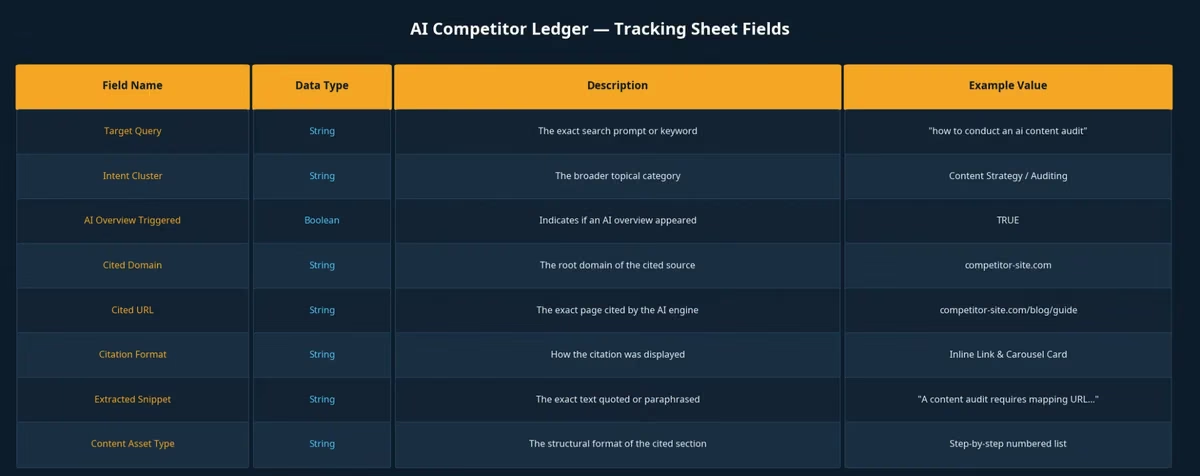
Once your query clusters are defined, you must record how AI engines respond to them. Because AI overviews can vary based on user location, search history, and device type, it is critical to collect this data consistently. For each target query, record:
Whether an AI overview is triggered.
The exact URLs cited in the primary text.
The specific text snippets used to support the answer.
The visual format of the citations (e.g., carousel, inline links, or drop-down sources).
Step 3: Building an AI Competitor Ledger
To organize this data, construct an AI Competitor Ledger. This tracking sheet allows you to identify which domains are winning the majority of citations in your space and analyze their content characteristics. Use the following structured fields to build your tracking sheet:
By analyzing this ledger over time, you will identify patterns in what your AI competitors are doing right. If you notice that a specific competitor is consistently cited for technical queries, it is highly likely they have optimized their site architecture. To see how this fits into a broader technical evaluation, review our comprehensive playbook on AI technical seo audits.
What Is the Content Teardown Playbook for Reverse-Engineering Competitor Structures?
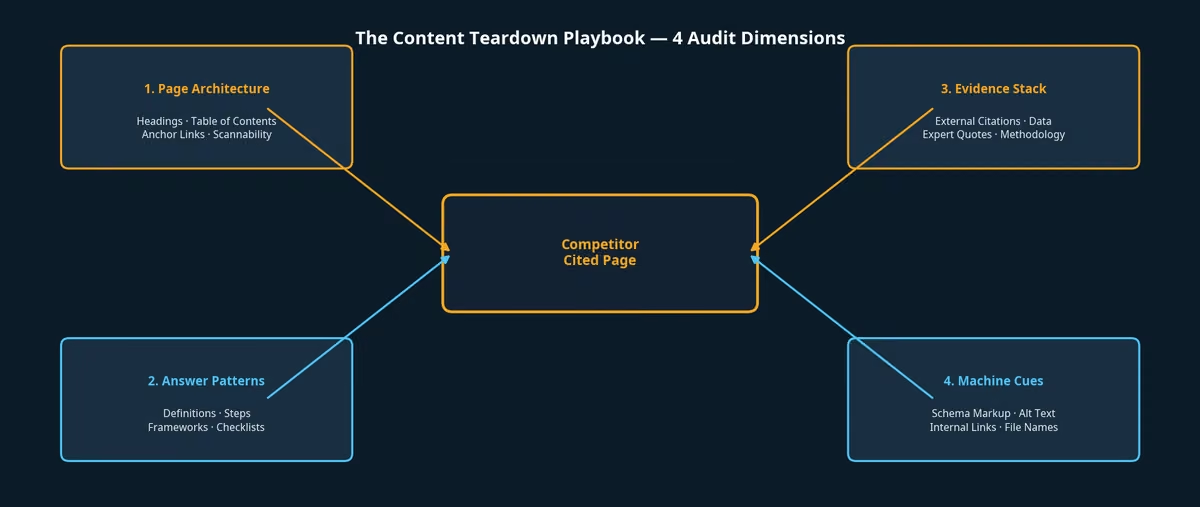
Once you have identified the competitors that dominate AI citations for your target queries, the next step is to conduct a systematic content teardown. This process goes far beyond simple keyword analysis. You must deconstruct the cited pages to decode the exact structural, semantic, and technical elements that made their content highly extractable for AI engines.
Use this systematic teardown framework to analyze high-performing competitor pages:
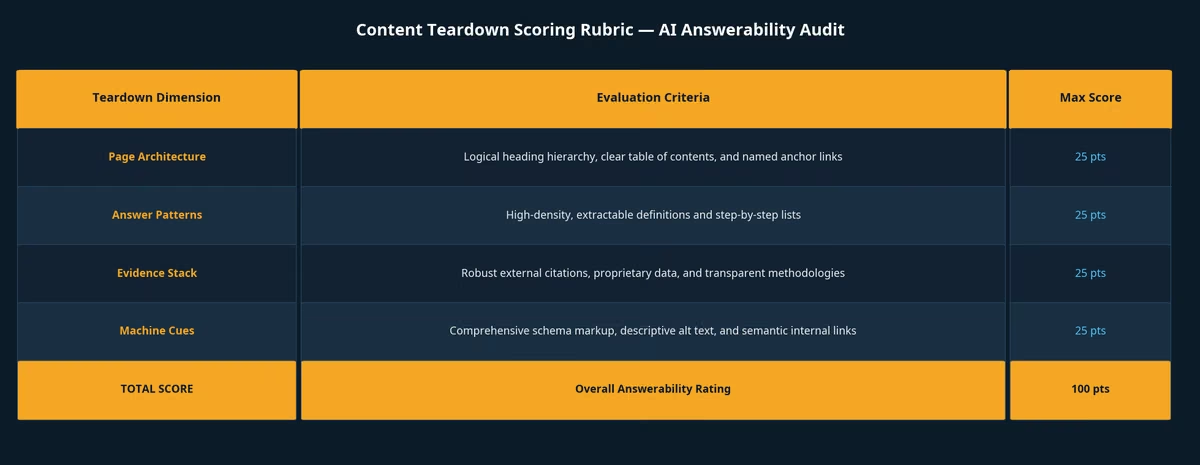
1. Page Architecture and Scannability
Analyze how the competitor structures their page layout. AI engines prefer clean, predictable hierarchies. Check for the following elements:
Heading Structure: Do they use logical, nested headings (H1 to H2 to H3) that map out the topic?
Table of Contents: Is there a clear, jump-linked table of contents at the top of the page?
Anchor Links: Do they use named anchor links for individual sections, allowing AI engines to link directly to a specific paragraph?
2. Answer Patterns and Extractability
Examine how the competitor presents answers to specific questions. Look for modular content blocks that are easy for an LLM to parse and extract:
Canonical Definitions: Do they provide direct, 40-to-60-word answers to "What is" questions near the top of the page?
Ordered Steps: Are processes outlined using clear, numbered lists with bolded action verbs?
Checklists and Frameworks: Do they use structured bullet points to summarize complex concepts?
3. The Evidence Stack
AI models are designed to avoid hallucinations by relying on verified facts. They are highly likely to cite sources that provide strong evidence. Evaluate the competitor's evidence stack:
Primary Citations: Do they cite reputable external sources (e.g., academic journals, industry reports, standards bodies) to back up their claims?
Proprietary Data: Do they include unique statistics, tables, or research findings?
Methodology Sections: Do they explain how they arrived at their conclusions or how their data was gathered?
4. Machine Cues and Technical Signals
Finally, look at the technical signals that help search crawlers understand the page's context:
Schema Markup: Do they use structured data (like FAQPage, HowTo, or Article schema) to define their content for search engines?
Descriptive Alt Text: Are their images and diagrams paired with descriptive alt text and file names that define the visual concept?
Internal Linking: How does the page fit into their overall site architecture?
To make this teardown process highly actionable for your content team, use a standardized scoring rubric. This allows you to evaluate competitor pages objectively and identify the exact areas where your content needs improvement.
By running this teardown on the top three cited pages for a query, you will quickly discover the structural blueprint required to compete. For instance, if competitor pages are winning citations because of their highly structured technical data, you may need to implement advanced schema. To learn how to automate this technical layer, read our guide on AI for schema to ensure your site's code is optimized for machine readability.
Which Content Asset Types Do AI Engines Repeatedly Cite?
Our research into AI citation patterns reveals that certain structural modules—or "asset types"—are cited far more frequently than standard paragraph text. To maximize your visibility in AI answers, you should design your content using a modular approach, integrating these high-performing asset types directly into your page layouts.
Let's explore the four most cited asset types and how to implement them:
1. Canonical Definition Blocks
AI engines are constantly looking for clear, concise definitions to answer informational queries. A canonical definition block should be placed high on the page, directly under the corresponding heading.
Structure: Keep the definition between 40 and 60 words. Bold the primary term in the first sentence. Use a direct, copula-based sentence structure (e.g., "AI competitor analysis is the process of...").
Before (Low Extractability): "When you are thinking about how to look at your competitors in the age of artificial intelligence, there are a lot of different things to consider. You have to look at their site, see what they are ranking for, and try to figure out what kind of AI systems are pulling their data. It's a complex process that involves a lot of moving parts."
After (High Extractability): "AI competitor analysis is a systematic methodology used to identify, evaluate, and reverse-engineer the content structures and data assets of competitors that are cited in AI-generated search answers."
2. Step-by-Step Procedures and Decision Frameworks
For "how-to" queries, AI engines almost always extract numbered lists. To make your procedures highly extractable, make them atomic and ordered.
Structure: Start each step with a bolded, action-oriented verb. Keep the step description concise, and follow it with a short, one-sentence explanation of why or how to perform that step.
Example:
Identify target queries: Select high-value keywords that trigger AI overviews.
Catalog cited domains: Record the websites that secure citations for those queries.
Analyze page structures: Teardown the cited pages to map their heading hierarchies.
3. Data-Backed Summaries and Comparison Tables
AI engines excel at processing structured data. When a user asks for a comparison or a summary of options, the AI will often extract data directly from a table.
4. Structured FAQs and Troubleshooting Blocks
FAQs are highly valuable because they map directly to the follow-up questions that users ask AI engines during a search session.
Structure: Phrase each FAQ question exactly as a user would type it into a search bar. Provide a direct, one-paragraph answer immediately below the question.
To implement this modular strategy across your entire content library, it is helpful to have a centralized system. You can utilize an AI calendar generator to schedule and manage the deployment of these optimized content blocks across your editorial calendar.
How Do You Structure Pages for Maximum Machine Readability?
Creating high-quality content is only half the battle; you must also ensure that AI crawlers can parse and understand your pages without errors. This requires optimizing your on-page elements for machine readability, a practice that sits at the intersection of traditional SEO and advanced semantic engineering.
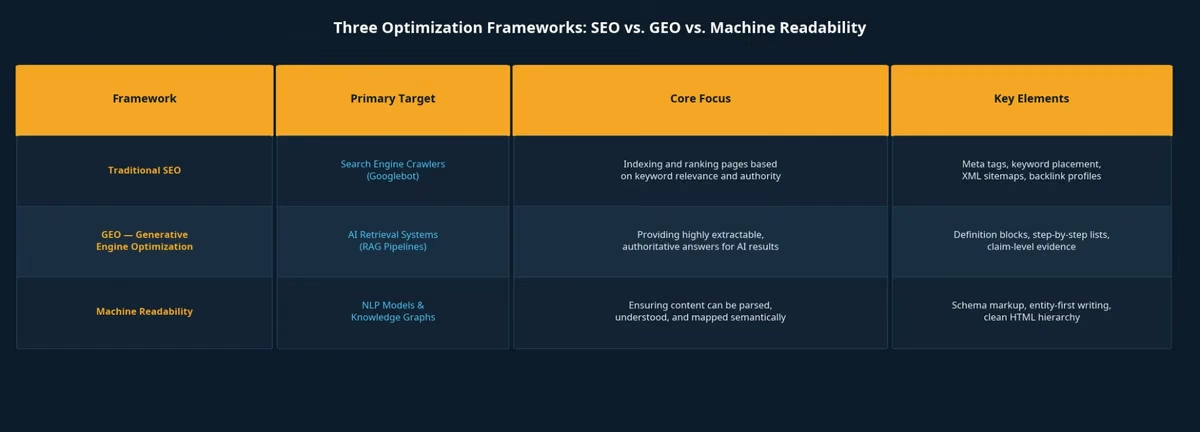
To understand where machine readability fits in the broader digital landscape, it is helpful to compare it to other common optimization frameworks:
To achieve excellent machine readability, focus on three core pillars:
Pillar 1: Entity-First Writing and Semantic Clarity
Modern search engines and AI models do not just look at keywords; they map relationships between real-world "entities" (people, places, concepts, and organizations) using a technology called a Knowledge Graph.
Use Canonical Names: Avoid vague pronouns. Instead of writing "Our tool can help you with this," write "The Gryffin SEO platform automates content auditing."
Define Relationships: Clearly state the connection between entities. For example, "Generative Engine Optimization (GEO) is an extension of search engine optimization (SEO) designed for AI search engines."
Avoid Ambiguity: Use consistent terminology throughout your article. If you refer to a process as "AI competitor analysis," do not switch to "machine rival evaluation" later in the text.
Pillar 2: Technical Schema Markup
Schema markup is a form of microdata that you add to your HTML. It acts as a direct translator for search engines, telling them exactly what your content represents. For AI visibility, implement these critical schema types:
Article Schema: Defines the core metadata of your page, including the author, publication date, and publisher.
FAQPage Schema: Tells search engines that your page contains a list of questions and answers, making them highly extractable for AI follow-up queries.
HowTo Schema: Explicitly maps out the steps of a process, ensuring AI engines can easily extract your step-by-step guides.
Pillar 3: Semantic Site Architecture and Internal Linking
AI engines crawl your site to understand your topical authority. A clean, logical site architecture helps them map your expertise.
Topic Clusters: Group related content together using a hub-and-spoke model. Link your highly detailed "spoke" articles back to a comprehensive "hub" page.
Descriptive Anchor Text: Never use generic anchor text like "click here" or "read more." Your anchor text should describe the exact topic of the target page. For example, if you are referencing how to evaluate your current search presence, link to a guide on SEO tools website analysis using descriptive phrasing.
By aligning your content with these three pillars, you make it incredibly easy for AI systems to crawl, index, and cite your pages. To see how these principles apply to a broader digital strategy, explore our analysis of AI-powered digital marketing to understand how automated workflows are reshaping modern marketing departments.
How Do You Build an AI Answerability Map From Gaps to Briefs?
With a clear understanding of your competitors' structures and the asset types that AI engines prefer, you can now translate these insights into an actionable content roadmap. This is done by building an AI Answerability Map.
An AI Answerability Map is a strategic framework that identifies the gaps between your current content and the information AI engines are actively citing, allowing you to prioritize and execute content optimizations systematically.
Step 1: Conducting a Gap Analysis
Compare your existing content library against your AI Competitor Ledger. For each target query cluster, ask:
Do we have a page targeting this intent? If not, you have a topical gap.
Does our page contain the asset types cited by the AI? If the AI cites a comparison table and your page only has paragraph text, you have a structural gap.
Is our evidence stack as strong as the competitor's? If they cite primary data and you only offer opinions, you have an evidence gap.
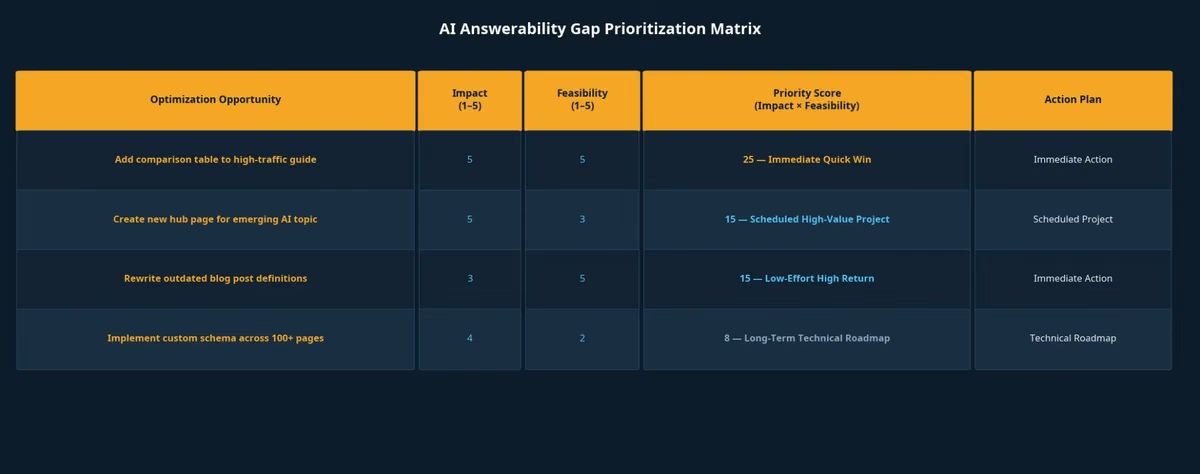
You cannot optimize every page at once. Use a prioritization matrix to evaluate your content opportunities based on two key dimensions: Business Impact (search volume, conversion potential, brand relevance) and Implementation Feasibility (content freshness, structural ease, resource requirements).
Step 3: Writing Content Briefs for AI Answerability
Once you have prioritized your opportunities, translate them into highly specific content briefs. A traditional content brief focuses on word count and keyword lists. An AI-optimized content brief must specify:
Target AI Intent: The exact question or concept the page must answer.
Required Asset Modules: Specific instructions to include a canonical definition block, a step-by-step list, or a structured comparison table.
Evidence Requirements: The exact data points, expert quotes, or primary sources that must be cited.
Schema Specifications: The technical structured data that must be implemented on the page.
By planning your content with this level of precision, you ensure that every page your team creates is engineered from the ground up for maximum machine readability. If you are looking to scale this content creation process across a larger team, consider studying the workflows of successful AI content writers to see how they balance automation with editorial quality.
How Do You Measure Your Presence in AI Answers and Iterate?
Generative engine optimization is not a set-it-and-forget-it strategy. AI models are constantly updated, search algorithms evolve, and competitors will continuously optimize their own pages. To maintain and grow your visibility, you must establish a rigorous measurement and iteration framework.
1. Key Visibility Metrics to Track
Because traditional keyword tracking tools do not capture the nuances of AI answers, you must monitor a unique set of visibility metrics:
Citation Share: The percentage of target queries in a cluster where your brand's URL is cited in the AI overview.
Snippet Quality: Whether the AI engine is quoting your content directly (high quality) or merely paraphrasing your page alongside other sources (medium quality).
Referral Traffic from AI Engines: The actual organic traffic driven to your site from AI-driven search engines like Perplexity, ChatGPT, and Google AI Overviews.
2. Monitoring for Drift and Regression
AI answers are dynamic. A page that secures a primary citation today might lose it tomorrow due to a model update or a competitor optimization.
Establish an Update Cadence: Re-evaluate your AI Competitor Ledger at regular intervals (e.g., monthly or quarterly) to monitor for citation drift.
Run Regression Checks: If you notice a drop in citation share for a specific cluster, immediately run a content teardown on the newly cited competitor pages to identify what has changed.
Prioritize Content Freshness: AI models heavily favor fresh information. Ensure your key data tables, statistics, and industry references are updated regularly to signal relevance to search crawlers.
To build a sustainable measurement program, it is critical to integrate these metrics into your standard reporting dashboards. For a step-by-step framework on how to design these tracking systems, review our guide on content measurement plans for changing search experiences to ensure your team is focused on the metrics that truly drive growth.
What Governance and Ethical Guardrails Are Required for AI Optimization?
Guardrail 1: Write for Users First, Structure for Machines Second
Your primary audience is always the human reader. If a page ranks highly in AI answers but fails to convert visitors because the writing feels robotic, your optimization efforts are wasted.
Maintain Brand Voice: Ensure your canonical definitions and step-by-step guides still reflect your brand's unique personality and tone.
Prioritize User Experience: Use clean layouts, engaging visuals, and intuitive navigation. A highly readable page naturally aligns with what AI engines want to retrieve.
Guardrail 2: Source Transparency and Responsible Citation
AI engines cite sources to justify their answers. If your content relies on unsourced claims or inaccurate data, you risk damaging your brand's credibility.
Cite Primary Sources: Always attribute data points, statistics, and expert quotes to their original sources.
Provide Methodologies: If you publish proprietary research, include a clear methodology section explaining how the data was collected and analyzed.
Guardrail 3: Monitor for AI Hallucinations and Brand Alignment
Sometimes, AI engines may paraphrase your content in a way that is inaccurate or misrepresents your brand's offerings.
Audit Brand Citations: Regularly search for your brand name within AI engines to ensure the synthesized descriptions are accurate.
Correct the Record: If you discover an AI engine is consistently hallucinating or presenting incorrect information about your services, update your on-page content and schema markup to clarify the facts.
By implementing these governance standards, you protect your brand's reputation while maximizing your search visibility. For a deeper exploration of how to balance technical optimization with editorial integrity, read our comparison of geo seo vs traditional seo to understand the ethical considerations of modern search marketing.
Conclusion: From Teardown to Repeatable Practice
The transition from traditional SEO to AI-driven search visibility requires a fundamental shift in how we plan, structure, and measure content. By moving away from keyword stuffing and embracing AI competitor analysis, content teams can build a highly structured, authoritative, and machine-readable web presence that AI engines confidently cite.
To scale this framework successfully, remember the core steps of the process:
Identify your true AI competitive set by building an AI Competitor Ledger.
Reverse-engineer winning structures using our Content Teardown Playbook.
Deploy high-visibility asset types, such as canonical definition blocks and comparison tables.
Optimize for machine readability through entity-first writing and structured schema markup.
Map your opportunities using an AI Answerability Map to prioritize high-impact quick wins.
Measure, iterate, and govern your content with rigorous ethical standards.
The search landscape will continue to evolve, but the principles of structured information architecture and authoritative evidence will always remain the foundation of search visibility. Begin by running a pilot teardown on a single high-value topic cluster, and use the insights to scale your generative engine optimization strategy.
Frequently Asked Questions
What is AI competitor analysis and how is it different from traditional SERP analysis?
AI competitor analysis is the systematic process of reverse-engineering the exact content structures, structured data, and authoritative evidence stacks of competitors that are cited in AI-generated search answers. Unlike traditional SERP analysis, which focuses on keyword rankings and backlink profiles for the "ten blue links," AI competitor analysis evaluates why and how AI engines extract and cite specific modular content blocks within synthesized search overviews.
How do AI systems decide which sources to cite in their answers?
AI systems use a framework called Retrieval-Augmented Generation (RAG) to build search answers. The system first retrieves a set of semantically relevant pages for a query, ranks them based on quality signals (such as structural clarity, evidence density, and freshness), and then uses a large language model to synthesize a response. The model appends citations to the highly structured, authoritative pages that directly supported the generated answer.
Which content structures are most likely to be reused in AI responses?
AI engines repeatedly cite highly structured, modular content asset types. These include canonical definition blocks (40-60 words with bolded terms), atomic step-by-step procedures, structured Markdown comparison tables, and FAQ blocks that map directly to user search queries.
How often should I re-evaluate AI answer sets and citations?
Because AI models and search algorithms are updated frequently, you should re-evaluate your AI answer sets and citations on a regular monthly or quarterly cadence. Additionally, you should run immediate regression checks whenever you notice a significant drop in organic referral traffic or citation share for a key topic cluster.
What metrics indicate progress in AI answer visibility?
Progress should be tracked using three core metrics: citation share (the percentage of target queries where your brand is cited), snippet quality (whether the AI quotes your content directly or merely paraphrases it), and referral traffic from AI-driven search engines (such as Perplexity, ChatGPT, and Google AI Overviews).
How can I add evidence without overwhelming the reader?
You can integrate strong evidence stacks without cluttering your page layout by using expandable accordion blocks for detailed methodologies, linking directly to primary external sources within your text, and summarizing complex data sets using clean, scannable Markdown comparison tables.
Do I need schema for every page to appear in AI answers?
While schema markup is not strictly mandatory to appear in AI answers, implementing structured data (such as Article, FAQPage, and HowTo schema) acts as a critical translator for search crawlers. It significantly increases your machine readability and makes it much easier for AI engines to identify and extract your content modules.
What ethical considerations apply when optimizing for AI answers?
Ethical optimization requires prioritizing the human user experience over machine-only optimization, maintaining brand voice, citing primary sources transparently, and regularly auditing AI engines to ensure your brand's information is being represented accurately and without hallucinations.
At first, we weren’t even thinking about AI visibility. We were focused on rankings and traffic like everyone else. But once we started testing our brand in ChatGPT and other AI tools, we realized we were barely showing up — even for topics we ‘ranked’ for. Gryffin gave us a clear picture of where we stood, how competitors were being cited instead, and what that actually meant for our pipeline. It shifted how we think about search entirely.












.webp)