AI in B2B Marketing: How to Build Visibility in AI Answer Engines
Marcela De Vivo
Marcela De Vivo
May 13, 2026
The way B2B buyers conduct research has undergone a seismic shift. Rather than clicking through search results, enterprise decision-makers are increasingly asking AI systems to synthesize vendor information, compare solutions, and validate suppliers. This isn't a marginal trend, it's a structural reordering of how business visibility is assigned.
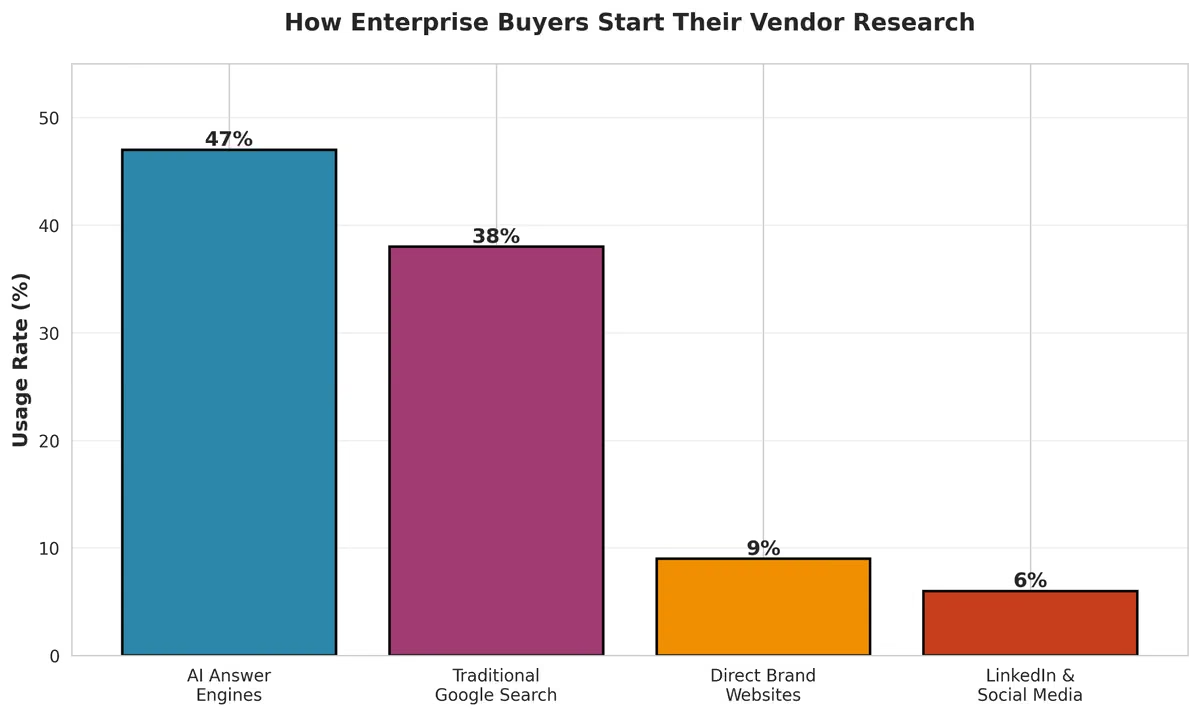
According to recent industry research, 47% of enterprise buyers now start their vendor research with AI tools instead of traditional search engines. This statistic underscores a fundamental change in buyer behavior. When a prospect wants to understand a complex service, compare competing vendors, or validate a supplier's credibility, they're more likely to ask an AI system than to navigate Google search results. These AI systems, ChatGPT, Perplexity, Claude, and Google Gemini, function as answer engines with opinions, not neutral search indexes. They synthesize information, prioritize authoritative sources, and deliver curated recommendations.
The implications are profound. If your company isn't included in the AI-generated answer, your prospect never sees you. There's no click-through, no engagement, no opportunity. You're simply invisible to the decision-maker at the exact moment they're evaluating solutions.
How the "Zero-Click" Problem Is Making Traditional SEO Obsolete
The "zero-click" phenomenon has been reshaping digital marketing for years, but AI has accelerated it dramatically. Over 50% of Google searches now end without a click to any website. Users get their answer directly from Google's AI Overview or from an AI answer engine, and they move on without visiting a single landing page.
For B2B marketers, this creates a catastrophic visibility problem. You can rank on page one of Google for your target keywords, but if your content isn't included in the AI-synthesized answer, you lose the prospect entirely. Traditional SEO metrics, keyword rankings, click-through rates, organic traffic, become increasingly irrelevant when the path to purchase no longer involves clicks.
Consider this scenario: A procurement manager searches, "What are the best AI tools for B2B marketing?" In the traditional SEO world, you'd want to rank in the top three organic results. But in the AI world, Perplexity or ChatGPT synthesizes an answer that cites three industry leaders, and your company isn't one of them. The prospect never sees your website. They never click. They never convert. Your SEO ranking is meaningless.
This is why the old playbook is failing. Marketers who continue to optimize solely for traditional search engine rankings are investing in a strategy that's increasingly disconnected from how buyers actually discover vendors.
What Is Generative Engine Optimization and Why It Matters for AI in B2B Marketing
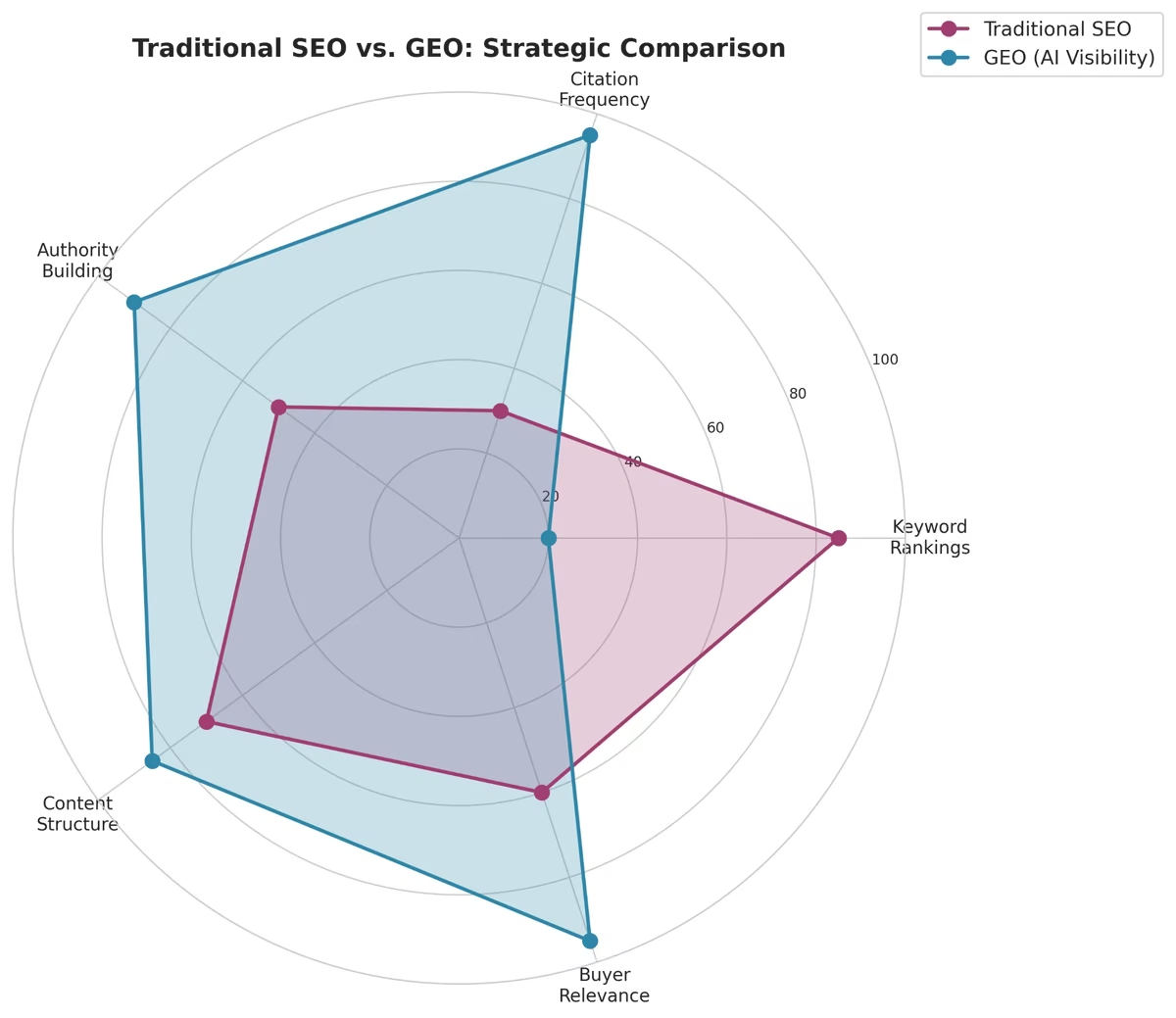
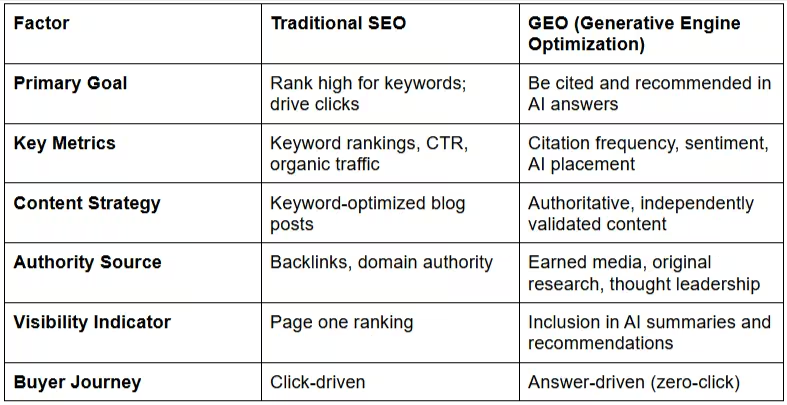
Generative Engine Optimization is the strategic practice of building cross-web authority and credibility so that AI systems recommend or cite your brand when prospects are exploring complex options. Unlike traditional SEO, which focuses on keyword rankings and click-through rates, GEO focuses on being the reasoned recommendation of an intelligent system.
GEO success means your brand appears in AI-generated answers not as a paid result, but as a trusted, authoritative source. It means being cited alongside industry leaders, appearing in AI summaries as a credible option, and being recommended by systems designed to prioritize expertise and independent validation.
The distinction between GEO and traditional SEO is critical:
GEO requires a fundamentally different approach to content and authority-building. It's not about gaming algorithms; it's about building genuine expertise and ensuring that expertise is visible to intelligent systems.
How to Structure Content for AI: Answer Engine Optimization Tactics
Answer Engine Optimization is the tactical execution layer of GEO. While GEO is about building cross-web authority, AEO is about structuring your content so it can be easily parsed, extracted, and cited by AI models.
AI systems are designed to extract specific, factual information from web content. They prioritize clarity, structure, and precision. Content that's easy for machines to understand is content that's more likely to be cited in AI-generated answers.
Effective AEO strategies include:
Use Question-Based Headers: Structure your content around the specific questions your prospects are asking. Instead of generic headers like "Our Solution," use "How Does AI in B2B Marketing Improve Lead Quality?" This makes it easier for AI systems to extract relevant answers.
Provide Precise, Structured Answers: Follow each question with a clear, concise answer. Avoid vague language or marketing fluff. AI systems reward specificity.
Leverage Structured Data Markup: Use schema markup (FAQ schema, Product schema, Organization schema) to help AI systems understand your content structure. This increases the likelihood of being cited.
Create Comprehensive Comparison Content: B2B buyers use AI to compare options. Content that clearly compares different approaches, tools, or vendors is highly valuable to AI systems seeking to provide comprehensive answers.
Develop Original Research: AI systems cite original research and data more readily than generic commentary. Conducting original research, surveys, benchmarks, case studies, gives AI something authoritative to cite.
Build a Strong Author Authority Profile: AI systems evaluate the credibility of the author. Establishing your team members as recognized experts in your industry increases the likelihood of citation.
How AI Systems Act as Trust and Recommendation Engines in B2B Sales
AI tools function as gatekeepers and recommendation engines early in the B2B buying cycle. When a prospect asks an AI system, "Who are the leading providers of [your service]?", the system isn't crawling your homepage. It's drawing on the accumulated weight of what credible, independent sources have said about you over time.
A mention in a respected trade publication carries exponentially more weight with an LLM than a hundred blog posts you've written yourself. This isn't a personal judgment, it's how the systems are designed. They're built to prioritize what has been externally validated.
This creates a powerful dynamic: being cited as an authoritative source in AI models validates your company to prospects at the exact moment they're evaluating options. It's a form of third-party endorsement that carries significant weight in the decision-making process.
For B2B sales teams, this means the most effective visibility strategy isn't always a digital one. A well-placed article in the right trade publication can drive more AI visibility, and ultimately more qualified leads, than months of content marketing on your owned channels.
Why PR, Original Research, and Thought Leadership Are Now Your Most Valuable Marketing Assets
The shift to AI-driven visibility has fundamentally changed what types of content matter most. Owned content, blogs, whitepapers, LinkedIn posts, still plays a role, but it's now a secondary reference point. AI bounces between what earned media says about you and what your own channels confirm. Consistency between the two matters enormously.
If your website says one thing and your press coverage implies another, AI loses confidence in your business and ranks you lower as a result.
The content types that AI rewards most are:
Earned Media Coverage: Articles in respected trade publications, industry news outlets, and third-party analysis sites. These carry the most weight because they represent independent validation.
Original Research: Surveys, benchmarks, case studies, and proprietary data that you've developed. AI systems cite original research because it's authoritative and newsworthy.
Thought Leadership: Consistent expert positioning from your team members. When your executives are regularly quoted in industry publications and speaking at conferences, AI systems recognize your company as a thought leader.
Consistent Messaging: Alignment between what your PR says, what your executives communicate, and what your website claims. Consistency builds trust with AI systems.
Measuring AI Visibility: The Brand Visibility Score and New Metrics for Success
Traditional marketing metrics, keyword rankings, organic traffic, click-through rates, are becoming increasingly irrelevant in an AI-driven landscape. B2B marketers need new frameworks to measure success.
The Brand Visibility Score is an emerging metric that tracks three critical dimensions:
Citation Frequency: How often your brand is mentioned or cited in AI-generated answers, across different AI platforms (ChatGPT, Perplexity, Google Gemini, Claude).
Sentiment and Context: Whether you're cited positively, neutrally, or negatively. Being mentioned as a leader carries more weight than being mentioned as one option among many.
Placement in AI Summaries: Whether your brand appears early in the AI-generated answer (high visibility) or later (lower visibility).
Unlike traditional SEO metrics, BVS directly correlates with AI visibility and, ultimately, with B2B lead generation and sales pipeline impact.
Monitoring your BVS requires different tools and approaches than traditional SEO monitoring. You need to:
Regularly query AI systems with your target keywords and track whether your brand appears in the answers.
Monitor trade publications and industry media to track earned media coverage.
Analyze the sentiment and context of your brand mentions across different platforms.
Track which specific keywords and topics trigger your brand to be cited in AI answers.
Strategic Priorities for B2B Marketers in 2026: From "Found" to "Recommended"
The shift from traditional SEO to AI visibility represents a fundamental reordering of B2B marketing priorities. According to recent industry surveys, 69% of B2B marketers have ranked AI visibility as a top priority for 2026.
This isn't a nice-to-have initiative. It's a critical business priority. The brands that win in the AI era won't be the ones with the biggest advertising budgets or the most polished website copy. They'll be the ones whose expertise is independently corroborated, consistently expressed, and findable by systems designed to reward credibility over promotion.
The strategic shift requires changes across multiple dimensions:
From Owned Content to Earned Media: Allocate more budget toward PR, thought leadership placements, and industry publication coverage. These drive AI visibility more effectively than owned content alone.
From Keyword Optimization to Authority Building: Stop obsessing over keyword rankings. Start building genuine expertise, conducting original research, and establishing your team as recognized industry experts.
From Click-Based Metrics to Citation-Based Metrics: Replace organic traffic and CTR with BVS and citation frequency as your primary success metrics.
From Siloed Channels to Integrated Strategy: Align your PR, content marketing, thought leadership, and owned channels so that AI encounters a consistent narrative about your company across all sources.
The Future of B2B Visibility Is AI-Driven
The rules of B2B marketing have fundamentally changed. The transition from traditional SEO to GEO/AEO isn't a marginal shift in tactics, it's a structural reordering of how business visibility and authority are assigned.
Buyers are using AI to make decisions. AI systems prioritize independent validation over self-promotion. And the brands that win will be those whose expertise is corroborated by credible third-party sources, consistently expressed across all channels, and easily findable by intelligent systems.
The good news is that this shift rewards genuine expertise and authentic authority-building. It penalizes shortcuts and manipulation. For companies with real expertise and a commitment to thought leadership, AI visibility represents an enormous opportunity.
The time to act is now. The brands that begin building AI visibility today, through strategic PR, original research, and consistent thought leadership, will be the ones that AI recommends to the next generation of B2B buyers. Those that continue to rely solely on traditional SEO will find themselves increasingly invisible.
Start by auditing your current AI visibility. Query the AI systems your prospects use with your target keywords. Are you being cited? In what context? What gaps exist between your earned media coverage and your owned content? Use these insights to build a strategic plan for integrating GEO into your overall marketing strategy. The future of B2B marketing is AI-driven. The question is: are you ready?
Frequently Asked Questions: What B2B Marketers Are Asking About AI Visibility
What is the difference between AI visibility and traditional SEO?
Traditional SEO focuses on ranking high for keywords in search engines to drive clicks. AI visibility focuses on being cited and recommended by AI systems when prospects ask questions. While traditional SEO is about clicks, AI visibility is about being the reasoned recommendation of an intelligent system.
How do I know if my company is being cited in AI-generated answers?
You can manually query AI systems (ChatGPT, Perplexity, Google Gemini) with your target keywords and observe whether your brand appears in the answers. For systematic monitoring, emerging tools track Brand Visibility Score across multiple AI platforms.
What types of content does AI reward most?
AI systems reward earned media coverage (trade publications), original research, thought leadership from recognized experts, and consistently messaging across owned and earned channels. Paid advertising and generic blog content carry minimal weight.
How can I improve my AI visibility without a large PR budget?
Focus on original research and thought leadership. Conduct surveys or case studies that generate newsworthy insights. Position your team members as experts through speaking engagements, industry publications, and consistent social media presence. These build authority that AI systems recognize.
Is traditional SEO still important?
Yes, but its role has changed. Traditional SEO is now a secondary reference point. AI bounces between what earned media says about you and what your website confirms. Consistency between the two matters, but earned media carries more weight.
What should my primary marketing metric be if I'm focusing on AI visibility?
Shift from organic traffic and keyword rankings to Brand Visibility Score, which tracks citation frequency, sentiment, and placement in AI summaries. This metric directly correlates with AI visibility and B2B lead generation.
How long does it take to build AI visibility?
AI visibility builds over time through consistent earned media coverage, original research, and thought leadership. Unlike traditional SEO, which can show results in weeks, AI visibility typically requires 3-6 months of consistent effort to show measurable results.
Can I improve my AI visibility through paid advertising?
Paid advertising has minimal impact on AI visibility. AI systems are designed to prioritize independent validation and earned media. Paid advertising may drive traffic, but it won't improve your citation frequency or placement in AI-generated answers.
What role does my company website play in AI visibility?
Your website serves as a reference point for consistency. AI systems check whether your website confirms what earned media says about your company. If there are contradictions, AI loses confidence. Your website should support and amplify your earned media narrative, not contradict it.
How do I measure ROI from AI visibility initiatives?
Track the correlation between changes in your BVS and changes in qualified leads, sales pipeline, and deal velocity. Monitor which keywords trigger your brand to be cited in AI answers and correlate that with inbound inquiry volume. Use these insights to optimize your strategy over time.
At first, we weren’t even thinking about AI visibility. We were focused on rankings and traffic like everyone else. But once we started testing our brand in ChatGPT and other AI tools, we realized we were barely showing up — even for topics we ‘ranked’ for. Gryffin gave us a clear picture of where we stood, how competitors were being cited instead, and what that actually meant for our pipeline. It shifted how we think about search entirely.











.webp)