Google AI Search Algorithm: What the May 2026 Core Update Signals and How to Respond
Marcela De Vivo
Marcela De Vivo
June 16, 2026
15 min
The landscape of search is experiencing a profound shift, driven by the continuous evolution of the Google AI search algorithm. The May 2026 core update serves as a powerful reminder that traditional ranking tactics are no longer sufficient. As AI-driven ranking systems become more sophisticated, they are fundamentally changing how content is evaluated, retrieved, and presented to users. For brands, content teams, and site owners, understanding these changes is not just about recovering from volatility; it is about building a durable strategy that thrives in an AI-first ecosystem.
This guide explores the mechanics of the May 2026 core update, examining how the Google AI search algorithm interprets search intent, evaluates originality, and measures trust. By breaking down what changed, identifying which content patterns are underperforming, and providing actionable guidance, we will equip you with the knowledge to align your digital presence with the future of search.
Why Understanding the Google AI Search Algorithm Matters Now
The volatility observed during the May 2026 core update highlights a critical reality: the Google AI search algorithm is becoming increasingly adept at distinguishing between content created for search engines and content created to satisfy real user needs. This update is not merely a tweak to existing signals; it represents a calibration of how AI-driven systems weigh intent satisfaction, originality, and user signals.
As we navigate this turbulence, it is essential to set clear expectations. The update is actively penalizing thin, repetitive, and scaled AI content while rewarding pages that demonstrate deep expertise and a clear understanding of the user's task. However, the durable practices that have always underpinned high-quality content, such as aligning with search intent, providing original insights, and establishing strong trust signals, remain as relevant as ever. The focus has simply shifted to how effectively these elements are executed and recognized by machine-learned systems.
For organizations looking to measure and improve their visibility, utilizing an AI search tracker can provide invaluable insights into how these algorithmic shifts impact brand mentions and citations across AI answer engines.
The Google AI Search Algorithm in 2026: Systems, Signals, and How They Interact
To fully grasp the implications of the May 2026 core update, we must clarify the terminology and mechanics underlying the Google AI search algorithm. A "core update" is a broad change to Google's ranking systems, designed to improve the overall quality of search results. These systems are increasingly reliant on AI to interpret the nuances of user queries and evaluate the usefulness of web pages.
Ranking Systems Versus Signals
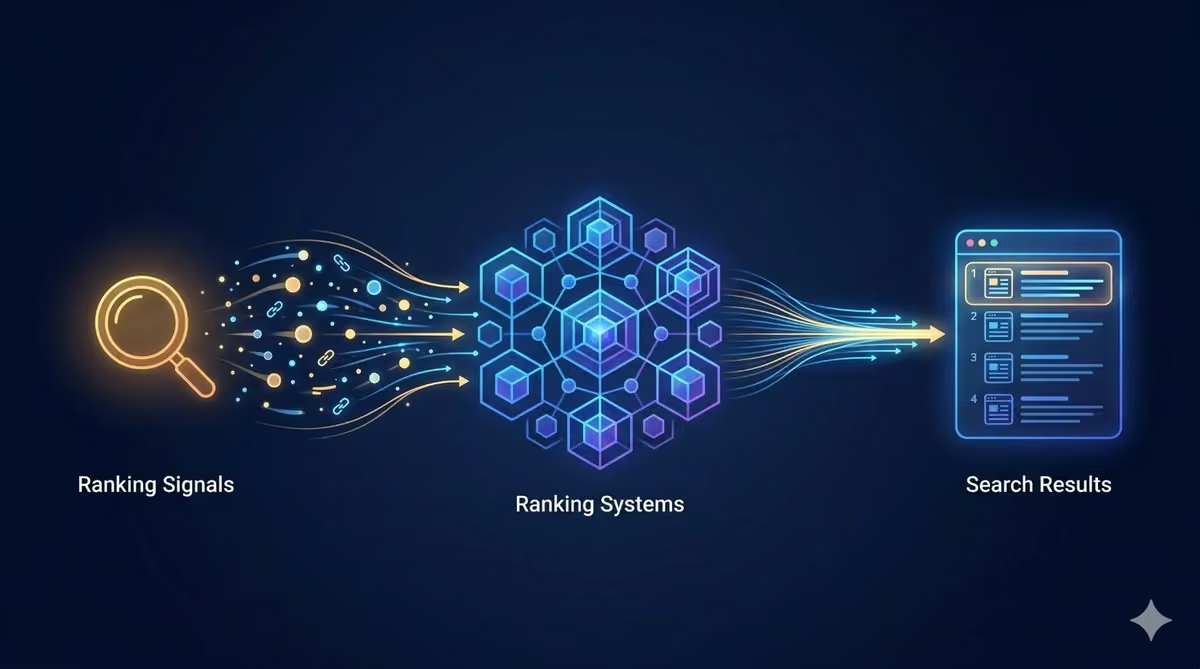
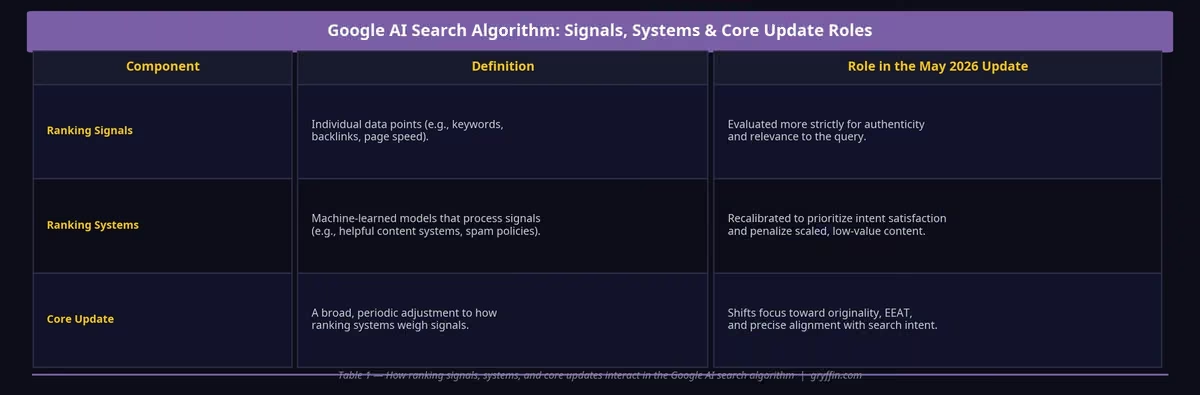
It is crucial to differentiate between ranking systems and ranking signals. Signals are individual data points, such as the presence of a keyword, page speed, or the quality of backlinks, that inform the algorithm. Systems, on the other hand, are complex, machine-learned models that process these signals to determine a page's relevance and authority. The Google AI search algorithm uses these systems to weigh intent satisfaction, originality, and user signals dynamically. During a core update, the algorithm recalibrates how these systems interact and which signals are prioritized.
ComponentDefinitionRole in the May 2026 UpdateRanking SignalsIndividual data points (e.g., keywords, backlinks, page speed).Evaluated more strictly for authenticity and relevance to the query.Ranking SystemsMachine-learned models that process signals (e.g., helpful content systems, spam policies).Recalibrated to prioritize intent satisfaction and penalize scaled, low-value content.Core UpdateA broad, periodic adjustment to how ranking systems weigh signals.Shifts focus toward originality, EEAT, and precise alignment with search intent.
AI's Role in Interpreting Intent and Usefulness
Where AI truly surfaces context is in its ability to understand entities, refine queries, and assess content usefulness. The Google AI search algorithm does not just look for matching keywords; it analyzes the relationship between concepts and the intent behind the search. This entity understanding allows the algorithm to connect a user's question with the most relevant and comprehensive answer, even if the exact phrasing differs.
As AI systems become more sophisticated, they are better equipped to evaluate whether a page genuinely satisfies a user's task or merely provides a superficial overview. This shift emphasizes the need for content that goes beyond basic definitions and offers actionable, context-rich information. To adapt to this new paradigm, brands must master generative engine optimization (GEO), which focuses on structuring content to be easily retrieved and cited by AI-driven search engines.
What Changed in May 2026: Timeline, Volatility, and Early Patterns
The May 2026 core update followed a familiar timeline: a pre-rollout period of subtle shifts, an official launch announcement, and a rolling period that spanned several weeks. Multi-week updates often cause significant turbulence as the algorithm processes changes across billions of pages and recalibrates its systems.
Rollout Mechanics and Volatility Windows
During the rollout, site owners typically observe natural flux in their metrics. Impressions and click-through rates may swing wildly as the algorithm tests different pages for various queries. It is important to recognize that these fluctuations are a normal part of the process and not necessarily indicative of a permanent penalty.
When monitoring performance during these volatility windows, it is essential to watch for temporary console anomalies, such as sudden drops in link counts or reporting glitches. Before making drastic changes to your site, validate these observations with server logs and analytics data. Utilizing comprehensive AI visibility metrics can help you cut through the noise and focus on the data that actually matters for your business outcomes.
Early Impact Themes
As the dust begins to settle on the May 2026 core update, several early impact themes have emerged. The Google AI search algorithm appears to be specifically targeting content patterns that offer little unique value. Pages that rely heavily on generic, AI-generated text without adding original insights or proprietary data have seen significant drops in visibility. Sites that use engineered subfolders to host mass-produced, low-quality content targeting long-tail keywords are being penalized. Content hubs that attempt to cover a wide range of topics superficially, without providing deep expertise or clear intent alignment, are losing ground to more focused, specialized pages. These observations underscore a clear message: the Google AI algorithm update is actively demoting scaled, low-originality content in favor of pages that demonstrate real value and precise intent match.
Why Scaled, Low-Originality AI Content Is Dropping
The decline of scaled, generic AI pages is one of the most defining characteristics of the May 2026 core update. As the google algorithm ai becomes more proficient at detecting patterns across domains and subfolders, it is increasingly penalizing content that is engineered for search rather than created for users.
Patterns That Underperform
Content that underperforms in the current landscape often shares several hallmarks. These pages typically exhibit dense repetition of keywords and concepts, generic phrasing that lacks a distinct point of view, and an absence of unique media or proprietary data. Furthermore, they often feature weak internal and external linking, failing to provide users with a clear path to deeper knowledge or credible sources.
When evaluating your own content, compare it against the "engineered for search" footprint. Does your page read like a generic summary of existing information, or does it offer original sources, unique media, and a strong editorial perspective? The algorithm is designed to reward the latter. Consider how balancing AI and authenticity in content creation can help you produce work that stands out in a crowded landscape.
How Scale Amplifies Risk
The risk associated with low-originality content is amplified when it is produced at scale. Uniform templates and a lack of distinct sources make it easy for the algorithm to identify and demote entire sections of a website. Quality must always take precedence over quantity. A smaller number of highly original, intent-driven pages will consistently outperform a large volume of generic, scaled content.
To ensure your content strategy aligns with these new requirements, consider conducting an AI competitor analysis. By reverse-engineering the structures and assets that get cited in AI answers, you can identify gaps in your own approach and build briefs that prioritize originality and value.
In an era of algorithmic volatility, aligning tightly with search intent is the most effective way to protect your visibility. The Google AI search algorithm is increasingly prioritizing specific, bottom-of-funnel queries over broad head terms. By focusing on identifying and solving precise user problems, you can create content that is resilient to algorithmic shifts.
Identifying Specific, Solvable Queries
The first step in an intent-driven strategy is uncovering high-intent, low-competition queries tied to real user tasks and pain points. This requires moving beyond basic keyword research and delving into the specific questions and challenges your target audience is facing. When integrating keywords, use terms like "Google AI search algorithm" naturally in headings and first paragraphs where the intent matches. Avoid keyword stuffing, and focus instead on ensuring that the content directly addresses the user's underlying need.
Page Templates That Satisfy Tasks
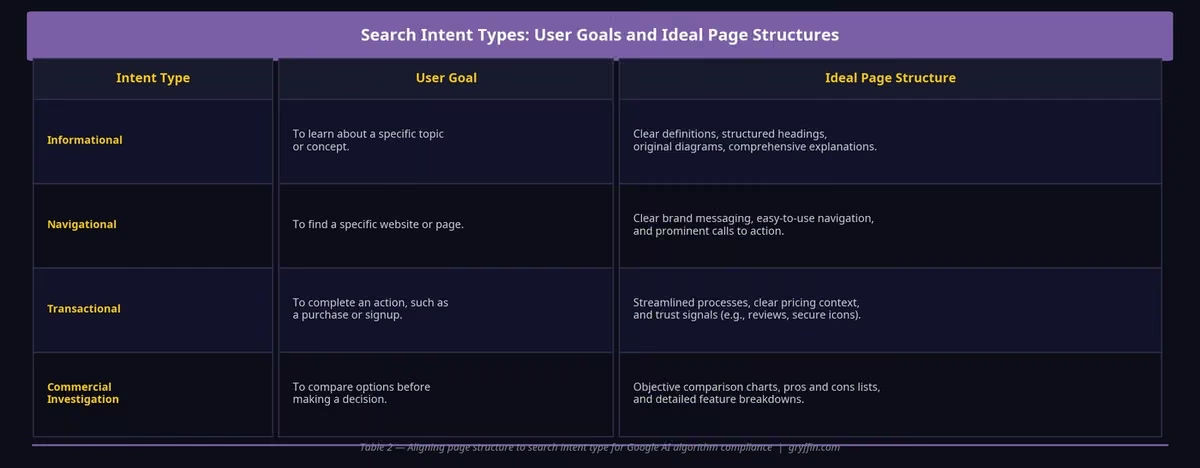
Page patterns that work well in this environment are those that facilitate clear task completion. Users want scannable answers, concise comparisons of options or methods, and actionable advice. The table below illustrates how different intent types map to ideal page structures.
Intent TypeUser GoalIdeal Page StructureInformationalTo learn about a specific topic or concept.Clear definitions, structured headings, original diagrams, and comprehensive explanations.NavigationalTo find a specific website or page.Clear brand messaging, easy-to-use navigation, and prominent calls to action.TransactionalTo complete an action, such as a purchase or signup.Streamlined processes, clear pricing context, and trust signals (e.g., reviews, secure icons).Commercial InvestigationTo compare options before making a decision.Objective comparison charts, pros and cons lists, and detailed feature breakdowns.
By aligning your metadata, introductions, and subheadings with the exact user job, you can create content that not only satisfies the Google AI search algorithm but also provides a superior user experience. For guidance on how to structure your pages for optimal performance in AI-driven interfaces, explore our AI search optimization playbook.
The Originality Layer: What "Unique Value" Looks Like in Practice
As the google algorithm ai content evaluation systems become more adept at identifying generic material, the "originality layer" has become a critical differentiator. Unique value is no longer just a nice-to-have; it is a fundamental requirement for maintaining visibility.
Evidence Types That Add Substance
Elements that differentiate content and add substance include proprietary data, original images and charts, step-by-step workflows, and reviewer notes. These elements demonstrate that the content is grounded in real-world experience and offers insights that cannot be found elsewhere. When creating visual assets, ensure they are optimized for clarity and context. Use descriptive captions and alt text that incorporate intent keywords naturally. Original visuals not only enhance the user experience but also provide the Google AI search algorithm with strong signals of quality and effort.
Linking That Teaches, Not Bloats
Contextual linking is another vital component of the originality layer. Purposeful internal paths guide users to related topics, while selective external citations to trusted sources demonstrate a commitment to accuracy and thoroughness. Avoid linking simply for the sake of linking. Every link should add value to the reader's journey, providing deeper context or verifying a factual claim. By structuring your content with descriptive H2s and H3s, table and figure captions, and on-page summaries that answer the core question fast, you can create a clear and authoritative resource.
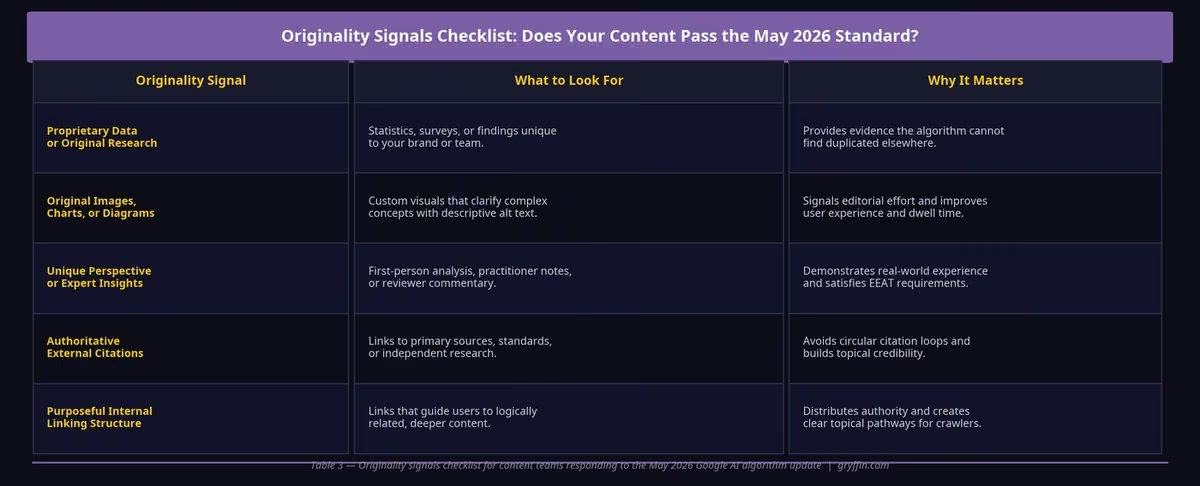
Originality Signals Checklist:
Does the page include proprietary data or original research?
Are there original images, charts, or diagrams that clarify complex concepts?
Does the content offer a unique perspective or expert insights?
Are external citations linked to authoritative, primary sources?
Does the internal linking structure provide a logical path for further learning?
For a practical framework on how to monitor and measure the impact of these originality improvements, our guide on AI brand visibility tracking offers a research-backed methodology for building reliable measurement systems.
EEAT in 2026: Demonstrating Real Expertise and Trust
Experience, Expertise, Authoritativeness, and Trustworthiness (EEAT) remain foundational pillars of the Google AI search algorithm. In 2026, demonstrating real expertise and trust requires a proactive and transparent approach to content creation.
Authorship, Credentials, and Disclosures
Make authorship explicit on every page. Include visible author bios with relevant credentials, and add editorial oversight notes where appropriate. This transparency helps establish the credibility of the content and the individuals behind it. When discussing complex or specialized topics, cite primary sources, industry standards, and independent references. Avoid circular citation loops, where multiple sites simply reference each other without adding new information. For Your Money or Your Life (YMYL) topics, add clear disclaimers, date stamps, and update histories to support reliability and demonstrate that the content is actively maintained.
Schema and Page-Level Trust Enhancers
Utilize schema markup (such as Article, Author, and Organization) to clarify entities and roles for the Google AI search algorithm. Schema provides structured data that helps the algorithm understand the context and relationships within your content, making it more likely to be featured in rich snippets and AI-generated answers. Page-level trust enhancers, such as clear review processes, transparent editorial policies, and easily accessible contact information, further solidify your site's authority.
Understanding how EEAT interacts with AI-driven search is also central to a broader generative engine optimization strategy. When AI answer engines pull content to synthesize responses, they consistently favor sources with verifiable expertise and strong trust signals. For a deeper dive into how to balance AI efficiency with human authenticity, read our guide on human and machine content creation.
Local and Aggregator Shifts: Direct Providers vs. Directories
The May 2026 core update also introduced significant shifts in how the Google AI search algorithm handles local and service-oriented queries. There is a clear trend toward surfacing direct providers over broad directories.
Direct Providers Surfacing Over Directories
For service queries, the algorithm increasingly leans toward direct providers that can demonstrate capability, proximity, and positive customer reviews. This shift reflects a desire to connect users with the actual businesses that can solve their problems, rather than forcing them to navigate through intermediary aggregators. Directories and aggregators still have a role to play, but their usefulness is now judged by the depth of their curation, the availability of unique filters, and the verification of their data. Aggregators that merely scrape and republish listings without adding value are seeing their visibility decline.
Structuring Service Pages for Intent
To capitalize on this trend, direct providers must structure their service pages to align with user intent. Page models that perform well include those that offer clear proof of work, comprehensive FAQs, transparent pricing context, and robust structured data. Include examples of "near me" intent signals, and ensure your page content explicitly addresses the specific services you offer and the areas you serve. By providing proof of service quality, embedding customer reviews, and ensuring contact clarity, you can position your business as the most relevant and trustworthy answer for local queries. This approach aligns directly with how AI search visibility is won at the local level.
Measuring During Rollouts: What to Track and How to Respond
Navigating a core update requires a measured and data-driven approach. Panicking and making drastic changes during a rollout can often do more harm than good. Instead, focus on tracking the right metrics and developing a strategic recovery plan.
What to Measure During Rollouts
Read patterns over time, focusing on impressions, click-through rates, queries gained or lost, entity associations, and the specific sections of your site that are affected. Avoid reacting to daily fluctuations; instead, look for sustained trends that indicate how the Google AI search algorithm is evaluating your content. Watch for temporary console anomalies, and always validate your observations with logs and analytics before taking action. Utilizing a comprehensive AI visibility platform can help you identify the exact topics, prompts, and sources where you are missing, providing a clear roadmap for improvement.
If your site has been negatively impacted by the update, focus on a practical recovery path. Prioritize evergreen utility pages, and avoid mass deletions during short-term swings. Consolidate content where overlap exists, ensuring that each page targets a distinct and specific intent. Tighten the intent match of your existing pages, add originality and references, and refine your internal pathways. Treat updates as calibration moments, not one-off events. By continuously iterating and improving your content, you can build resilience against future algorithmic shifts. For organizations looking to understand how AI-driven search impacts the entire customer journey, our guide on [AI sales funnel](https://gryffin.com/blog/ai-sales-funnel-visibility) visibility provides a stage-by-stage measurement framework.
Conclusion: Build for Real Queries, Real People, and Verifiable Value
The May 2026 core update reinforces a fundamental truth about the Google AI search algorithm: it is designed to reward content that provides verifiable value to real people. While the mechanics of the algorithm continue to evolve, the core principles of intent precision, originality layers, and EEAT endure across updates.
Treat AI as a drafting assistant, but remember that your true differentiator lies in your evidence, structure, and editorial judgment. By focusing on these durable practices, you can navigate the complexities of AI-driven search and build a sustainable strategy that drives long-term visibility. As a next step, consider revisiting your top 20 URLs by traffic and intent. Apply the originality and EEAT checklists outlined in this guide, and measure the impact of your improvements. For a comprehensive view of how your brand performs across AI answer engines, explore Gryffin's AI visibility features and start tracking the metrics that matter most.
Frequently Asked Questions
What Is the Google AI Search Algorithm and How Does It Affect Rankings?
The Google AI search algorithm refers to the machine-learned systems Google uses to interpret search intent, evaluate content originality, and measure trust signals. It affects rankings by dynamically weighing these factors to ensure the most helpful, context-rich, and authoritative pages are surfaced for user queries, often penalizing scaled or generic content.
How Long Do Core Updates Take to Settle, and When Should I Make Changes?
Core updates typically take several weeks to fully roll out and settle. During this volatility window, it is common to see significant fluctuations in impressions and rankings. You should wait until the rollout is officially complete and validate your data over a sustained period before making any drastic structural or content changes.
Is AI-Generated Content Allowed If It Is Original and Well-Cited?
Yes, AI-generated content is permissible if it provides unique value, aligns with user intent, and demonstrates strong EEAT. The Google AI search algorithm focuses on the quality and originality of the content, not just how it was produced. Content that uses AI as a drafting tool but includes proprietary data, expert editorial oversight, and authoritative citations can perform well. For more on this, read our guide on balancing AI and authenticity in content creation.
Why Did My Backlink Count Drop in Search Console During the Update?
During a core update, it is common to experience temporary reporting anomalies in tools like Search Console, including sudden drops in backlink counts. This is often a result of the algorithm recalibrating its systems and processing massive amounts of data. Always validate these drops with external analytics and server logs before assuming a permanent loss of link equity.
How Can Service Businesses Adapt If Directory Rankings Decline?
Service businesses can adapt by optimizing their direct provider pages to strongly signal capability, proximity, and trust. This includes adding proof of work, embedding customer reviews, providing clear pricing context, utilizing local schema markup, and ensuring the content directly answers "near me" intent queries better than broad directories.
What Signals Help Pages Qualify for Featured Snippets Post-Update?
To qualify for featured snippets, pages must provide concise, highly relevant answers to specific queries. Signals include clear and descriptive H2 and H3 structures, 40 to 60-word summary definitions, properly formatted lists or tables, and strong EEAT indicators. The content must directly and quickly satisfy the user's core question.
How Do I Know If Multiple Pages Target the Same Intent and Should Be Consolidated?
You can identify overlapping intent by analyzing the search queries driving traffic to those pages. If multiple pages are ranking for the exact same set of primary keywords and answering the same user question, they are likely cannibalizing each other. In such cases, consolidating the content into one comprehensive, authoritative page is the best approach. Tracking your AI visibility metrics can help you identify which pages are underperforming and where consolidation is warranted.
At first, we weren’t even thinking about AI visibility. We were focused on rankings and traffic like everyone else. But once we started testing our brand in ChatGPT and other AI tools, we realized we were barely showing up — even for topics we ‘ranked’ for. Gryffin gave us a clear picture of where we stood, how competitors were being cited instead, and what that actually meant for our pipeline. It shifted how we think about search entirely.











.webp)