SEO Search Intent: How To Match Your Content To User Goals
Marcela De Vivo
Marcela De Vivo
March 11, 2026
For years, SEO was a game of ranking for keywords. Find the right phrase, sprinkle it across your page, and wait for the traffic to come. But here’s the hard truth: keywords alone no longer cut it. Search engines and more importantly, AI-powered engines aren’t just looking for content that contains the right words. They’re looking for content that understands the user’s intent.
That’s why mastering the types of search intent isn’t just an SEO best practice, it's a conversion strategy.
So what exactly are the types of search intent?
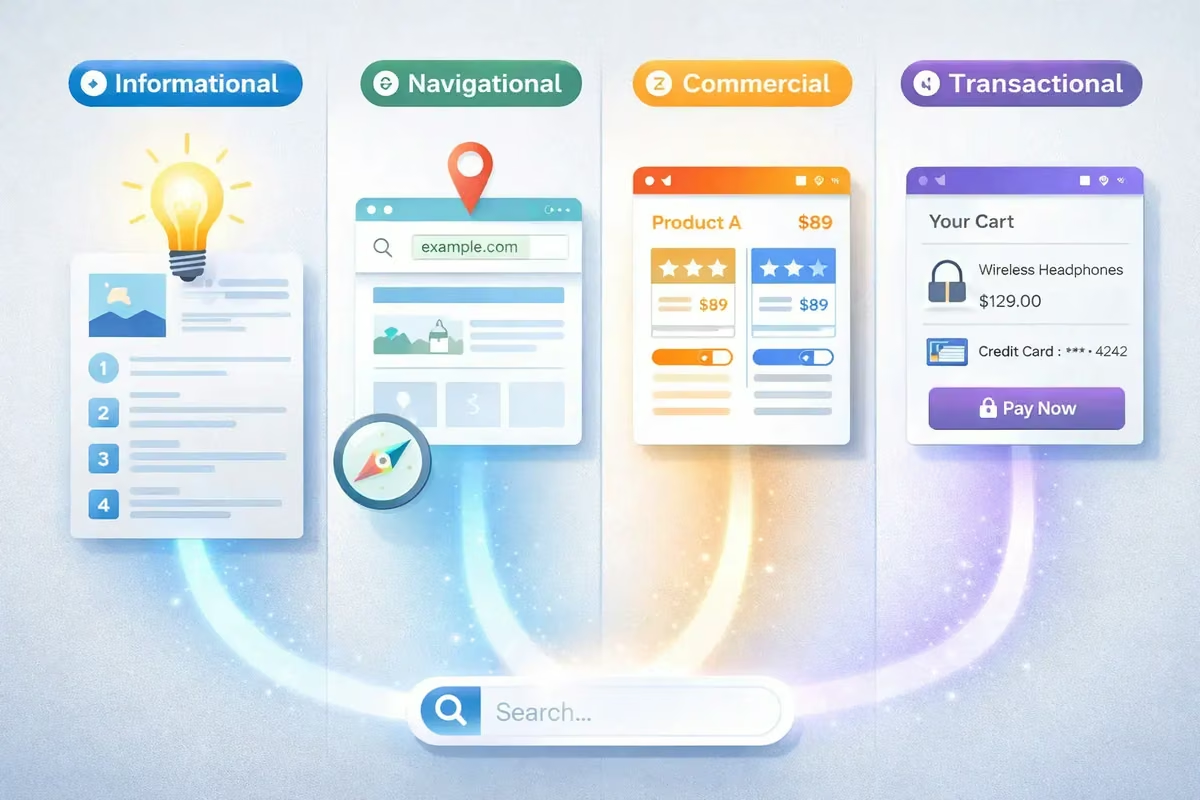
In short, search intent refers to the reason behind a user’s query. Are they looking to learn something (informational)? Find a specific site (navigational)? Compare products (commercial)? Or are they ready to take action (transactional)? The more accurately your content aligns with that intent, the more likely it is to rank and convert.
Search engines like Google and AI engines like ChatGPT, Perplexity, and Gemini are rapidly evolving to interpret user behavior, not just keywords. That means content that doesn't directly address intent is likely to be skipped, buried, or worse: completely ignored by generative engines that serve direct answers.
In this article, we’re going to break down:
What search intent optimization actually means in 2025
The difference between seo search intent and real-world user behavior
How to write for specific intents like navigational, informational, commercial, and transactional
Why search intent analysis is your new content superpower
Ready to stop writing for search engines and start writing for real intent that drives real conversions? Let’s get into it.
SEO Search Intent: What It Is and Why It Drives Conversions
While keyword research helps identify what users are typing into search engines, SEO search intent is about understanding why they’re doing it. That distinction is critical. High-performing content doesn't just contain relevant keywords it fulfills the user’s purpose. It answers their question, solves their problem, or guides their next move. That’s what earns both visibility and action.
How SEO Search Intent Adds Context to Keywords
A keyword like “email marketing software” is virtually meaningless without context. Is the user trying to compare tools? Learn what it is? Find a specific brand? Your strategy and your content should shift based on that intent. Without this layer of understanding, your content might still attract clicks, but it won’t lead to meaningful engagement or conversions.
SEO search intent bridges this gap by ensuring content strategy isn’t built solely on search volume or keyword difficulty, but on the purpose behind each query.
Signals Google uses to infer SEO search intent
Search engines like Google and AI engines powering tools like ChatGPT and Perplexity don’t just index content; they also analyze it. They analyze contextual signals to determine whether a page is likely to satisfy a user’s goal. These signals might include:
The phrasing and structure of the query
SERP features like People Also Ask, featured snippets, and suggested follow-ups
Engagement data across similar queries and topics
Content format (e.g., listicles, guides, product pages) that historically performs well for the query type
For example, if a search includes terms like “top,” “best,” or “vs,” Google may surface list-style commercial content. If it sees phrases like “how to,” it expects step-by-step guidance. These nuanced signals drive the types of content that rise to the top.
Turn this keyword into a content plan by SEO search intent
To turn SEO search intent into high-performing content, you need to approach keywords through the lens of user goals. Consider the keyword:
“Best CRM software for small businesses”
At first glance, it appears to be a commercial keyword likely used by someone comparing solutions before making a decision. A strong match would be:
A comparison guide of top CRM tools
Feature breakdowns
Case studies or use cases tailored to small businesses
Now imagine instead serving this user a homepage or a product demo. That’s a mismatch. You’re forcing action before the user has reached that stage of readiness. This is where intent becomes the differentiator between traffic that bounces and traffic that converts.
How to Operationalize SEO Search Intent in Your Content Strategy
To consistently publish high-performing content, intent can’t be an afterthought. It has to guide your entire strategy:
Research SERP results for your target keywords to reverse-engineer what Google favors.
Choose formats (e.g., blog, FAQ, comparison page) that naturally align with each intent type.
Plan content clusters where each piece supports different stages of the journey one keyword might lead to multiple content opportunities.
Evaluate performance through engagement metrics, not just rankings. Time on page, click-through rates, and conversion signals indicate whether your content meets the user’s needs.
In the AI era of search, content isn’t winning because it’s stuffed with keywords. It’s winning because it delivers on purpose and that purpose is driven by intent.
Navigational SEO Search Intent: Serve Users Who Know Your Brand
Not every search starts with discovery. Sometimes, users already know the destination; they just need the quickest route to get there. That’s where navigational search intent comes in.
Navigational intent refers to searches conducted with the primary goal of reaching a specific website, page, or brand. The user isn’t exploring options they’re zeroing in on a particular source. Think of queries like:
“Dropbox login”
“Nike Air Max official site”
“Ahrefs pricing”
“Gryffin blog”
These users already have a brand or resource in mind. The search isn’t about comparing it’s about finding. Your job is to make sure they land exactly where they expect to go.
Explain how navigational intent shapes SEO and UX decisions
While navigational queries may seem like a given after all, the user already wants your brand; they represent a key moment of trust. If a user searches your name or product and doesn’t find a clear, authoritative result, it introduces friction. Worse, it opens the door for competitors to intercept that traffic.
This type of intent typically signals lower-funnel behavior. A visitor who searches “brand + login,” “brand + pricing,” or “brand + features” is actively engaging with your offering. Even though the query isn’t transactional, the motivation often is.
From an SEO standpoint, optimizing for navigational intent is about reinforcing brand visibility and trust. From a UX standpoint, it’s about removing friction so users can get exactly where they intended to go fast.
Navigational SEO Search Intent: Must-Have Pages and Patterns
If you want to rank for your own brand and serve returning visitors effectively, your site must thoroughly cover navigational queries. Here’s where it matters most:
Branded homepage visibility: Your domain should rank cleanly for your company name and core branded terms.
Login and portal pages: These are frequently searched by existing customers. Ensure your site is the first and only destination that appears.
FAQ and support content: Many users search for help using branded queries, such as “Brand + cancel subscription” or “Brand + customer service.”
Product and feature pages: Branded products (especially for SaaS or e-commerce) should have dedicated, well-optimized landing pages to capture direct product searches.
Resource hubs or blogs: Users often return to trusted branded resources. Make sure your blog or resource center is indexed cleanly and easy to find through branded search.
How to Optimize Pages for Navigational SEO Search Intent
Optimizing for navigational intent is as much about clarity as it is about coverage. Users with this intent don’t want lengthy introductions, SEO fluff, or marketing spin; they want to get in, get what they need, and move on.
To meet that need:
Ensure all branded assets login pages, pricing pages, product names are clearly indexed and structured.
Use exact match page titles and meta descriptions to reflect common branded queries.
Simplify navigation and internal linking so that users who land on your site can reach their destination in one or two clicks.
Monitor Google Search Console to identify and refine for branded query performance.
While navigational queries may not introduce your brand to new users, they play a critical role in retaining existing ones, reinforcing credibility, and creating seamless return experiences. When users already know where they want to go, make sure you're not just visible, you're effortless to find.
SEO Search Intent Examples: Queries and the Right Content to Create
Understanding search intent in theory is helpful but applying it in practice is what transforms content from filler into fuel for performance. The clearest way to build that understanding is through the analysis of real-world queries. When you look closely at how people search, patterns emerge that tell you exactly what kind of content to create, and when.
Informational SEO Search Intent: How to Write Guides That Rank
Let’s say someone types “how to improve email open rates.” This is a clear signal of informational intent. The user isn’t looking to buy software or sign up for a platform they’re trying to solve a problem, likely early in their research process. The correct response is a detailed, actionable guide that teaches them how to get better results, without pushing a hard sell.
Similarly, a query like “what is voice search SEO” signals that the user is exploring a topic for the first time. These are moments to educate and build authority, not convert immediately. Content designed for informational intent should satisfy curiosity while building trust for future steps in the journey.
Navigational SEO Search Intent: Route Users to the Exact Page
Consider the query “HubSpot login.” There’s no ambiguity here; the user knows where they want to go. They just need a shortcut to get there. The ideal content isn’t a blog post, product description, or sales page; it's a login portal, homepage, or clearly indexed internal page.
Another example: “Stripe pricing.” This isn’t a general pricing comparison, it's a navigational query aimed at a specific brand. These users already know you; now they want clarity, speed, and ease of access. If your page structure doesn’t reflect that intent, they’ll bounce or worse, land on a competitor’s site that outranks you for your own brand.
Commercial SEO Search Intent: Comparisons, Features, and Proof
Now imagine a search for “best CRM software for small business.” This signals commercial intent the user is actively researching solutions, likely close to making a decision. They don’t want a lecture on what CRM is; they want side-by-side comparisons, expert recommendations, and insights into features, pricing, and usability.
Another variation, like “email marketing vs SMS marketing,” reveals that the user is weighing options. They’re in the evaluation phase. The right content here would be a comparison guide, explainer, or expert roundup that frames the differences clearly and helps move them toward action.
Transactional SEO Search Intent: Optimize for Action and Clarity
When someone searches “buy running shoes online,” the intent is obvious. They’re ready to act. This isn’t the time for an educational article or brand story; they need a fast-loading product page, clear calls to action, pricing information, and a seamless checkout process.
A query like “checkout Shopify plans” also reflects transactional behavior. The user isn’t window shopping; they're standing at the register. At this point, content should remove friction, answer final objections, and guide the user toward completion.
How to Turn SEO Search Intent Signals Into a Content Plan
The key to working with intent is training yourself and your team to read between the lines of every keyword. The phrasing, context, and implied urgency tell you more than any keyword volume metric ever could. Once you identify what a user truly wants, your job is to deliver content that aligns with that moment in their journey.
Informational queries call for guidance. Navigational queries call for clarity. Commercial queries call for persuasion. And transactional queries call for action.
Recognizing these distinctions is how high-performing brands build content ecosystems that not only attract traffic but also convert attention into outcomes.
Google and SEO Search Intent: What the Algorithm Rewards Today
The way Google evaluates content has undergone a radical shift. Where SEO once relied on matching keywords to queries, today’s algorithms are focused on matching content to user goals. This evolution from keyword matching to intent matching has redefined what it means to “optimize for search.”
Why Rankings Depend on SEO Search Intent, Not Just Keywords
In the early days of SEO, Google rewarded exact matches. If someone searched “best email marketing tools,” your job was to include that exact phrase multiple times across headings, metadata, and body copy. But that approach no longer works. Google’s algorithm now prioritizes whether your content actually meets the need behind the query, not just whether it includes the words.
This evolution is driven by machine learning. Google uses data from millions of queries, SERP interactions, and content patterns to understand what kinds of results lead to user satisfaction. It evaluates time on page, click-through rates, pogo-sticking behavior, and even subsequent searches to determine whether your content fulfilled the searcher’s intent.
In this environment, the question isn’t “Did you use the keyword?” It’s “Did you answer the question?”
How Google Infers SEO Search Intent from Signals and Behavior
Intent detection is baked into every part of the search experience. When a user types a query, Google interprets it through a complex mix of linguistic signals, historical patterns, and behavioral data. It uses contextual clues not just from the query itself, but from what users typically click on afterward to decide which content deserves to rank.
For example, a search like “how to build a website” typically yields beginner tutorials, rather than agency service pages. A query like “best SEO tools 2025” triggers listicles and comparison guides, not product demo forms. That’s because Google has learned what formats and content types satisfy each type of intent informational, commercial, navigational, and transactional and prioritizes accordingly.
As a result, your content needs to align not only with what the user says, but what Google believes they actually want.
Analyze a SERP and classify dominant SEO search intent
To compete in this environment, marketers need to treat the search engine results page as a diagnostic tool. By analyzing the structure and content of top-ranking results, you can infer exactly how Google has interpreted the intent behind a query.
Start by reviewing the types of pages that rank: Are they blog posts, product pages, pricing tables, or FAQs? Then look at what SERP features are present: People Also Ask boxes, featured snippets, site links, or knowledge panels all indicate intent-specific signals.
Featured snippets, for example, often suggest that the query is informational. Product carousels or shopping ads typically point to transactional intent. Meanwhile, the presence of multiple branded pages signals navigational behavior. These patterns aren’t random their strategic insights into how Google evaluates and delivers content.
Use PAA and AI Overviews to Refine SEO Search Intent
One of the fastest ways to understand user intent is to look at Google’s “People Also Ask” (PAA) section. These questions are generated based on what users commonly explore next, making them a goldmine of intent insight. If the top PAA results for your keyword ask about benefits, features, or comparisons, it’s a strong sign you’re in commercial intent territory. If they lean toward definitions and how-tos, information is your target.
The same goes for AI-generated summaries and overviews, especially within Google’s Search Generative Experience. If the summary highlights pros and cons, next steps, or product specs, Google has already inferred that the user wants more than surface-level information they want resolution.
Tapping into these clues lets you structure your content to match what both users and algorithms expect.
Why Matching SEO Search Intent Drives Sustainable Rankings
Google’s endgame is no longer about keywords, it's about outcomes. The best-performing content is the content that answers the query, satisfies the user, and moves them closer to their goal. If your content fails to deliver on its intended purpose, no amount of on-page SEO will save it.
Understanding how Google interprets intent isn’t just a ranking advantage it’s a strategic necessity in the age of AI search. The brands that thrive won’t be the ones stuffing pages with keywords. They’ll be the ones that consistently align their content with what the algorithm and the audience is actually looking for.
User Search Intent and SEO Search Intent: Meet People at Each Stage
Search intent isn’t just a technical factor, it's psychological. Behind every query is a person with a goal, a mindset, and a level of urgency. Understanding user search intent means digging into why someone is searching, not just what they’re typing. This shift from keyword targeting to user targeting is how modern content strategy drives results across the entire funnel.
What User Psychology Reveals About SEO Search Intent
When someone types a query into a search engine, they’re expressing a need. That need could be rooted in curiosity, problem-solving, comparison, or a desire for immediate action. Recognizing these motivations is how you create content that doesn’t just get clicked it gets remembered.
Informational queries often reflect curiosity or a lack of certainty. Commercial intent reflects decision-making behavior. Transactional intent is action-oriented usually involving trust, price sensitivity, and time pressure. Navigational intent, meanwhile, suggests brand familiarity and a desire for efficiency.
This is where user intent becomes a behavioral signal. When you understand where someone is mentally and emotionally in their journey, you can tailor your content tone, structure, and CTA to meet them there, turning passive traffic into active engagement.
Map SEO Search Intent to ToFu, MoFu, and BoFu Content
To align content with user intent, think in terms of the marketing funnel:
Top of Funnel (ToFu): Users are exploring and learning about the product. They ask “what,” “why,” and “how.” These queries signal informational intent and call for guides, explainers, tutorials, and educational content.
Middle of Funnel (MoFu): Users are comparing options. They’re evaluating benefits and weighing trade-offs. This is where commercial intent becomes apparent, and where comparison articles, expert roundups, and feature breakdowns excel.
Bottom of Funnel (BoFu): Users are ready to take action. Transactional intent dominates. The right content here includes landing pages, product pages, pricing breakdowns, and checkout flows.
Outside the Funnel: Navigational searches don’t neatly fit into a funnel stage, but they are crucial for branded experiences. These queries require clarity, direct access, and a frictionless user experience.
When you match your content not just to the keyword, but to the user’s mindset, the experience becomes seamless and so does the path to conversion.
Metrics That Indicate Poor SEO Search Intent Fit
User intent isn’t static, and it’s not always obvious at the keyword level. That’s why behavioral data plays such a critical role in validating your assumptions.
If you’re seeing high bounce rates, low time on page, or poor click-through rates from SERPs, it’s often a sign of intent mismatch. Users are landing but they’re not finding what they expected. Likewise, strong metrics like high dwell time or scroll depth suggest that your content is resonating with the user’s needs.
CTR can reveal whether your meta titles and descriptions reflect the right promise. Session duration shows whether the content delivers on that promise. Conversion rates prove whether it inspired action. These are not just vanity metrics, they're your compass for refining intent alignment at scale.
Start With SEO Search Intent—Then Optimize the Experience
Getting search intent right isn’t just about structuring your content for Google it’s about building empathy into every piece you create. When you understand what your audience is trying to achieve, you stop guessing and start guiding.
High-performing teams don’t write content first and assign intent later. They lead with intent. It informs the keyword, format, angle, CTA, and KPIs. This is what separates tactical SEO from strategic content marketing: one focuses on driving traffic, while the other serves real human needs, driving growth.
Search Intent Analysis: Reverse Engineer SEO Search Intent Step by Step
Most content strategies fail not because of poor execution but because they’re answering the wrong question. Search intent analysis fixes that. It’s the process of decoding what users actually want when they type in a query. In today’s search landscape, mastering this skill is the difference between publishing noise and creating content that drives performance.
Start With the SERP to Identify SEO Search Intent Fast
Before you write a word of content, look at the search engine results page (SERP) for your target keyword. This isn’t just about who’s ranking it’s about what is ranking and why. Google’s results are a live blueprint of what it believes satisfies the query’s intent.
Scan the top results and ask:
Are they blogs, product pages, videos, or FAQs?
What language do they use? Are they educational, persuasive, or transactional?
What SERP features show up People Also Ask, featured snippets, reviews, sitelinks?
Each of these signals tells a story. A SERP filled with how-to guides? That’s informational intent. Product listings with star ratings and prices? That’s transactional. The format and tone of the SERP reveal exactly what kind of content users want and what Google is rewarding.
Analyze Competitors to Validate SEO Search Intent Patterns
Once you’ve identified intent from the SERP, dive deeper. Look at the actual content that ranks. How is it structured? How long is it? What questions does it answer? What objections does it address?
The goal isn’t to copy it’s to identify content patterns that meet user needs. For example, if every top-ranking article for a commercial keyword includes side-by-side comparisons, pricing breakdowns, and testimonials, you have your formula. The structure is effective because it reflects the decision-making process users are already familiar with.
Great content doesn't happen in a vacuum; it happens when you reverse engineer what already works.
How to Use AI to Analyze SEO Search Intent and Content Gaps
AI isn’t just a content generator, it's a research accelerator. Tools like Gryffin go beyond surface-level suggestions by analyzing live search data, competitor gaps, and content performance signals to recommend content formats, topics, and CTAs that align with real user intent.
Instead of guessing what to create, you’re working from intent models trained on actual SERP behavior, traffic data, and performance benchmarks. That’s how you move from one-off wins to scalable, systemized content strategy.
This approach also lets you create across the funnel mapping different types of content to different types of intent, and automating the process of content ideation, formatting, and optimization.
Merge SERP Intent Signals With Analytics to Confirm Fit
Even when your content ranks, the job isn’t done. Search intent analysis doesn’t stop at the SERP; it continues on the page. That’s where performance metrics become your second layer of feedback.
If users are bouncing fast, not clicking CTAs, or spending little time on the page, you’re not meeting their intent even if you’re ranking. However, if you notice long dwell times, high scroll depth, and strong engagement, it’s confirmation that your content resonates with the target audience's mindset.
Combining search data with on-page behavior is how high-performing teams validate, iterate, and scale intent-aligned content. One tells you what users want the other tells you if you delivered.
Systemize SEO Search Intent Analysis for Consistent Performance
Great SEO is no longer about who can write the most content; it's about who can write the most effective content. It’s about who can consistently publish content that answers the most relevant questions in the most useful formats for each stage of the journey.
Intent analysis gives you that edge. It transforms content from guesswork into a repeatable, scalable system driven by data, not assumptions. And when powered by AI tools that translate those signals into action, it’s no longer a manual grind it’s a strategic engine.
You’re not just creating content. You’re architecting experiences that align with what users actually want and that’s what drives results.
Master SEO Search Intent to Drive Rankings and Conversions
Search engines have changed. So have users. The brands that win today aren’t chasing keywords, they're answering fundamental questions, solving real problems, and matching real intent.
Mastering the types of search intent isn’t just a content strategy, it's a growth strategy. Whether your audience is looking to learn, compare, navigate, or make a purchase, your ability to meet them with the right content at the right moment is what separates you from the noise.
When your pages are aligned with what people actually want, everything changes. Rankings improve. Engagement rises. Conversions multiply. Because intent isn’t a theory it’s the foundation of search behavior.
Q: What is search intent, and how do the four types change the way I plan and write content in 2025? A: Search intent is the reason behind a user’s query, typically informational, navigational, commercial, or transactional. In 2025, you plan content by aligning format, depth, tone, and CTAs to that intent, not just the keyword. Search and AI engines reward pages that fulfill the user’s goal, so map topics to journey stages and create the format that best satisfies that purpose.
Q: How do I decide the right content format for a keyword like “best CRM software for small business”? A: That query signals commercial intent, so create comparison content that helps evaluation. Use a ranked list, feature and pricing breakdowns, SMB-specific use cases, and light recommendations. Avoid pushing a product demo or homepage too early, and confirm the format by reviewing current SERP results.
Q: Show me a step-by-step way to read a Google SERP and infer the user’s intent before I write. A:
Search the keyword and scan the top results for page types such as blog posts, comparisons, product pages, or support docs.
Note SERP features like People Also Ask, featured snippets, product carousels, and site links.
Skim titles and introductions to gauge whether pages teach, compare, or sell.
Map these signals to intent: informational, commercial, navigational, or transactional.
Match your format and structure to what the SERP favors.
Q: How should I structure pages to capture navigational queries like “Brand login,” “Brand pricing,” or “Brand support”? A: Use exact-match titles and meta descriptions that mirror the query, and ensure the page is cleanly indexed. Keep content concise with clear headings, direct links, and obvious next steps. Create dedicated pages for login, pricing, features, and support, and connect them with simple internal linking. Monitor branded queries in Search Console to fix gaps fast.
Q: What signals does Google use now to match content to intent, and how should I adapt my SEO for that? A: Google looks at query phrasing, SERP features, engagement patterns, and formats that historically satisfy similar searches. Adapt by answering the underlying goal, not just matching keywords: choose the right format, structure content to resolve the main task, and validate with user signals like dwell time and conversions. Reverse engineer the SERP to set your angle and depth.
Q: Which behavioral metrics tell me my page isn’t meeting user intent, and what should I change? A: Warning signs include high bounce rate, low time on page, weak scroll depth, poor CTR from SERPs, and thin conversion signals. Fix the promise-to-delivery gap: refine titles and meta descriptions, match format to intent (guide, comparison, product page), front-load answers, and align CTAs with the user’s readiness. Remove friction and reorganize sections around the questions users expect.
Q: Give examples of informational, navigational, commercial, and transactional queries and the best kind of page for each. A:
Informational: “how to improve email open rates” → in-depth guide or tutorial
Navigational: “HubSpot login” or “Stripe pricing” → login portal or brand pricing page
Commercial: “best CRM software for small business” or “email marketing vs SMS marketing” → comparison list or vs-page with feature and price details
Transactional: “buy running shoes online” or “checkout Shopify plans” → product or plan page with clear CTAs and fast checkout
Q: How can I build an intent-led content cluster that covers ToFu, MoFu, and BoFu without pushing users too fast? A: Map topics to funnel stages: ToFu guides for education, MoFu comparisons and use cases for evaluation, and BoFu product, pricing, and landing pages for action. Interlink with gentle next-step CTAs rather than hard sells on early-stage pages. Measure engagement and conversions to fine-tune pathways and pacing.
Q: How can I use People Also Ask and AI summaries/overviews to spot intent and structure my article? A: People Also Ask reveals the next questions users ask, signaling whether they want definitions, how-tos, comparisons, or specifications. AI summaries and overviews highlight pros and cons, next steps, and key attributes that reflect dominant intent. Use these cues to build sections, subheadings, and FAQs that answer the main query and anticipated follow-ups.
Q: What tools or workflows help me systemize search intent analysis and plan content across the funnel? A: Use a repeatable workflow: audit the SERP, analyze top pages for patterns, pull query data from Search Console, and validate with on-page metrics. AI-driven tools like Gryffin analyze live SERP behavior and competitor gaps to recommend formats, topics, and CTAs aligned to intent. Document templates for each intent type and automate ideation and optimization to scale consistently.
At first, we weren’t even thinking about AI visibility. We were focused on rankings and traffic like everyone else. But once we started testing our brand in ChatGPT and other AI tools, we realized we were barely showing up — even for topics we ‘ranked’ for. Gryffin gave us a clear picture of where we stood, how competitors were being cited instead, and what that actually meant for our pipeline. It shifted how we think about search entirely.










.webp)