What Is Generative Engine Optimization (GEO)? Services, Strategy, and a 2026 Guide
Marcela De Vivo
Marcela De Vivo
June 16, 2026
18 min read
The traditional model of search engines returning ten blue links is rapidly evolving into a paradigm where AI-powered answer engines synthesize information to provide direct, conversational responses. For ecommerce and DTC brands, this shift means that if your brand is not cited in those synthesized answers, you may not even enter the consideration set. Generative engine optimization services help teams operationalize GEO, ensuring that content, product data, and brand signals are structured so AI-driven answer engines can extract, verify, and cite them. This comprehensive guide explores the mechanics of generative engines, the commercial impact for ecommerce, the core pillars of a GEO strategy, and a 90-day roadmap to earn AI citations in 2026.
Generative Engine Optimization, Defined
Generative Engine Optimization (GEO) is the strategic practice of structuring digital content, product data, and brand signals so that AI-driven answer engines can effectively extract, verify, and cite your brand in their synthesized responses. As consumer behavior shifts toward conversational search, visibility is no longer measured solely by ranking positions in lists of links, but by the frequency and accuracy with which an AI chooses to cite you. For a deeper dive into the fundamentals, read Generative Engine Optimization (GEO): What It Is and How to Implement.
The term was formally introduced in 2023 by researchers at Princeton University, who defined GEO as a framework for helping content creators improve visibility in generative engine responses. By 2026, that academic concept has become a boardroom imperative. According to industry research, traditional search engine volume is projected to drop by as much as 25% by 2026 due to AI chatbots and virtual agents, and more than 58% of consumers have already replaced classic search engines with AI tools when searching for products or services.
How Is Generative Engine Optimization Different From Traditional SEO?
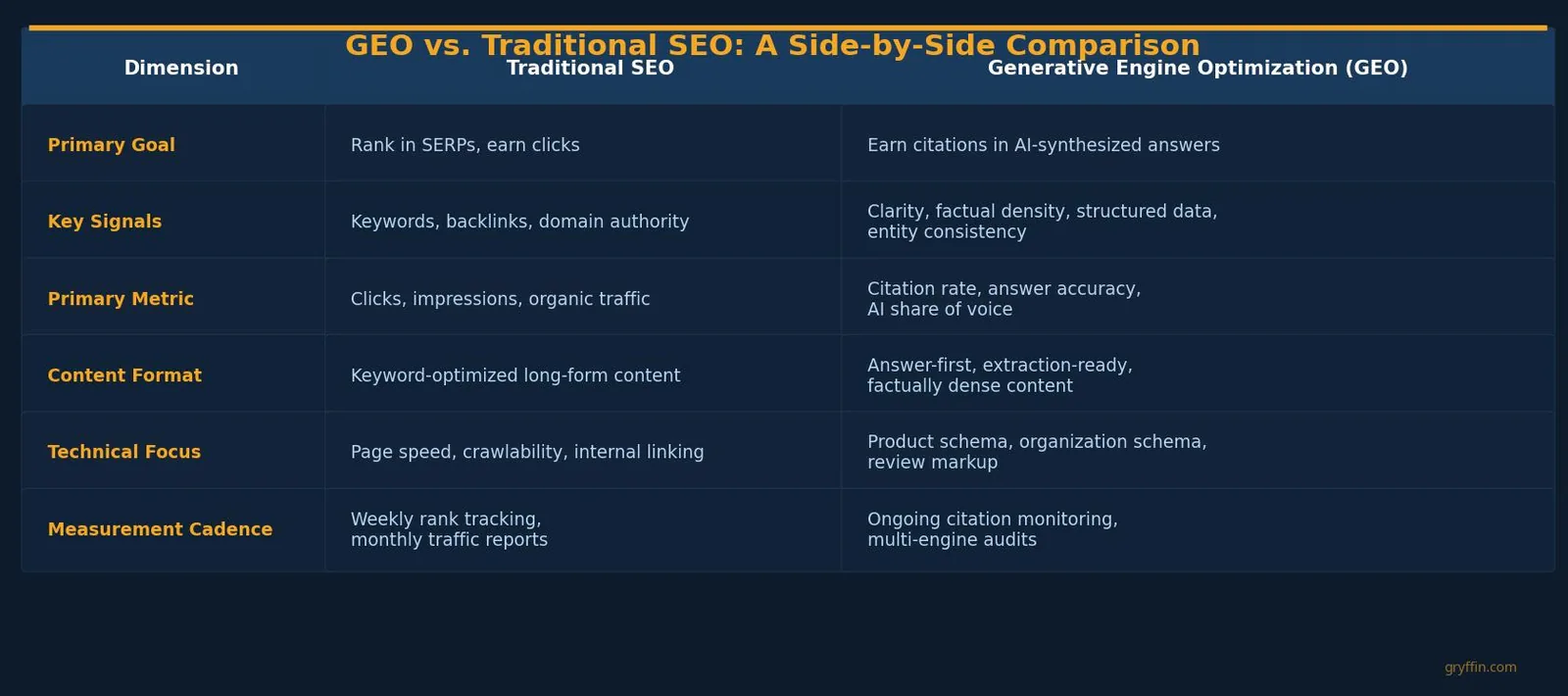
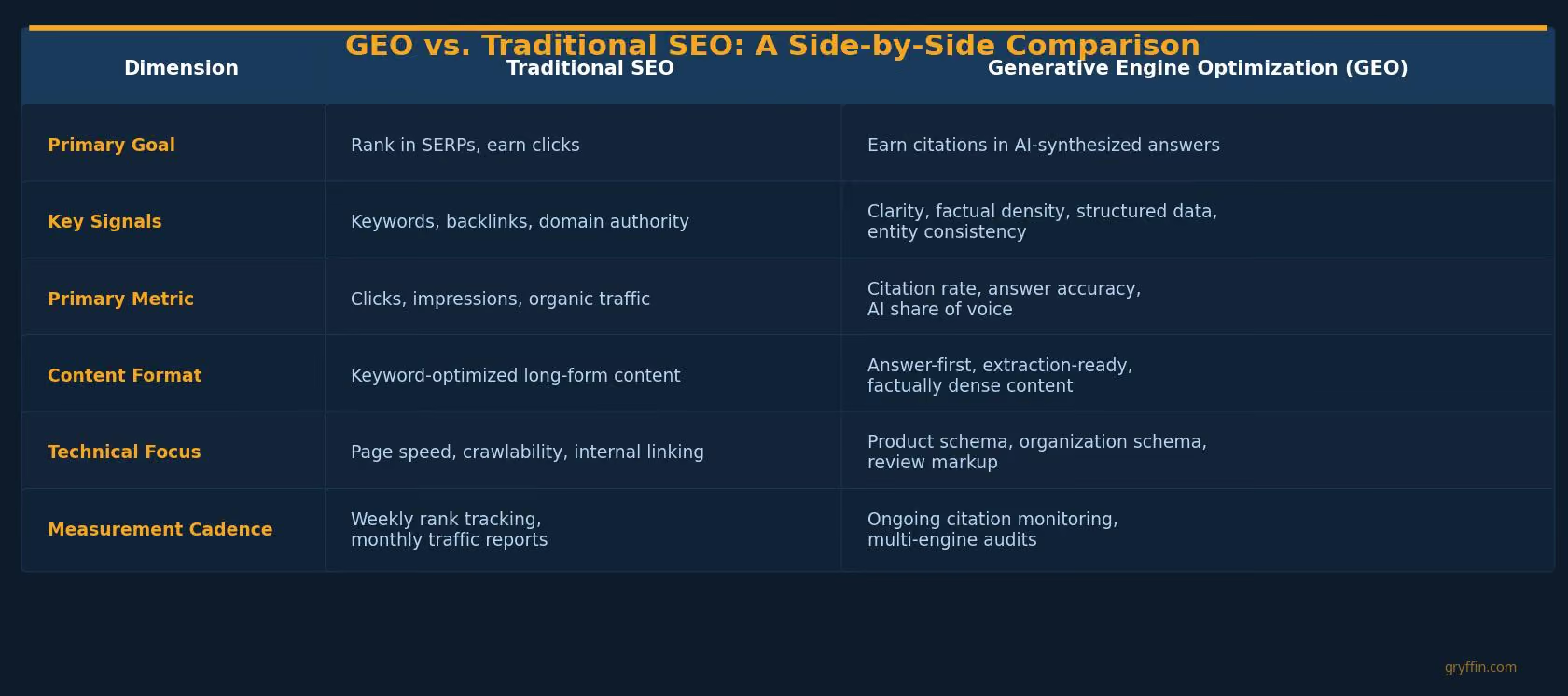
While traditional SEO optimizes for ranking positions to drive clicks, GEO targets the engines that synthesize answers. The outcomes, signals valued, and metrics of success differ significantly between the two disciplines. Traditional SEO relies heavily on keyword density, backlink profiles, and domain authority to secure top positions on search engine results pages. Success is measured by impressions, clicks, and organic traffic. In contrast, GEO prioritizes clarity, factual density, and structured data to increase the likelihood of inclusion in synthesized answers. The primary metric for GEO is the citation rate, meaning how often your brand is recommended or referenced by the AI, rather than clicks or rank.
Understanding these differences is foundational to building a strategy that works in 2026. To track the metrics that matter in this new environment, teams should explore How to Measure AI Visibility, which cuts through vanity data to focus on business outcomes.
Where GEO Shows Up In The Buyer Journey
The impact of GEO is most pronounced in zero-click decisions and recommendation-style queries. When users ask an AI assistant to recommend the best sustainable running shoes under $150, they expect a synthesized, evidence-backed answer, not a list of links to browse. In these scenarios, citations influence consideration without requiring a click. Research confirms that nearly 60% of searches now end without a click to any external website, meaning the battle for consideration is often won or lost before the user ever visits a brand's site. If your brand is not part of that synthesized answer, you lose visibility at the critical moment of intent.
How Generative Engines Compose Answers
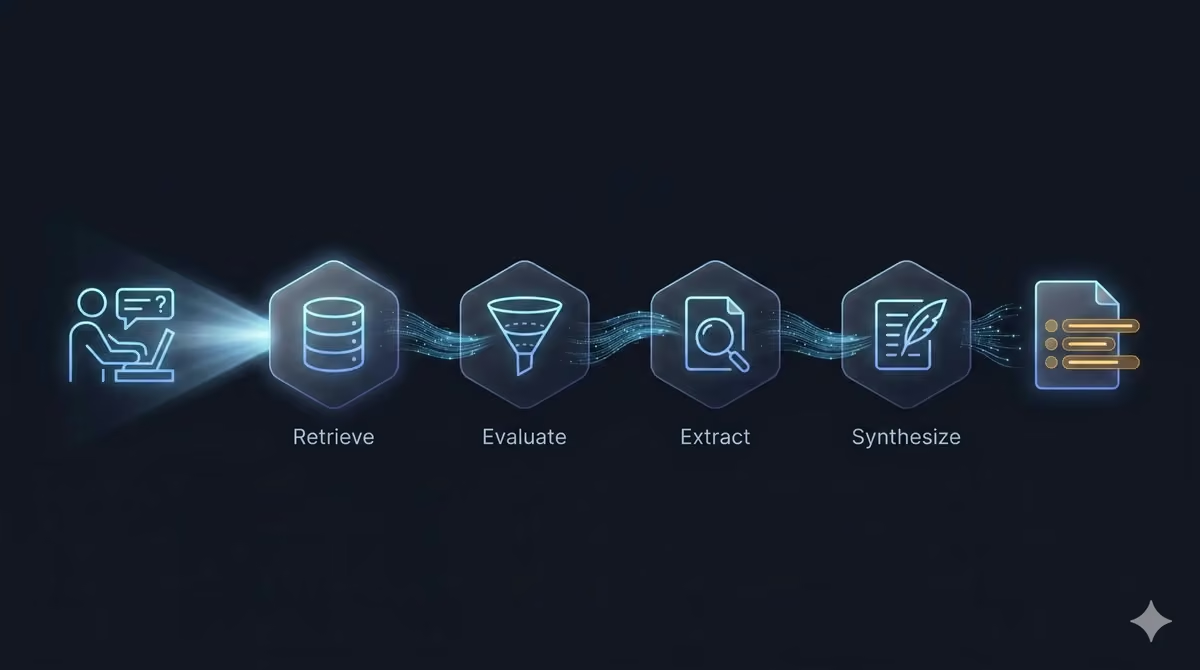
To effectively optimize for generative engines, it is essential to understand how these systems retrieve and synthesize information. The high-level pipeline involves retrieving relevant documents, evaluating their credibility, extracting factual claims, and synthesizing a coherent response. This process is not random; it is governed by clear signals that brands can actively influence.
The Retrieval And Synthesis Pipeline
When a user submits a query, the generative engine first retrieves a set of relevant documents from its index or via real-time web search. It then evaluates these documents for authority, relevance, and factual accuracy. The engine extracts specific claims, data points, and context from the most credible sources, synthesizing them into a natural language response. Extraction relies heavily on clearly structured, unambiguous passages. If a brand's content is buried in long, complex paragraphs or lacks clear formatting, the AI may struggle to extract the necessary facts, reducing the likelihood of citation. Research from SparkToro found that 44.2% of all LLM citations come from the first 30% of a piece of content, underscoring the importance of leading with the most critical information.
Signals That Raise Inclusion Likelihood
Generative engines look for specific signals when deciding which sources to cite. Factual density is paramount; content that contains clear statistics, direct answers, and unambiguous claims is far more likely to be extracted than verbose or purely promotional text. Entity consistency is another critical factor. The AI must be able to confidently associate a brand with specific topics, products, and attributes across multiple trusted sources. Finally, structured data provides a machine-readable roadmap to your content, making it easier for the engine to parse and verify facts without relying solely on natural language processing.
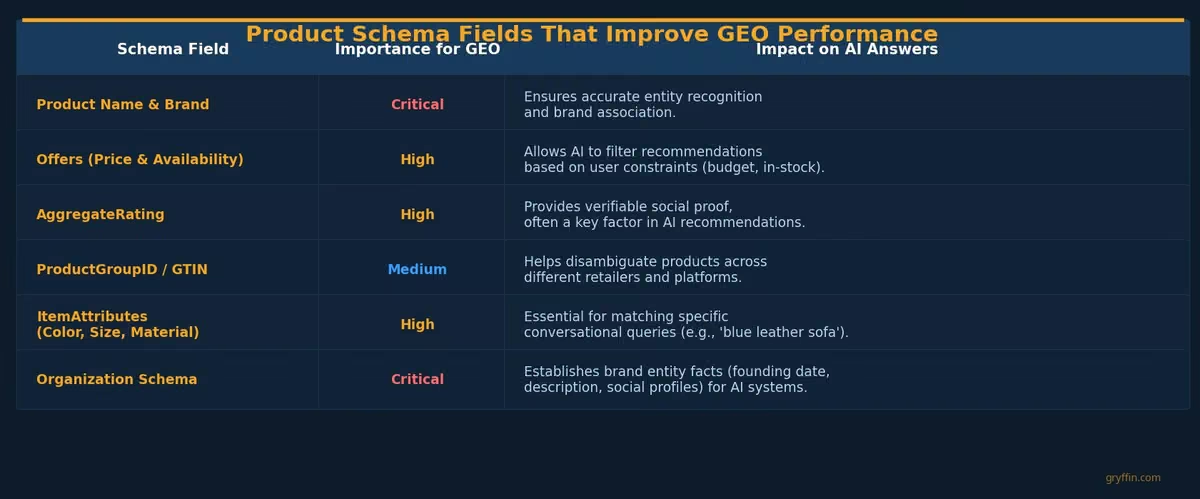
For ecommerce brands, specific schema fields directly impact AI answer quality:
Why GEO Matters More For Ecommerce In 2026
The shift toward generative search is profoundly impacting ecommerce and direct-to-consumer (DTC) brands. As consumers increasingly rely on AI assistants for product discovery and comparison, the traditional funnel is compressing. Shoppers are moving from awareness to consideration within a single AI chat session, bypassing category pages and traditional review sites entirely.
The Shift In Shopper Behavior
Consumers are embracing AI because it reduces friction. Instead of opening ten tabs to compare features, prices, and reviews, a shopper can simply ask an AI to "compare the battery life and warranty of the top three robot vacuums under $500." The AI does the heavy lifting, synthesizing data from across the web into a single, cohesive recommendation. If an ecommerce brand is not cited in that recommendation, they are effectively invisible to that shopper. This behavioral shift is accelerating; a recent survey found that 45% of consumers trust AI recommendations as much as or more than traditional search results. To stay ahead of these shifts, brands must adapt their SEO Content Creation workflows.
Commercial Impact Of AI Citations
The commercial implications of this shift are significant. Being cited as a top recommendation by a generative engine carries immense trust and authority, often leading to higher conversion rates when the user finally clicks through to purchase. Conversely, absence from these answers means losing market share to competitors who have successfully optimized for GEO. Furthermore, AI engines often synthesize sentiment alongside facts. If the consensus across the web is that a brand's customer service is poor, the AI will likely include that caveat in its answer, directly impacting sales. Managing this requires a robust AI Search Tracker to monitor brand mentions and sentiment.
The Core Pillars Of A GEO Strategy For DTC Brands
A successful generative engine optimization strategy is built on a foundation of clarity, authority, and technical precision. For DTC and ecommerce brands, this requires a shift away from traditional keyword stuffing and toward an entity-first approach that prioritizes factual extraction.
Answer-First Content Architecture
Generative engines favor content that directly answers user queries without unnecessary preamble. An answer-first architecture involves structuring pages so that the most critical information, the direct answer to the implied question, appears at the very top. This is often achieved through concise summary blocks, bulleted lists, and clear headings. The goal is to make it as easy as possible for the AI to extract the core facts. Instead of burying the price, warranty, and key features of a product in a long narrative description, those details should be presented clearly and immediately. For guidance on structuring content for AI, see our AI Content Writer for SEO guide.
Robust Structured Data Deployment
Structured data is the language of generative engines. While traditional search engines use schema markup to generate rich snippets, AI engines use it to verify facts and understand relationships between entities. For ecommerce brands, comprehensive product schema is non-negotiable. This includes detailed attributes such as price, availability, aggregate ratings, and specific item characteristics like color and material. Furthermore, organization schema is critical for establishing the brand as a recognized entity, linking the official website to social profiles, founding dates, and corporate information.
Authority And Entity Signals
Generative engines prioritize credible, authoritative sources. Building authority for GEO involves more than just acquiring backlinks; it requires establishing a consistent entity presence across the web. This means ensuring that the brand's information is accurate and consistent on third-party review sites, industry directories, and news publications. When an AI engine finds the same facts corroborated across multiple trusted sources, its confidence in that information increases, raising the likelihood of citation. Earning mentions in authoritative publications is a powerful signal of credibility.
Clarity-First Copywriting
The way content is written directly impacts its extractability. Clarity-first copywriting focuses on simple sentence structures, active voice, and unambiguous language. Metaphors, idioms, and complex jargon can confuse natural language processing algorithms, leading to misinterpretation or exclusion. Every sentence should convey a clear fact or claim. When discussing a product's benefits, brands should use precise metrics and data points rather than vague superlatives. Instead of saying a product is "super fast," state that it "completes the task in 4.2 seconds." Learn more about Generative Search Optimization: How to Write for AI Engines.
Platform-Specific Nuance
While the core principles of GEO apply broadly, different generative engines have unique nuances. ChatGPT, Claude, and Google's AI Overviews each utilize different training data, retrieval mechanisms, and synthesis algorithms. A comprehensive GEO strategy must account for these differences. For example, some engines may place a higher weight on real-time news sources, while others prioritize established academic or technical documentation. Brands must monitor their visibility across multiple platforms to identify gaps and adjust their strategies accordingly.
Auditing Your GEO Visibility
Before implementing a GEO strategy, it is essential to establish a baseline. Auditing GEO visibility involves systematically testing how a brand appears in generative engine responses across a range of relevant queries. This process requires a structured approach to track performance and identify areas for improvement.
Building A Target Query List
The first step in a GEO audit is building a list of target queries. These should include branded queries (e.g., "What are the features of [Brand] shoes?"), non-branded informational queries (e.g., "How to choose a sustainable running shoe"), and commercial investigation queries (e.g., "Best running shoes for flat feet"). The list should reflect the questions actual customers are asking throughout the buyer journey. Understanding SEO Search Intent is crucial for building this list effectively.
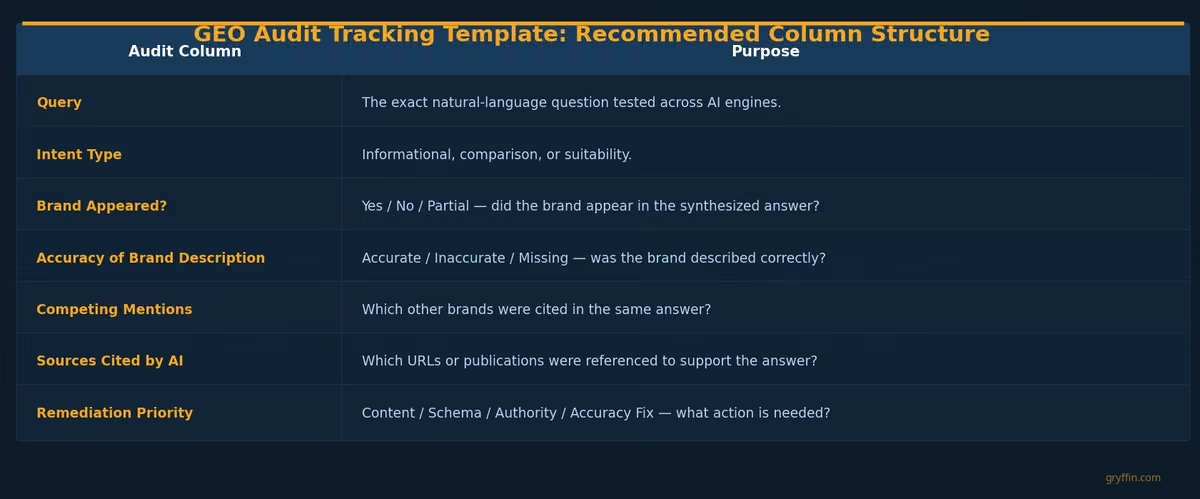
Tracking Citations And Accuracy
Once the query list is established, teams must systematically test those queries across major generative engines (e.g., ChatGPT, Claude, Gemini, Perplexity) and record the results. This manual testing can be supplemented with an AI Visibility Platform to scale the effort.
This structured tracking allows teams to identify patterns. Are they consistently missing from comparison queries? Is the AI citing outdated pricing information? These insights inform the remediation strategy.
What Generative Engine Optimization Services Actually Include
For many brands, operationalizing GEO requires specialized expertise and resources that may not exist in-house. Generative engine optimization services provide a structured, data-driven approach to improving AI visibility. These services typically encompass a range of strategic and technical deliverables.
Comprehensive AI Visibility Audits
A foundational service is the comprehensive AI visibility audit. This involves analyzing a brand's current presence across multiple generative engines, identifying citation gaps, and evaluating the accuracy of AI-synthesized information regarding the brand. The audit also includes an analysis of competitors' AI visibility, reverse-engineering the sources and signals that are earning them citations.
Entity And Schema Architecture
Technical GEO services focus on building a robust entity architecture. This includes designing and implementing comprehensive structured data strategies, ensuring that product, organization, and review schema are deployed correctly and comprehensively. Experts ensure that the brand's entity information is consistent and machine-readable across all digital touchpoints.
Extraction-Ready Content Production
Content services for GEO focus on producing and optimizing content specifically for AI extraction. This involves rewriting existing pages to improve clarity and factual density, creating answer-first summary blocks, and developing new content that directly addresses the specific questions users are asking AI assistants. This often involves creating detailed FAQs, comparison guides, and data-rich product descriptions. For agencies looking to scale this, exploring SEO Software For Agencies can streamline the workflow.
Third-Party Validation Campaigns
Because generative engines rely on corroborated information, GEO services often include campaigns to secure third-party validation. This is not traditional link building; it is focused on earning factual mentions and reviews on trusted, authoritative platforms that AI engines frequently crawl and cite. This might involve digital PR, review generation strategies, and partnerships with credible industry publications.
In-House Vs. Services: Making The Right Call
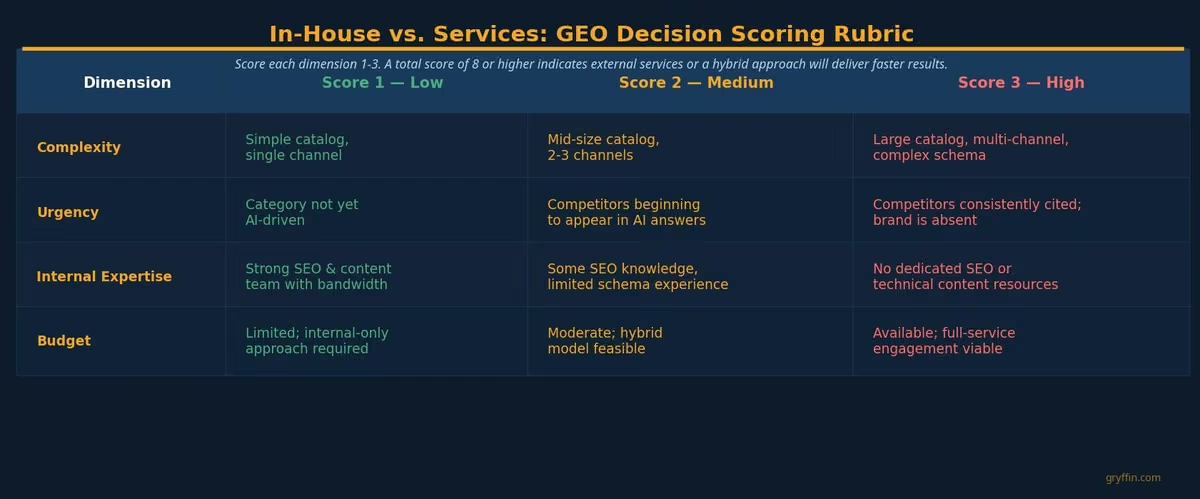
Deciding whether to build a GEO capability in-house or partner with an external service provider depends on a brand's internal resources, technical expertise, and the urgency of their visibility gaps.
Assessing Internal Capabilities
Brands with strong technical SEO teams and agile content creators may be well-positioned to handle GEO in-house. However, they must be willing to invest the time to understand the nuances of generative engines and adapt their existing workflows. If a team is already struggling to maintain traditional SEO performance, adding GEO to their plate without additional resources is likely to fail.
When To Bring In External Experts
External GEO services are highly valuable for brands that need to close visibility gaps quickly, lack in-house technical expertise (particularly regarding advanced schema deployment), or operate in highly competitive verticals where competitors are already dominating AI citations. External experts bring specialized tools, cross-industry insights, and proven methodologies that can accelerate results.
A 90-Day GEO Roadmap For Ecommerce Teams
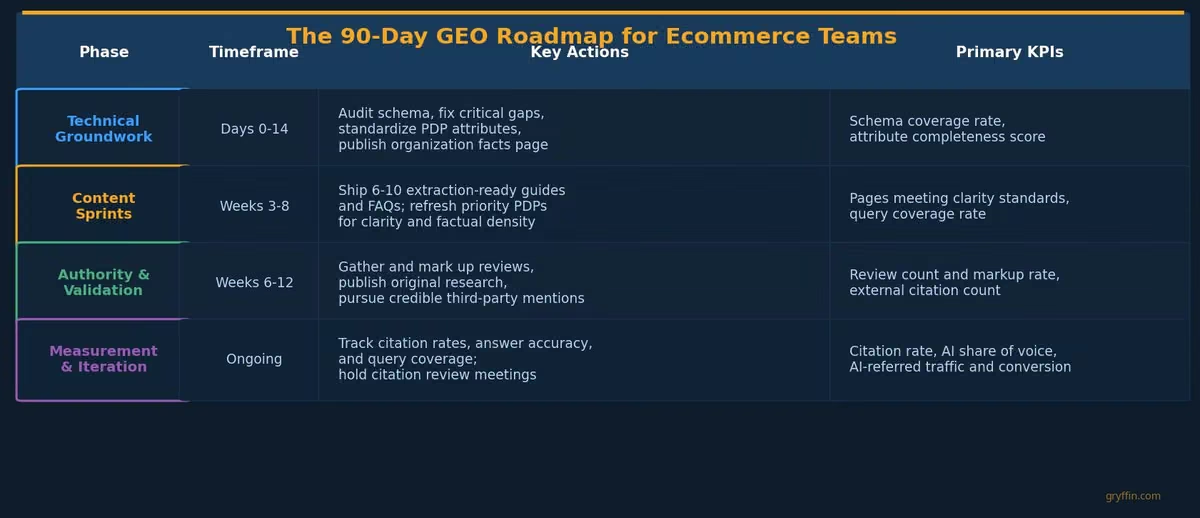
Implementing a GEO strategy can seem daunting, but breaking it down into manageable phases makes it achievable. This 90-day roadmap provides a structured approach for ecommerce teams to build a foundation for AI visibility.
Phase 1: Technical Groundwork (Days 1-30)
The first 30 days should focus on establishing a solid technical foundation. This involves conducting a comprehensive schema audit to identify missing or inaccurate product and organization markup. Teams should standardize product attributes across all PDPs, ensuring that critical details like price, availability, and specifications are clearly defined. Finally, creating a dedicated "organization facts" page that clearly states the brand's history, mission, and core policies provides a centralized, authoritative source for AI engines to reference.
Phase 2: Content Sprints (Days 31-60)
With the technical foundation in place, the focus shifts to content. Teams should identify the top 20 priority pages (e.g., key product pages, category guides) and optimize them for extraction. This involves rewriting complex paragraphs for clarity, adding answer-first summary blocks, and ensuring high factual density. Concurrently, teams should develop 5-10 new extraction-ready guides or comprehensive FAQs that directly address the most common questions identified during the initial visibility audit.
Phase 3: Authority And Measurement (Days 61-90)
The final phase focuses on building external authority and establishing a measurement cadence. Teams should launch campaigns to gather authentic customer reviews and mark them up with appropriate schema. They should also actively pursue mentions and citations on credible third-party sites relevant to their industry. Simultaneously, teams must implement a system for ongoing measurement, tracking citation rates, answer accuracy, and overall AI share of voice on a monthly basis. This data will inform the ongoing iteration of the GEO strategy. For a complete solution, consider exploring Gryffin's AI Visibility Tools.
Frequently Asked Questions
What are generative engine optimization services?
Generative engine optimization (GEO) services are specialized marketing offerings designed to help brands appear in the synthesized answers provided by AI search engines like ChatGPT, Claude, and Google's AI Overviews. These services typically include AI visibility audits, structured data implementation, entity management, and the creation of extraction-ready, factually dense content.
How much do GEO services cost for an ecommerce brand?
The cost of GEO services varies widely based on the complexity of the catalog and the scope of the engagement. A one-time AI visibility audit and schema overhaul might range from $3,000 to $10,000, while ongoing monthly retainers for content optimization and third-party validation typically range from $2,500 to $8,000 per month.
Can traditional SEO agencies provide generative engine optimization?
Some traditional SEO agencies are adapting their services to include GEO, but the disciplines require different skill sets. Traditional SEO focuses heavily on link building and keyword density, while GEO requires deep expertise in natural language processing, entity architecture, advanced schema deployment, and clarity-first copywriting. It is important to vet an agency's specific experience with AI answer engines.
How long does it take to see results from GEO?
Unlike traditional SEO, which can take six months or more to show significant movement, GEO results can sometimes be seen more quickly, particularly when correcting factual inaccuracies or deploying missing schema. However, establishing a consistent presence in competitive AI queries typically requires 3 to 6 months of sustained effort across technical, content, and authority pillars.
Do I need to change my entire website for GEO?
No, a complete website overhaul is rarely necessary for GEO. The most effective approach is to systematically optimize priority pages—such as top-selling product pages and key informational guides—by improving clarity, adding structured data, and incorporating answer-first summary blocks, rather than rewriting the entire site.
Is GEO only important for large enterprise brands?
No, GEO is critical for brands of all sizes, especially in the ecommerce and DTC space. Because AI engines often synthesize answers based on specific product attributes and consumer reviews, smaller brands with highly specific, well-structured product data and strong niche authority can frequently out-position larger competitors in AI recommendations.
How do I know if my brand is currently visible in AI search?
To determine your current AI visibility, you must conduct manual testing or use an AI visibility tracking platform. This involves entering your target queries (both branded and non-branded) into major AI engines like ChatGPT, Perplexity, and Gemini, and recording whether your brand is cited, recommended, or accurately described in the synthesized responses.
What is the most important ranking factor for AI answer engines?
Generative engines do not use "ranking factors" in the traditional SEO sense. Instead, they rely on inclusion signals. The most critical signals are factual density (clear, unambiguous data points), entity consistency (corroborated facts across multiple trusted sources), and comprehensive structured data (schema markup that makes the content easily machine-readable).
At first, we weren’t even thinking about AI visibility. We were focused on rankings and traffic like everyone else. But once we started testing our brand in ChatGPT and other AI tools, we realized we were barely showing up — even for topics we ‘ranked’ for. Gryffin gave us a clear picture of where we stood, how competitors were being cited instead, and what that actually meant for our pipeline. It shifted how we think about search entirely.







.webp)