AI Visibility Platform Guide: How to Find the Topics, Prompts, and Sources Where You Are Missing
Marcela De Vivo
Marcela De Vivo
June 10, 2026
The discovery journey for modern consumers and enterprise buyers has shifted fundamentally. Visibility today spans search engine results pages, AI answer engines, specialized media outlets, community forums, and creator channels. When a prospective customer asks a question, the platforms they use synthesize information from across the web to provide a direct answer. If your brand is not included in those answers, you are experiencing a citation gap.
A citation gap occurs when competitors, industry peers, or alternative solutions are named or referenced in an answer, but your brand is conspicuously absent. These gaps represent lost opportunities to build trust, establish authority, and ultimately drive revenue. Research consistently shows that more than half of consumers now use AI to research purchases before making a decision, and AI search visitors demonstrate a conversion likelihood that is four times higher than traditional search visitors. The implication is clear: being absent from AI-generated answers is not a minor inconvenience; it is a significant competitive disadvantage.
Closing these gaps requires a systematic approach to understanding where and why they occur. This guide provides a practical framework to map your core topics, analyze the prompts users are asking, and evaluate the sources that AI platforms trust. By quantifying these gaps, you can develop a targeted strategy to improve your visibility across every relevant surface. To execute this framework efficiently at scale, many organizations rely on an AI visibility platform. This type of platform serves as the analytical layer that unifies cross-surface signals into a single visibility model, allowing you to track mentions, measure your share of citation, and prioritize the actions that will have the greatest impact on your digital presence.
What Are The Modern Discovery Surfaces Where Citations Happen And How Do Visibility Gaps Form?
Understanding how each discovery surface selects what to cite is the essential first step in any visibility gap analysis.
The mix of surfaces where buyers discover new products and services is more diverse than ever before. Understanding how each surface selects what to cite or surface is the first step in identifying why gaps appear in your brand visibility. Each surface operates according to its own logic, and a strategy that works for one may be entirely ineffective for another.
How Do Search Engines And AI Answer Engines Use Entities And Consensus?
Traditional search engines and modern AI answer engines rely heavily on entities, trusted sources, and consensus. When a user inputs a query, these systems do not just look for keywords; they look for recognized entities (people, places, organizations, concepts) and the relationships between them. AI platforms evaluate the consensus among high-authority sources to formulate their answers. If your brand is not clearly defined as an entity, or if authoritative sources do not consistently link your brand to the relevant topic, you will not be cited. For a deeper dive into how this differs from traditional methods, you can review what AI search optimization is and how brands can adapt.
Why Do Media And Analysts Prioritize Expertise And Original Data?
Editorial media and industry analysts confer citations based on demonstrated expertise, newsworthiness, and original data. Journalists and researchers are looking for unique insights that add value to their reporting. If your content strategy relies solely on repurposing existing information without contributing new data or expert commentary, you are unlikely to earn mentions from these high-value sources. Earning citations here requires a commitment to producing original research and thought leadership that journalists can reference with confidence.
How Do Communities And Creators Build Trust Through Repeat Exposure?
In community forums, Q&A platforms, and creator channels, citations are driven by trust, practical usefulness, and repeat exposure. Contributors in these spaces recommend tools and solutions that they have personally vetted and found valuable. If your brand does not actively participate in these communities, or if your product documentation is difficult to use, creators and community members will recommend alternatives. Building visibility here requires providing genuinely helpful resources and engaging authentically with practitioners over time.
Why Do Visibility Gaps Emerge Despite Active Content Creation Efforts?
Visibility gaps often emerge even when a brand is actively producing content. This typically happens due to weak entity definition, thin citation profiles, or a limited presence of recognized experts associated with the brand. Another common cause is a mismatch between the questions users are actually asking and the formats in which your content is presented. If your content does not directly address the user intent or is buried in inaccessible formats, AI systems will bypass it in favor of clearer, more structured answers from competitors.
Where Does An AI Visibility Platform Fit Into The Discovery Stack?
Tracking citations across all these diverse surfaces manually is nearly impossible at any meaningful scale. An AI visibility platform unifies these cross-surface signals into a single, cohesive visibility model. It ingests data from search results, AI answers, media mentions, and community discussions, allowing you to see exactly where you are cited and where your competitors are winning. By using an AI search tracker, you can move from guessing about your visibility to measuring it with precision and acting on the data with confidence.
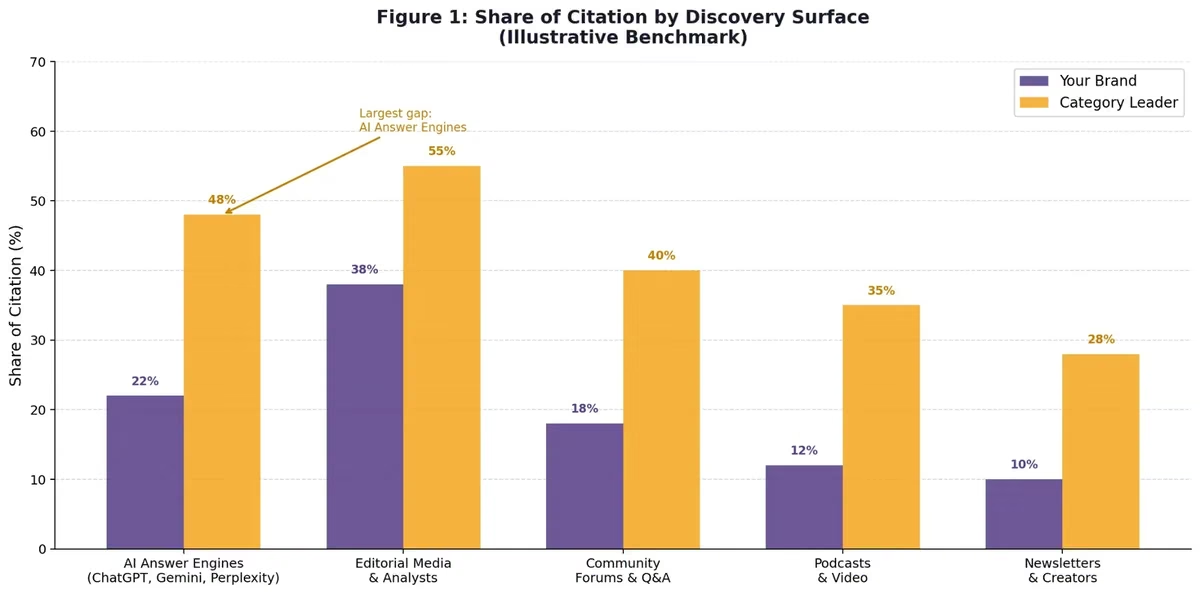
Figure 1: Share of Citation by Discovery Surface. The gap between a typical brand and the category leader is widest in AI answer engines and editorial media, making these the highest-priority surfaces to address.
How Can You Build A Topic And Entity Map Before Hunting For Visibility Gaps?
Building a topic and entity map is a foundational step that transforms abstract visibility goals into a measurable, actionable framework.
Before you can accurately identify where you are missing, you must clearly define what you should be known for. This requires building a comprehensive inventory of the concepts, problems, solutions, and outcomes that define your market. Entities and their relationships form the backbone for measuring citations accurately, and without this foundation, any gap analysis will be incomplete.
Why Is An Entity-First Approach Critical For Accurate Visibility Measurement?
An entity-first approach moves beyond simple keyword tracking. It involves mapping out your organization, your products, your key personnel, the broader category you operate in, and the specific use cases you address. It also requires cataloging the synonyms, abbreviations, and job-to-be-done language that your audience uses. AI systems understand the world through these entities and their relationships. If you want to be cited as a solution for a specific problem, the AI must recognize the relationship between the entity of your brand and the entity of that problem. Without this clarity, even excellent content can be overlooked.
What Sources Should You Mine To Create A Draft Topic Ontology?
To build a robust topic and entity map, you need to look beyond traditional keyword research tools. Start by mining internal sources: customer interviews, support tickets, and sales call notes. These sources reveal the actual language your customers use when they describe their problems and desired outcomes. Next, examine external signals: analyze Search Engine Results Page features, related queries, community discussion threads, and the tracks at major industry conferences. This will help you identify the concepts that are currently driving conversation in your category and the language patterns that AI systems have learned to associate with your space.
How Do You Validate Your Entity Map Against Search Features And AI Answers?
Once you have a draft ontology, you must validate it. Test whether your identified entities actually appear in search features and AI-generated answers when relevant queries are made. Check for ambiguity carefully. If an entity name has multiple meanings, you need to provide strong context signals on your digital properties to disambiguate it. This validation loop ensures that your entity map reflects the reality of how AI systems interpret your market, not just how you internally describe your business.
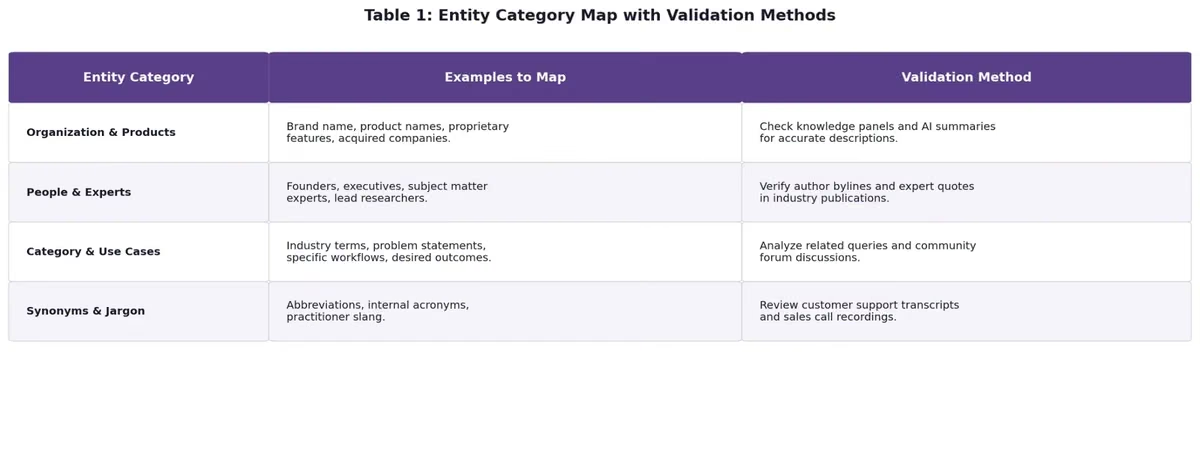
Table 1: Entity Category Map with Validation Methods. Use this framework to ensure every relevant entity is defined, disambiguated, and validated against live AI and search signals.
How Do You Map The Prompt Space To Understand How AI Systems Answer Questions In Your Category?
Prompt space mapping requires a collaborative, research-driven approach that bridges SEO expertise with a deep understanding of buyer intent.
Understanding the prompt space means identifying the full range of questions, commands, and conversational queries that users are submitting to AI platforms in your category. This is distinct from traditional keyword research because the intent, format, and specificity of prompts differ substantially from short-tail search queries. To understand how to measure what actually matters in AI visibility, you need to move beyond impressions and clicks and into citation frequency and answer quality.
What Is The Difference Between Informational, Navigational, And Evaluation Prompts?
Prompts can be broadly categorized by the stage of the buyer journey they represent. Informational prompts seek to understand a concept or problem. Navigational prompts seek a specific resource or brand. Evaluation prompts compare options and seek recommendations. Your visibility gaps will differ significantly across these categories. A brand may be well-cited in informational answers but completely absent from evaluation prompts, which are the highest-value queries for driving purchase intent. Understanding this distribution is essential for prioritizing your content investments.
How Do You Systematically Collect And Categorize Prompts At Scale?
Collecting prompts at scale requires a combination of automated monitoring and structured manual research. Start by identifying the seed topics from your entity map and generating prompt variations across all three intent categories. Then test these prompts across multiple AI platforms and record the answers, the cited sources, and the brands mentioned. An AI visibility tracking platform can automate much of this collection and categorization, allowing you to monitor hundreds or thousands of prompts continuously rather than conducting periodic manual audits.
How Do You Identify Which Prompts Are Driving The Most Valuable Discovery Traffic?
Not all prompts are equally valuable. To prioritize your efforts, you need to correlate prompt categories with downstream business outcomes. Evaluation prompts that include your product category alongside buying signals represent the highest priority. You can identify these by analyzing the language patterns in prompts where competitors are cited but you are not, and by cross-referencing with your own analytics data to understand which content topics are already driving qualified traffic and conversions. For teams managing building visibility in B2B AI answer engines, this correlation analysis is particularly critical given the longer sales cycles involved.
How Can You Audit Your Citation Profile Across Sources To Find The Gaps That Matter Most?
A citation audit is the process of systematically documenting where your brand is and is not mentioned across the sources that AI platforms trust. The goal is not simply to count mentions but to assess their quality, recency, context, and authority. This audit forms the evidentiary foundation for your visibility strategy.
What Makes A Citation High-Quality Versus A Thin Or Misleading Mention?
A high-quality citation is one that appears in an authoritative source, provides meaningful context about your brand's capabilities or expertise, and is linked to or referenced by other trusted sources. A thin citation is a bare mention without context, often in a list or directory without supporting narrative. A misleading mention may associate your brand with incorrect information or outdated product details. AI systems weight citations differently based on these quality signals, which means that a single high-quality mention in a top-tier publication can be worth more than dozens of thin directory listings.
How Do You Categorize And Prioritize The Gaps You Discover?
Once you have completed your audit, you need to organize your findings into a structured gap inventory. Categorize each gap by type, source tier, topic relevance, and estimated business impact. This categorization allows you to move from a raw list of missing citations to a prioritized action plan. Teams that use how to perform a competitor analysis for AI search engine visibility as part of their audit process consistently find that the most impactful gaps are concentrated in a small number of high-authority source categories.
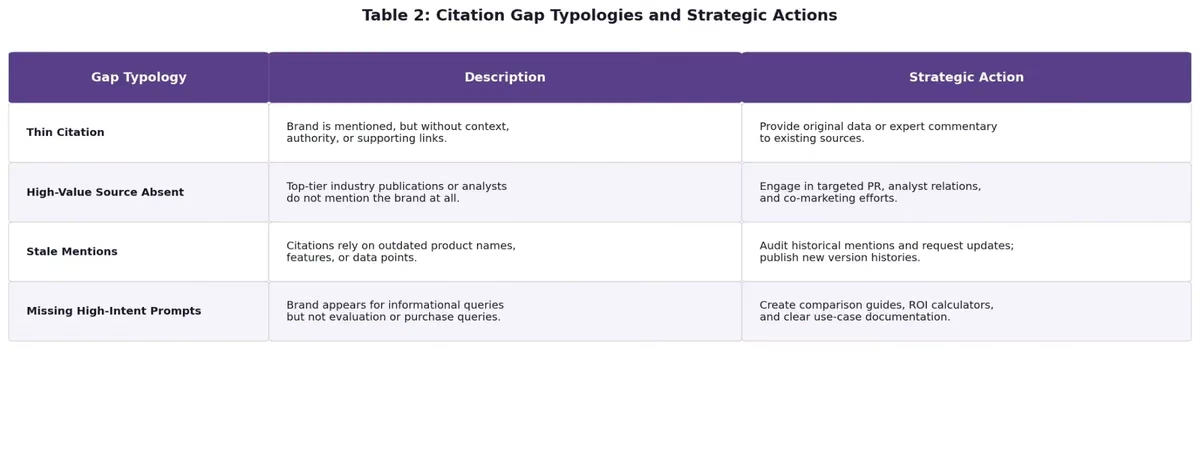
Table 2: Citation Gap Typologies and Strategic Actions. Each gap type requires a distinct response strategy, and conflating them leads to wasted effort.
What Are The Common Gap Typologies And Their Strategic Implications?
Gap typologies fall into several recurring patterns. Thin citation gaps require enrichment of existing mentions through outreach and content provision. High-value source gaps require targeted relationship-building with journalists, analysts, and community leaders. Stale mention gaps require a proactive update campaign to replace outdated information with current, accurate content. Missing high-intent prompt gaps require new content creation specifically designed to answer evaluation-stage questions. Each typology demands a different response, and conflating them leads to wasted effort and diluted results. For agencies managing multiple clients, white label SEO software with AI visibility capabilities can help systematize this categorization process across accounts.
How Do AI Systems Decide Which Sources To Cite In Their Responses?
Understanding the mechanics of how AI answer engines select their sources is essential for developing an effective citation strategy. While the precise algorithms are proprietary and constantly evolving, the underlying principles are well-documented through research and empirical observation.
What Role Does Domain Authority And Topical Expertise Play In Source Selection?
AI systems apply a form of authority weighting that considers both the general credibility of a source and its specific expertise in the relevant topic area. A publication that consistently produces high-quality, accurate content on a specific subject will be weighted more heavily for queries in that subject area than a general-interest publication with occasional coverage. This means that building topical authority through consistent, expert-level content production is a more durable strategy than pursuing broad coverage across many topics.
How Does Structured Data And Content Formatting Influence AI Ingestion?
The format in which your content is presented significantly affects whether AI systems can successfully extract and use it. Content that is well-structured with clear headings, concise definitions, and explicit answers to specific questions is far more likely to be cited than content that buries key information in dense prose. Implementing structured data markup, maintaining clean and crawlable site architecture, and formatting content to directly answer the types of prompts you have identified in your prompt space map are all critical technical factors. For a practical guide on this, review a practical playbook for ChatGPT visibility.
Why Does Sentiment And Brand Framing In Existing Citations Matter?
AI systems do not just count citations; they interpret the sentiment and context of those citations. If the majority of existing mentions of your brand are neutral or negative, or if they associate your brand with problems rather than solutions, this framing can influence how AI platforms describe your brand in their answers. Actively monitoring and managing the sentiment of your citation profile is therefore an important component of a comprehensive visibility strategy. This is explored in depth in our guide on managing AI brand sentiment in LLMs.
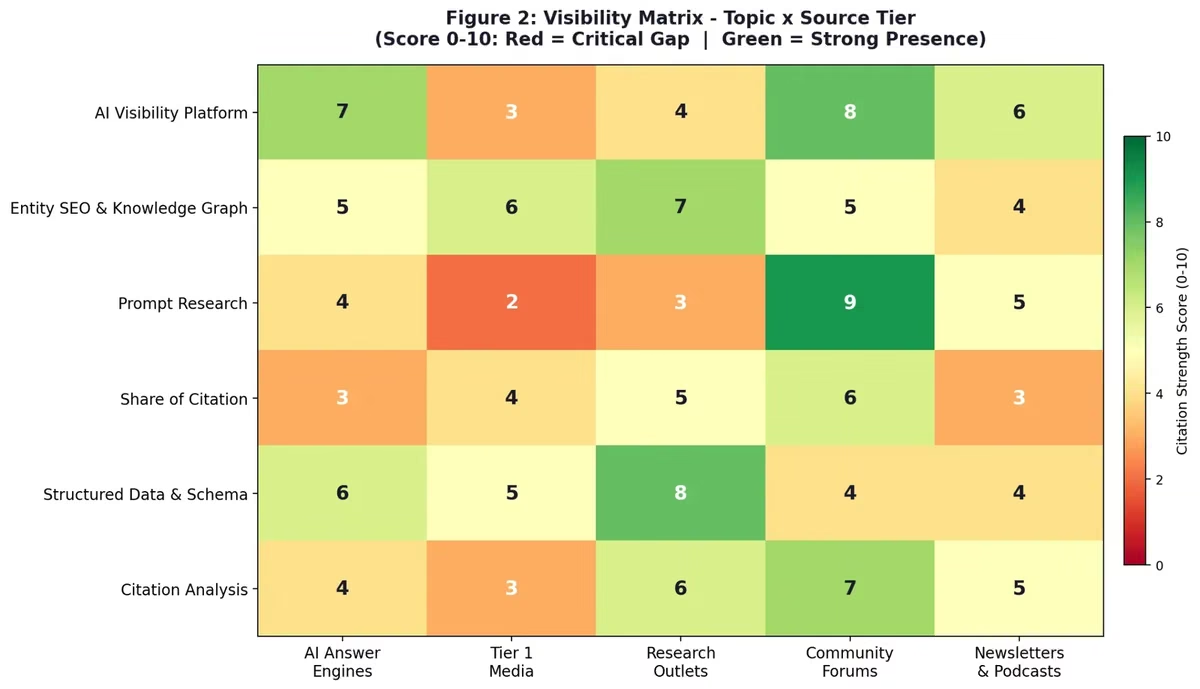
Figure 2: Visibility Matrix - Topic x Source Tier. Red cells indicate critical gaps requiring immediate attention; green cells indicate strong citation presence to be maintained and leveraged.
How Can You Prioritize Visibility Gaps With A Scoring Model That Respects Both Effort And Impact?
A disciplined prioritization model ensures your team focuses on the visibility gaps that will deliver the greatest return on investment.
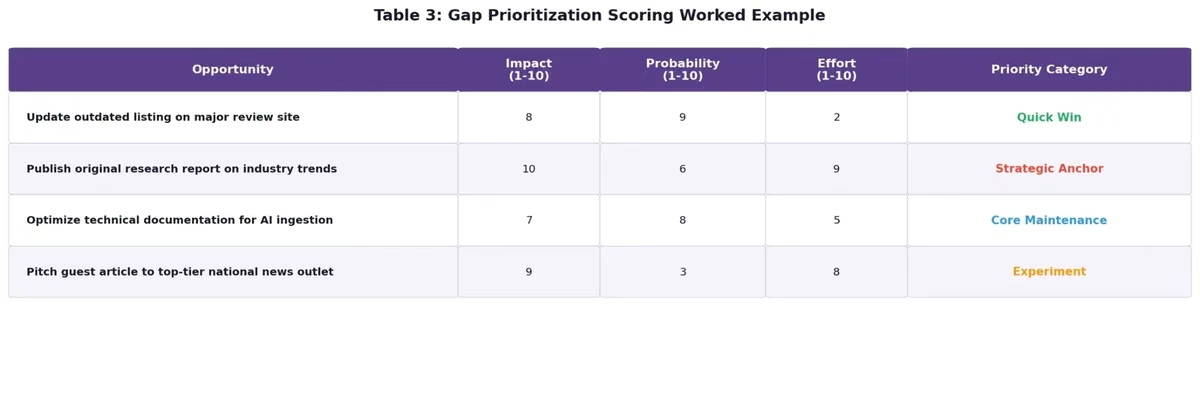
Not every visibility gap deserves equal attention. A systematic prioritization model allows you to allocate your resources to the opportunities that will deliver the greatest return. The most effective models balance three variables: the potential business impact of closing the gap, the probability of success given your current assets and relationships, and the effort required to execute the necessary actions.
How Do You Apply An Impact Versus Effort Model To Your Gap Inventory?
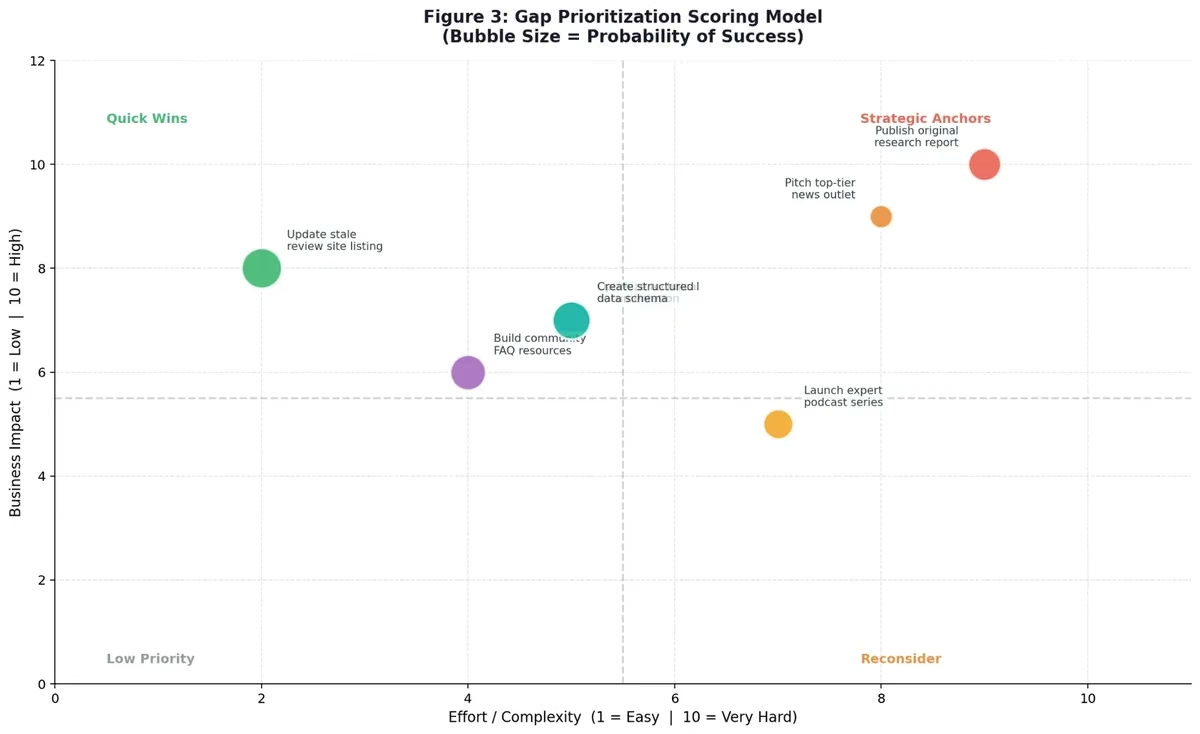
Begin by scoring each gap opportunity on a simple scale for impact and effort. Impact should reflect the estimated contribution to revenue-relevant visibility: how many high-intent buyers would encounter your brand if this gap were closed? Effort should reflect the realistic resource investment required: does this require a single content update, or does it require a multi-month relationship-building campaign? Plotting these scores on a two-by-two matrix immediately reveals your quick wins (high impact, low effort) and your strategic anchors (high impact, high effort that justifies long-term investment). For teams focused on measuring AI sales funnel visibility by stage, this impact scoring should be calibrated against funnel stage data.
Why Is It Important To Select A Balanced Portfolio Of Gap-Closing Actions?
A common mistake is to focus exclusively on quick wins and neglect the strategic anchors that build durable, long-term visibility. Quick wins deliver fast results but often have a limited ceiling. Strategic anchors, such as earning a citation in a major industry report or building a relationship with a key analyst, take longer to execute but create compounding returns over time. A balanced portfolio approach ensures that your team is always making progress on both fronts simultaneously, maintaining momentum while building the foundational assets that will sustain your visibility over the long term.
Table 3: Gap Prioritization Scoring Worked Example. Color-coded priority categories help teams quickly identify where to focus their immediate and long-term efforts.
Figure 3: Gap Prioritization Scoring Model. Bubble size represents probability of success. Quick Wins appear in the top-left quadrant; Strategic Anchors in the top-right.
How Do You Build A Repeatable Measurement Cadence For Ongoing Gap Monitoring?
Visibility is not a static condition. The sources AI platforms trust evolve, new competitors enter the conversation, and the prompts users submit change with market trends and news cycles. A repeatable measurement cadence ensures that your gap inventory stays current and your prioritization model reflects the latest competitive landscape. Most organizations benefit from a monthly monitoring cycle for high-priority prompts and sources, with a deeper quarterly audit that reassesses the full entity map and source tier rankings. Gryffin's AI visibility features are designed to support this kind of continuous monitoring at scale, making it practical to maintain an always-current view of your citation profile without manual overhead.
How Do You Execute Gap-Closing Actions Ethically And Sustainably?
Closing visibility gaps is not about gaming AI systems or manufacturing artificial citations. The most effective and durable approach is to earn citations by genuinely improving the quality, accessibility, and authority of your content and your brand's presence in the communities and publications that matter. Ethical execution also protects your brand from the reputational risks associated with manipulative tactics, which AI platforms are increasingly capable of detecting and discounting.
What Content Formats Are Most Effective For Earning Citations In AI Answers?
Original research reports, comprehensive how-to guides, expert commentary pieces, and structured FAQ content are consistently among the most cited content formats in AI answers. These formats share a common characteristic: they provide clear, direct answers to specific questions in a format that is easy for AI systems to extract and attribute. Investing in these formats for your highest-priority prompt categories is one of the most reliable ways to improve your citation rate. For guidance on how to structure this content for maximum AI discoverability, see our resource on how brands can appear in AI-generated answers.
How Do You Build Relationships With The Sources That AI Platforms Trust Most?
Earning citations from top-tier sources requires building genuine relationships with the journalists, analysts, researchers, and community leaders who create content for those sources. This means investing in media relations, analyst briefing programs, and community engagement over the long term. It also means making it easy for these sources to cite you accurately by maintaining a well-organized press room, providing clear and accessible product information, and being responsive to inquiries. Brands that treat source relationship-building as a core marketing function consistently outperform those that treat it as an occasional PR activity.
What Ethical Guardrails Should Guide Your Citation And Visibility Work?
The most important guardrail is accuracy. Every citation you earn should accurately represent your brand's capabilities, and you should never attempt to earn citations by providing misleading or exaggerated claims. A second guardrail is transparency: disclose sponsored content, paid placements, and commercial relationships clearly. A third guardrail is proportionality: focus your outreach efforts on sources where your brand genuinely belongs in the conversation, rather than attempting to force citations in contexts where your brand is not relevant. These principles are not just ethical imperatives; they are also practical ones, because AI systems are increasingly sophisticated at detecting and discounting citations that appear inauthentic or manipulative.
How Does An AI Visibility Platform Accelerate Every Stage Of This Framework?
Executing the framework described in this guide manually is possible for a small number of topics and sources, but it quickly becomes impractical at the scale required to compete effectively in a modern market. An AI visibility platform provides the infrastructure to automate data collection, standardize measurement, and surface actionable insights across the full scope of your visibility landscape.
What Core Capabilities Should You Look For In An AI Visibility Platform?
The most important capabilities to evaluate are cross-surface monitoring (the ability to track citations across AI answer engines, search features, media, and communities in a single interface), entity tracking (the ability to monitor your brand and related entities rather than just exact-match keywords), gap analysis (the ability to automatically identify where competitors are cited and you are not), and prioritization support (the ability to score and rank opportunities based on your defined business objectives). Gryffin's AI visibility features are built around these core capabilities, providing marketing teams with a unified view of their citation landscape and a clear path to closing the gaps that matter most.
How Does Automated Monitoring Change The Economics Of Visibility Management?
Manual visibility monitoring requires significant analyst time and produces results that are already outdated by the time they are compiled. Automated monitoring changes the economics fundamentally: it allows teams to maintain continuous, real-time awareness of their citation profile across hundreds of prompts and sources simultaneously, at a fraction of the cost of manual research. This shift from periodic audits to continuous monitoring also changes the strategic posture of the team, enabling proactive gap-closing rather than reactive catch-up. For a detailed look at the capabilities that make this possible, visit the Gryffin features page.
How Do You Integrate Visibility Data Into Your Broader Marketing Measurement Framework?
AI visibility data is most powerful when it is integrated with your broader marketing measurement framework. Citation frequency and share of citation should be tracked alongside traditional metrics like organic traffic, branded search volume, and pipeline contribution. This integration allows you to demonstrate the business impact of your visibility investments and to make the case for sustained resource allocation. It also enables you to identify the correlations between visibility improvements and downstream revenue outcomes, which is the ultimate validation of your strategy. To explore how this integration works in practice, review our guide on how to reverse-engineer content that appears in AI answers.
Frequently Asked Questions: AI Visibility Platform
What Is An AI Visibility Platform And How Does It Help My Brand Get Found?
An AI visibility platform is a software solution that tracks and analyzes how and where your brand is cited across AI answer engines, search features, editorial media, and community platforms. It helps your brand get found by identifying the specific topics, prompts, and sources where you are missing from AI-generated answers, and by providing the data you need to prioritize and execute a targeted strategy to close those gaps. Rather than relying on guesswork or periodic manual audits, an AI visibility platform gives you a continuous, data-driven view of your citation landscape. To see how this works in practice, explore Gryffin's AI visibility features.
How Do I Find The Specific Prompts Where My Brand Is Missing From AI Answers?
Finding the specific prompts where your brand is missing requires a combination of prompt space mapping and systematic testing. Start by building a comprehensive list of prompts across informational, navigational, and evaluation intent categories for your core topics. Then test each prompt across the major AI platforms and record which brands are cited and which are not. An AI visibility platform can automate this process at scale, continuously monitoring hundreds of prompts and alerting you when new gaps appear or when existing gaps are closed. For a step-by-step approach, see our guide on using an AI search tracker to monitor your citation profile.
What Is The Difference Between Share Of Voice And Share Of Citation?
Share of voice is a traditional marketing metric that measures your brand's presence in paid and earned media relative to competitors, typically expressed as a percentage of total category mentions. Share of citation is a more specific metric that measures how frequently your brand is cited in AI-generated answers relative to the total number of relevant answers produced. Share of citation is a more direct measure of AI visibility because it reflects the specific mechanism by which AI platforms surface information to users. Understanding how to measure what actually matters in AI visibility requires tracking both metrics and understanding how they relate to each other.
How Do AI Answer Engines Decide Which Sources To Cite In Their Responses?
AI answer engines use a combination of retrieval, re-ranking, and synthesis processes to select their sources. In the retrieval stage, the system identifies a broad set of potentially relevant documents. In the re-ranking stage, it applies authority and relevance signals to narrow the set to the most trustworthy and topically appropriate sources. In the synthesis stage, it extracts and combines information from the selected sources to formulate a coherent answer. Brands that appear in authoritative, well-structured sources that are clearly associated with the relevant topic entities are most likely to be cited. For a deeper exploration of this process, see our resource on how brands can appear in AI-generated answers.
How Often Should I Re-Audit My Visibility Gaps And Citation Metrics?
The appropriate audit frequency depends on the pace of change in your category and the scale of your visibility program. As a general guideline, high-priority prompts and top-tier sources should be monitored continuously using automated tools. A structured review of your full gap inventory should be conducted monthly, with a comprehensive re-audit of your entity map and source tier rankings conducted quarterly. If a significant industry event, product launch, or competitive development occurs, an ad-hoc audit is warranted to capture the impact on your citation profile. If you have questions about setting up a monitoring cadence that fits your organization, contact the Gryffin team for a consultation.
What Ethical Guardrails Matter Most In Citation Work And AI Optimization?
The three most important ethical guardrails are accuracy, transparency, and proportionality. Accuracy means ensuring that every citation you earn correctly represents your brand's actual capabilities and expertise. Transparency means disclosing commercial relationships and sponsored content clearly. Proportionality means focusing your outreach on sources and conversations where your brand genuinely belongs, rather than attempting to force citations in irrelevant contexts. These guardrails protect your brand's reputation and ensure that your visibility strategy builds durable, trust-based authority rather than short-term gains that may be reversed as AI platforms become more sophisticated at detecting manipulation. For more on building a sustainable AI visibility strategy, explore how to reverse-engineer content that appears in AI answers.
At first, we weren’t even thinking about AI visibility. We were focused on rankings and traffic like everyone else. But once we started testing our brand in ChatGPT and other AI tools, we realized we were barely showing up — even for topics we ‘ranked’ for. Gryffin gave us a clear picture of where we stood, how competitors were being cited instead, and what that actually meant for our pipeline. It shifted how we think about search entirely.










.webp)